
Special Needs Trust for Down Syndrome: Florida Guide

Could a well-meant gift or inheritance unintentionally affect support your child depends on? For a family considering a special needs trust for down syndrome child, the answer depends on more than the diagnosis. The source of the funds, the trust terms, and how money is managed can all matter when coordinating with needs-based benefits.
It’s understandable to want resources available for your child’s future without putting essential support at risk. A special needs trust may help hold and manage assets for your child’s benefit, but it doesn’t guarantee eligibility for SSI or Medicaid, and not every child needs the same plan. Down syndrome alone doesn’t establish eligibility for public benefits.
This Florida guide explains how first-party and third-party trusts differ, what to consider when choosing a trustee, and why trust administration matters. You’ll also learn how a trust may fit alongside your broader estate plan and which questions about benefits, funding, and future decision-making deserve careful review. With the right planning, your family can make informed choices shaped by your child’s needs and circumstances.
Table of Contents
Why Families Consider a Special Needs Trust for a Child With Down Syndrome
A special needs trust may help a family coordinate resources for a child’s future while taking needs-based benefits into account. It can provide a framework for managing funds for the child, but it doesn’t guarantee eligibility for SSI, Medicaid, or any other program. The trust’s terms, the source of its assets, and how funds are used all matter.
Down syndrome doesn’t determine a person’s abilities, support needs, or eligibility for benefits. One person may need ongoing assistance with daily activities, while another may live more independently and need different kinds of support. A special needs trust for down syndrome child should reflect that individual’s life and the family’s goals, rather than assumptions about a diagnosis. The Special Needs Trust overview describes the general purpose of these trusts and their connection to public benefit programs.
How a family’s goals shape the planning question
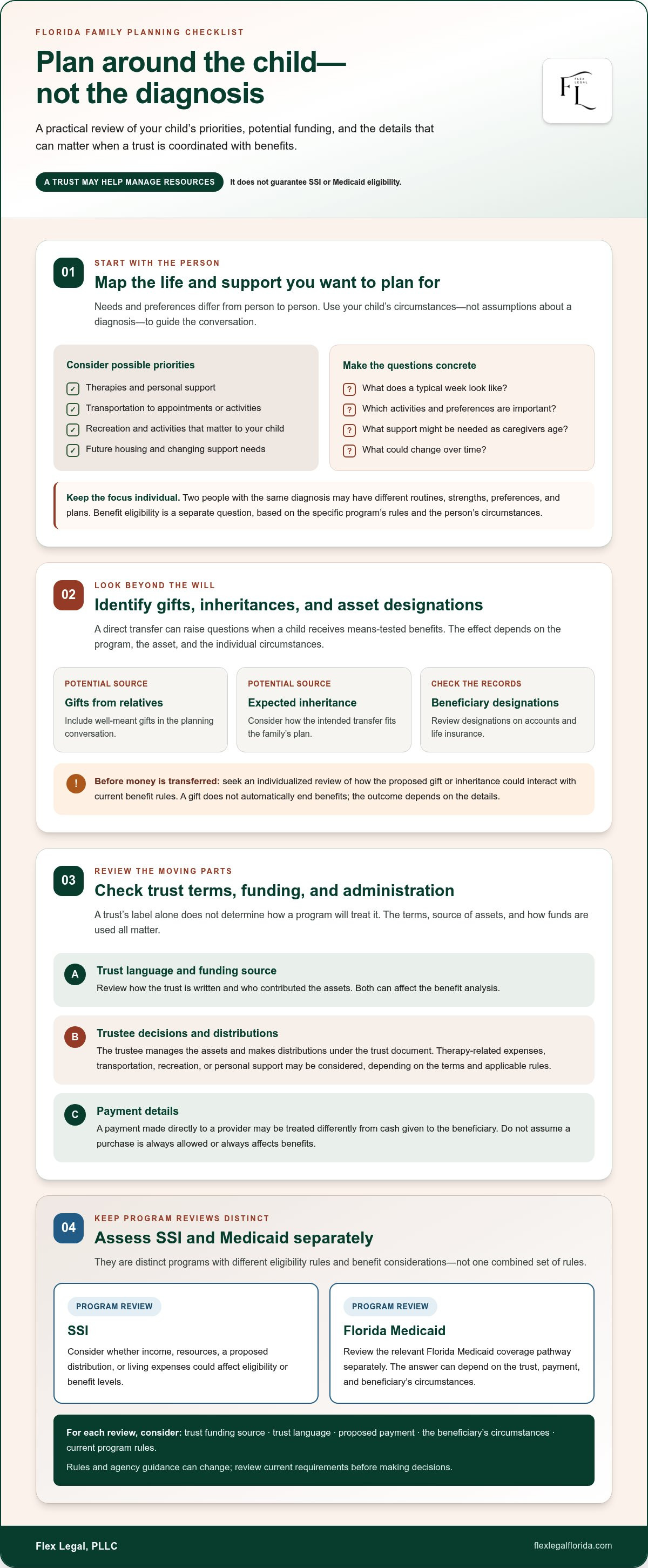
Begin with the life you hope to support, not a particular trust type. Consider what help your child may need now and what could change over time. Your family might want to plan for therapies, transportation to appointments or activities, recreation, personal support, or future housing. Listing these priorities can make discussions about how trust resources might supplement other care and support more specific.
Make the questions concrete: What does a typical week look like? Which activities matter to your child? What support might be needed as parents or caregivers age? Needs can change, and two people with the same diagnosis may have very different routines, strengths, preferences, and plans. Benefit eligibility is a separate question. It depends on the rules of the specific program and the person’s circumstances, so family goals shouldn’t be treated as proof of eligibility.
Good planning follows the person, not the diagnosis. This keeps the conversation centered on your child’s preferences, practical needs, and the resources your family may be able to provide.
Why gifts and inheritances deserve advance attention
A direct gift or inheritance can raise questions if your child receives means-tested benefits, because a program may consider the person’s resources or how funds are held. That doesn’t mean every gift automatically ends benefits. The effect depends on the program, the asset, and the individual circumstances. Before money is transferred, seek an individualized review of how the proposed gift could interact with current benefit rules.
Look beyond a parent’s will. Gifts from relatives, an expected inheritance, and beneficiary designations on accounts or life insurance can all direct assets to your child. A well-intended designation may produce a different result from the one your family planned. Include these details in the broader estate-planning conversation so trust planning, asset transfers, and your family’s intentions can be considered together.
How a Special Needs Trust Works Alongside SSI and Medicaid
A special needs trust is a legal arrangement that holds assets for a beneficiary and is managed by a trustee. The trustee handles the funds and makes distributions according to the trust document. For a family considering a special needs trust for down syndrome child, the goal may be to provide additional resources while coordinating with public benefits. A trust doesn’t guarantee benefit eligibility or a particular outcome.
Benefit analysis depends on several connected details: how the trust is written, who contributed the assets, how the trustee uses them, and the current rules of each program. Planning should aim to supplement support, not assume trust funds can replace services or benefits. A trust’s label alone doesn’t determine how a program will treat it. The terms, funding, and administration matter.
What the trustee controls and what the beneficiary receives
The trustee manages trust assets and decides whether to make distributions under the document’s terms. Depending on those terms, a trustee might consider paying for a therapy-related expense, transportation, recreation, or personal support. The beneficiary’s practical access to funds depends on how the trust is structured and on applicable program rules.
Payment details matter. A payment made directly to a provider may be treated differently from cash given to the beneficiary, and certain expenses can raise benefit questions. Don’t assume that a particular purchase is always allowed or always affects benefits. The trustee should understand the trust’s instructions and seek guidance when a proposed distribution could affect the beneficiary’s support.
How SSI and Medicaid questions require separate review
SSI and Medicaid are distinct programs, with different eligibility rules and benefit considerations. A trust that raises one question under SSI may require a separate analysis under the relevant Florida Medicaid coverage pathway. Review each program independently rather than treating “benefits” as one set of rules.
For each program, consider whether income, resources, a proposed distribution, or living expenses could affect eligibility or benefit levels. The answer can depend on the trust’s funding source, its language, the payment involved, and the beneficiary’s circumstances. Rules and agency guidance can change, so review current Social Security Administration guidance and Florida Medicaid requirements before making decisions or distributions.
Good administration is ongoing. Keep the trust document, funding records, distribution decisions, and relevant benefit information organized so the trustee can make informed choices and explain how funds were handled. When family circumstances or support needs change, revisit whether the plan still fits.
Coordinating trust terms with the rest of a Florida estate plan can help families align their intentions for future support and asset transfers. Florida special needs planning can provide a framework for reviewing those connected decisions.
First-Party, Third-Party, or Pooled Trust: Which Situation Fits?
A useful starting question is: whose money will fund the trust? A first-party trust may be considered for assets that already belong to the beneficiary. A third-party trust is generally funded by parents, relatives, or other people. A pooled trust is managed by a nonprofit and may offer another structure for certain situations. Each option has different legal and administrative considerations.
The source of the funds helps guide trust selection, but it doesn’t settle the decision on its own. Trust terms, benefit rules, the beneficiary’s circumstances, and the family’s goals also need review.
When the child already owns or receives assets
If an inheritance, settlement, or another asset is paid directly to the beneficiary, pause before transferring or spending it. A first-party trust may be relevant, but requirements can depend on the asset, the beneficiary’s circumstances, and current federal and Florida rules. Medicaid payback provisions and administration requirements need specific legal review. Don’t assume a trust can be created or funded in the same way for every situation.
Gather documents showing where the funds came from, who owns them, and whether a transfer or payment has already occurred. Acting before distributing or moving assets can give the family a clearer basis for evaluating options and potential effects on benefits.
When parents or relatives want to provide future support
Families planning to contribute their own assets may consider a third-party trust and coordinate it with wills, existing trusts, and beneficiary designations. Relatives also need clear instructions. A well-intended gift or account designation can direct funds to the beneficiary personally instead of following the family’s broader plan.
Review how a Florida revocable trust fits an estate plan alongside special needs planning. An individualized review can connect the intended funding source with the trust structure, estate documents, and current benefit rules.
A Practical Florida Planning Checklist for Parents and Caregivers
A useful plan starts with a clear picture of your child’s life today and the support you hope to make possible in the future. Use this checklist to organize information before drafting or reviewing a special needs trust for down syndrome child. The details can help connect trust decisions with benefit planning and the rest of your Florida estate plan.
1. Gather benefit records. Collect current benefit notices and other documents showing which programs your child receives or has applied for. Note questions about eligibility or reporting that need individual review.
2. Inventory assets and transfers. List accounts, property, existing trusts, and other relevant financial records. Include expected inheritances, family gifts, and beneficiary designations on accounts or policies, along with who currently owns each asset.
3. Collect existing estate documents. Gather wills, trust documents, powers of attorney, health care planning documents, and any papers that name a guardian or decision-maker. Record when they were created and whether they still reflect your intentions.
4. Describe your child’s priorities. Prepare a family-centered summary of preferences, routines, meaningful activities, goals, and support needs. Include useful information about communication and daily life, but limit sensitive medical details to what matters for planning.
5. Identify decision-makers. Consider who could serve as trustee and who might take over if that person can’t continue. Think about reliability, communication, recordkeeping, and willingness to handle responsibilities over time.
6. Document goals and review points. Write down what you hope resources will support and what questions remain. Plan to revisit the documents after major family changes, asset transfers, or shifts in your child’s circumstances.
Prepare for adulthood and changing needs
As your child approaches adulthood, consider which support, decision-making arrangements, benefits, and services may need review during the transition. Don’t assume a plan created earlier will automatically fit later circumstances. Florida rules and program requirements can depend on the situation, so review them in light of your child’s needs and current guidance. A transition conversation can also help identify which decisions your child can make independently and where support may be useful.
Help trustees and relatives understand the plan
A trustee needs practical information as well as legal instructions. Discuss how you prefer updates to be shared, what records should be maintained, and who should be contacted when questions arise. Relatives who may give money or name beneficiaries should understand the family’s intentions before taking action. Written family guidance can explain preferences and routines, but it doesn’t replace the trust document or change its terms.
For broader context, consider how family needs and future planning fit together. To organize your documents and goals into an individualized plan, plan your Florida special needs trust with legal guidance.
Plan a Special Needs Trust With Florida Legal Guidance
A trust is one part of a larger plan for your child’s future. Legal guidance can help connect the trust’s terms with who will fund it, how it fits with your other estate documents, and what current benefit rules may mean for your family. The plan should reflect your child’s circumstances and preferences, your family’s resources, and your goals for future support.
No trust can guarantee eligibility for SSI or Medicaid, protect every asset, or produce the same result for every family. Individualized planning helps identify the questions that matter in your situation and coordinate documents and funding intentions around them. Families in Palm Beach County can include special needs planning in West Palm Beach as part of that process.
Questions a Florida plan should resolve
Start with the practical decisions: who may contribute assets, who will manage the trust, and who could take over if the original trustee can’t serve. The plan should also address how a successor trustee is identified and how the trust relates to your will, revocable trust, beneficiary designations, and any guardianship planning. Review each connection rather than assuming the documents work together automatically.
Legal counsel can assess these choices against applicable federal and Florida requirements. That review is especially useful before changing account beneficiaries, transferring property, or relying on a trust to achieve a particular benefit or asset outcome.
What to bring to an individualized planning conversation
Bring current estate documents, benefit information, a list of assets and expected transfers, and questions about the support you hope to provide. A summary of your child’s preferences, routines, goals, and anticipated needs can make the conversation specific. Flex Legal, PLLC provides special needs planning within its Florida estate-planning practice, connecting trust decisions with the family’s broader plan.
If the trust is one part of a wider review, consider how it fits with related estate-planning decisions. The key is to make decisions with the full picture in view, including family roles, future funding, and the current rules that apply.
Make Your Family’s Next Step Clear
You don’t need to have every future decision settled before you begin. Start by identifying the questions that feel most urgent, such as who should help manage resources or how future gifts fit your family’s intentions. A focused conversation can turn those questions into practical next steps.
For a special needs trust for down syndrome child, the most useful starting point is your child’s actual circumstances and your family’s priorities. Flex Legal makes special needs planning its primary service and brings that focus to its Florida estate planning and probate practice serving West Palm Beach. The goal is thoughtful coordination, not a promise that any trust will produce a particular benefit or legal outcome.
When you’re ready, discuss a plan built around your family’s needs with Flex Legal. You can take the process one decision at a time, with guidance shaped around the future you want to support.
Frequently Asked Questions
Does a child with Down syndrome automatically qualify for SSI or Medicaid?
No. A Down syndrome diagnosis alone doesn’t establish eligibility for either program. SSI considers whether a person meets its disability criteria as well as applicable income and resource rules. Medicaid eligibility depends on the specific coverage pathway and the person’s circumstances. Keep benefit notices and application records together, and review eligibility individually rather than relying on a diagnosis or trust plan to determine the outcome.
Can relatives leave money directly to a child who has a special needs trust?
They can, but a direct gift may raise benefit questions and may not follow the family’s intended plan. If relatives want funds managed under a trust, the gift or beneficiary designation generally needs to be directed appropriately under the trust’s terms. Give relatives clear written instructions before they make a transfer or update an account. Review the proposed arrangement first, especially if the child receives needs-based benefits.
What happens if a child with Down syndrome receives an inheritance directly?
A direct inheritance becomes an asset belonging to the beneficiary and may affect eligibility for means-tested benefits, depending on program rules and the person’s situation. Don’t spend, transfer, or retitle inherited funds without first understanding the options and potential consequences. Gather the will or account records, inheritance documents, and current benefit information. Prompt legal review can help the family understand available steps without assuming benefits will automatically end.
Can a parent serve as trustee of a special needs trust in Florida?
Often, a parent can be named trustee, subject to the trust’s terms and applicable requirements. The role involves managing trust property, following the document, keeping records, and making decisions in the beneficiary’s interests. Parents should also consider who could step in if they become unable to serve. Naming a successor and planning for clear communication can support continuity as family circumstances change.
Does a special needs trust affect SSI or Medicaid eligibility?
It can affect how assets or payments are reviewed, but the trust’s existence doesn’t automatically preserve or end eligibility. For a special needs trust for down syndrome child, the funding source, document terms, distributions, and specific benefit program all matter. SSI and Medicaid have separate rules, so review each separately using current Social Security Administration and Florida Medicaid guidance before funding the trust or making distributions.
Can a special needs trust pay for housing or personal expenses?
Possibly, depending on the trust terms and how the payment is made, but housing-related support can raise SSI questions. For example, paying a landlord directly may be treated differently from giving the beneficiary cash, and any impact on SSI may depend on current rules. Personal expenses also need case-by-case review. A trustee should consider the proposed payment and its potential effects on benefits before distributing funds.
What happens to first-party special needs trust funds after the beneficiary dies?
Remaining funds in a first-party trust are generally subject to Medicaid reimbursement under the trust’s payback terms, up to the amount Medicaid paid for the beneficiary’s care. Any balance after that is handled according to the trust document and applicable law. The exact outcome depends on the trust and the benefits involved. Families should understand these terms before funding the trust and keep the document available for future administration.


Comments