
Florida Asset Protection for Singles: A Practical Guide

Florida asset protection for single person planning starts with understanding which rules apply to each asset, not choosing one tool and expecting it to cover everything. A trust isn’t a universal shield from creditors. That can feel unsettling when a lawsuit or creditor claim could put savings, a home, or business interests at risk.
Florida law provides protections for certain assets, while other planning tools have important limits. Because a single person can’t use tenancy by the entirety, it’s especially important to understand how the available options fit your circumstances. A revocable trust, for example, can help with estate planning, but generally doesn’t shield your assets from creditors.
This guide explains which Florida protections may apply to your home, retirement accounts, income, and personal property. It compares trusts, LLCs, and insurance so you can see the role and limits of each. The goal is to help you consider a coordinated, lawful plan before a claim arises and identify what to discuss with counsel based on your assets and priorities.
Table of Contents
Florida Asset Protection for a Single Person: Start With Your Risks
Florida Asset Protection Rules: Understand What Each Asset May Qualify For
Trust, LLC, Insurance, or Exemptions: Compare Florida Protection Options
Build a Florida Asset-Protection Plan: A Practical Preparation Checklist
Personalized Florida Asset Protection for a Single Person: Plan Your Next Steps
Florida Asset Protection for a Single Person: Start With Your Risks
Asset protection works best when it starts with your actual risks, not a preselected trust or business structure. Asset protection is lawful advance planning to manage exposure to future claims, not concealing assets or using transfers to defeat creditors. Planning must reflect Florida law and your circumstances. No structure can guarantee that every asset will be protected from every claim or legal outcome.
Which risks matter most when you plan alone?
Start by listing what you own, what you owe, and who may depend on you. Include your home and other property, savings and investments, business interests, personal debts, and any professional or business exposure. Consider whether you support a child, parent, or another person, even if they aren’t legally your dependent. Those responsibilities may affect your insurance needs, beneficiary choices, and estate plans.
Being unmarried can also change which ownership options are available. Tenancy by the entirety, for example, is a form of ownership reserved for married couples, so a single person can’t use its protections. That doesn’t mean every unmarried person has the same needs. Your title, beneficiaries, dependents, and liabilities still shape which options are worth examining.
Separate your concerns by purpose. A lawsuit or creditor claim involves exposure during your lifetime. Long-term-care planning raises questions about future care needs and their financial effect. Incapacity planning focuses on who can manage finances or make health decisions if you can’t. Estate-transfer planning addresses who receives property after death. A general Homestead Exemption overview can introduce the concept, but it doesn’t explain how Florida’s rules apply to your property.
What asset protection can and cannot promise
Florida asset protection for single person planning is prospective and fact-specific. Review your arrangements before a dispute develops, and have Florida counsel evaluate how current laws apply to your assets and goals. Don’t transfer or retitle property to frustrate a known or pending creditor claim. Such actions can create serious legal problems rather than reliable protection.
Different tools address different needs. Insurance may help manage covered losses, but its scope depends on the policy. Legal structures can affect ownership and exposure, but they have limits and must be established and maintained appropriately. Wills and trusts can support management and transfer goals; estate documents alone don’t automatically shield assets from creditors. A coordinated plan starts by identifying your main risks, then matching each concern with an appropriate tool.
Florida Asset Protection Rules: Understand What Each Asset May Qualify For
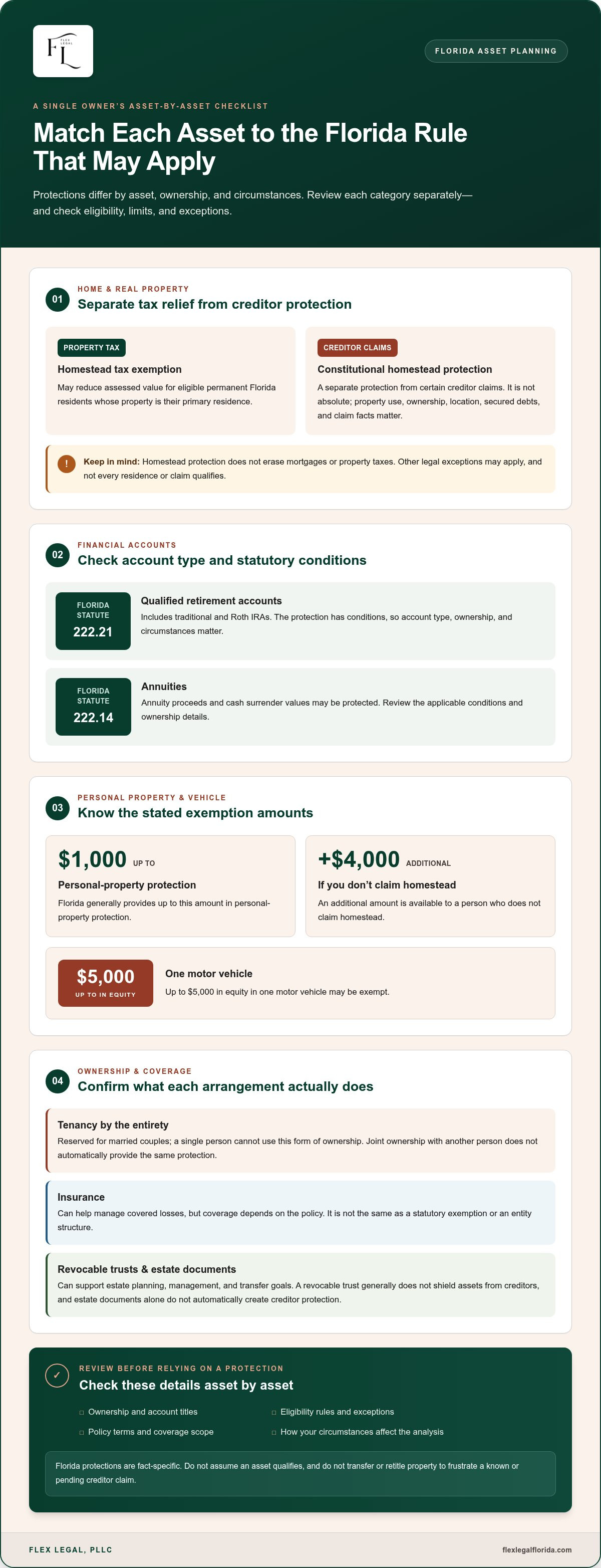
Florida doesn’t protect every asset in the same way. A home, retirement account, insurance policy, and vehicle may each be subject to different rules. Some protections come from state law and apply to qualifying assets; others depend on how an asset is owned, the terms of a policy, or a legal structure. Assess asset protection one asset at a time because each category has its own eligibility rules, limits, and exceptions.
How Florida homestead and exemption rules may affect you
Florida’s homestead rules involve two concepts that are easy to confuse: property-tax exemptions and protection from certain creditors. The state’s homestead property-tax exemption may reduce assessed value for eligible permanent Florida residents whose property is their primary residence. The Florida Homestead Exemption page explains tax eligibility and benefits. This tax exemption is distinct from the Florida Constitution’s homestead protections against certain creditor claims.
Creditor protection isn’t absolute. The property’s use, ownership, location, debts secured by it, and the facts of a claim can affect the analysis. Mortgages and property taxes, for example, aren’t erased by homestead protection, and other legal exceptions may apply. Don’t assume that every residence or claim qualifies. Have the rules assessed in light of your particular home and circumstances.
Why ownership and marital status change the analysis
Tenancy by the entirety is an ownership form for married spouses, not a protection available to a single owner. If you own property individually, the analysis turns on the rules for that asset and its title. Joint ownership with another person also doesn’t automatically create the same protections as tenancy by the entirety. Review deeds and account titles carefully; a label such as “joint” doesn’t settle the legal result.
Florida law provides specific protections for some financial assets. Qualified retirement accounts, including traditional and Roth IRAs, receive protection under Florida Statute 222.21. Annuity proceeds and cash surrender values may also be protected under Statute 222.14. These rules have conditions, so account type, ownership, and circumstances matter.
Other exemptions are more limited. Florida generally provides up to $1,000 in personal-property protection, with an additional $4,000 available to a person who doesn’t claim homestead. Up to $5,000 in equity in one motor vehicle may also be exempt. Insurance is different: it can help manage covered losses under the policy, but it isn’t the same as a statutory exemption or an entity structure.
For a single person, Florida asset protection for single person planning begins by matching each asset to the rule that may apply, then checking limitations and exceptions. A legal review can connect those rules with your ownership and estate-planning goals. Flex Legal provides individualized asset-protection planning in West Palm Beach.
Trust, LLC, Insurance, or Exemptions: Compare Florida Protection Options
These tools serve different purposes. A Florida exemption may protect a qualifying asset under state law. Insurance can help manage covered losses. An LLC may separate certain business or investment liabilities from personal affairs when properly structured and maintained. A revocable trust and estate documents can support management and transfer goals, but they don’t automatically shield assets from creditors.
When insurance, an LLC, or a trust serves a different purpose
Think of insurance as risk transfer, not an exemption. A policy may respond to covered claims, but its terms and current coverage determine what it can do. An LLC may be relevant for a business or investment property; it isn’t a blanket shield for personal liabilities. Florida’s charging-order rules differ for multi-member and single-member LLCs, so ownership and structure deserve careful review.
A revocable living trust can help organize management and the transfer of assets, but transferring property into one doesn’t automatically protect it from creditors. For more on its estate-planning role, read this guide to revocable trusts in West Palm Beach.
Which approaches deserve careful legal review?
Each option brings different costs and administrative responsibilities. Insurance requires attention to policy terms and coverage updates. An LLC requires appropriate formation, records, and operation. Trusts and estate documents need to reflect your goals and the assets involved. A transfer, a change in ownership, or an existing creditor claim can alter the analysis, so timing and details matter.
For Florida asset protection for single person planning, the useful question isn’t “Which one tool protects everything?” It’s “Which combination fits my assets, risks, and goals?” A tailored review can distinguish legal exemptions from voluntary structures and coordinate protection planning with estate documents, without treating any option as a guarantee.
Build a Florida Asset-Protection Plan: A Practical Preparation Checklist
A useful plan starts with a clear picture of your finances and priorities. Gather current records before deciding whether an exemption, insurance, an entity, or an estate document may fit. This preparation makes a legal review more focused, especially when your assets, responsibilities, or goals have changed.
What to organize before reviewing your options
Inventory assets and debts. List real estate, accounts, investments, vehicles, business interests, rental property, and personal debts. Note approximate values and any loans secured by an asset.
Identify your risks. Record potential professional or business exposure, existing disputes, caregiving responsibilities, and anyone who relies on your financial support.
Review ownership and beneficiaries. Check how each asset is titled and who is named to receive it. A beneficiary designation or joint title may affect how an asset transfers, so use the records rather than relying on memory.
Assess insurance and legal documents. Gather current policies, entity records, deeds, account statements, wills, trusts, and powers of attorney. Note coverage limits, exclusions, and documents that may need updating.
Set your priorities. Decide what matters most, such as managing a business risk, planning for incapacity, supporting a dependent, or directing assets after death.
Planning alone doesn’t mean planning without support. A durable power of attorney can address who may handle financial matters if you become incapacitated. Review how that document fits with the rest of your plan in this Florida durable power of attorney guide.
How to turn the inventory into a useful plan
Match each concern to a possible tool, then write down its purpose and limits. For example, insurance may address covered losses, while an estate document may support decision-making or asset transfers. A business or rental-property interest may call for a closer look at ownership and entity records. This step-by-step approach keeps Florida asset protection for single person planning grounded in your circumstances rather than a generic checklist of products.
If you’ve received a creditor demand, lawsuit notice, or other claim, get timely legal advice before changing ownership or transferring property. Don’t move assets to frustrate a known or pending claim; the timing and reason for a transfer can matter legally. Proactive planning is different from trying to place assets beyond a creditor’s reach after a dispute has begun.
Once your records and priorities are in order, explore asset-protection planning in West Palm Beach for guidance tailored to your assets, risks, and estate-planning needs.
Personalized Florida Asset Protection for a Single Person: Plan Your Next Steps
The right plan connects the pieces. A legal review can consider how your assets are titled, which Florida exemptions may apply, what liabilities you face, and how your estate documents fit together. That broader view can help identify gaps, such as an asset with no clear transfer plan or a business interest that deserves a closer look.
What an individualized review should consider
Bring together your property and account records, ownership documents, existing obligations, insurance policies, and estate-planning documents. Then consider your goals: preserving a home, managing business exposure, supporting a dependent, choosing who can act for you during incapacity, or directing how property passes after death. Priorities vary, especially for someone planning without a spouse.
Florida asset protection for single person planning isn’t a one-size-fits-all product. Flex Legal’s asset-protection planning is tailored to your assets, goals, and circumstances. Counsel can explain where Florida law may offer protection, where additional planning may be worth considering, and what tradeoffs or ongoing responsibilities come with a particular approach.
Protection during life and transfer after death are related but distinct. A will can direct the distribution of property, while a revocable living trust may support management and transfer goals. Neither automatically protects assets from creditors. Incapacity documents, such as a durable power of attorney, address who may manage financial matters if you can’t. For a broader look at coordinating these documents, see this West Palm Beach estate planning guide.
When to move from research to legal planning
Consider reviewing your plan after a major change, such as acquiring significant property, starting or selling a business, taking on new responsibilities for a dependent, or moving to Florida. A change in circumstances can affect ownership, beneficiaries, and which legal tools still fit your goals.
If a creditor demand, lawsuit, or threatened claim already exists, seek prompt, case-specific legal advice before transferring or retitling assets. Timing matters, and a plan designed for future risks is different from an attempt to frustrate an existing claim. A careful review can clarify your options and limitations in plain language.
For individualized guidance in West Palm Beach, discuss your Florida asset-protection plan with Flex Legal. A clear next step can help align asset ownership, risk planning, and estate documents with the life you’re building.
Make Your Next Planning Step Count
Effective Florida asset protection for single person planning starts with your actual assets, ownership, and risks. Florida exemptions may apply to specific asset categories, while insurance, LLCs, and estate documents serve different purposes. No single tool protects everything, and a revocable trust doesn’t automatically shield assets from creditors.
A practical next step is to organize your deeds, account and insurance records, entity documents, and estate papers. Review them together to see how asset protection can work alongside plans for incapacity, dependents, and property transfers. Acting before a claim arises gives you more room to consider lawful options that fit your goals.
Flex Legal provides asset-protection planning alongside estate-planning services in West Palm Beach. Discuss a Florida asset-protection plan tailored to your goals and take a clear, proactive step toward protecting what matters to you.
Frequently Asked Questions
What asset-protection options does a single person have in Florida?
Options may include applicable Florida exemptions, appropriate insurance, entity planning for qualifying business or investment assets, and coordinated estate documents. The right mix depends on what you own, how it’s titled, your liabilities, and your goals. Florida asset protection for single person planning is lawful preparation for future risks, not hiding assets or defeating creditors. No tool guarantees immunity from every claim, so review the options and their limits under current law.
Is a revocable living trust enough to protect my assets from creditors in Florida?
No. A revocable living trust can support asset management and distribution, but generally shouldn’t be treated as an automatic creditor-protection device. Its effect depends on the trust terms, who owns and controls the assets, applicable law, and the facts involved. Probate planning and protection from claims during your lifetime are different goals. Before retitling property or moving assets into a trust, get legal advice about the consequences.
Can a single person use tenancy by the entirety in Florida?
Generally, tenancy by the entirety is an ownership form for married spouses, so it isn’t ordinarily available to someone who owns property alone. That general rule doesn’t resolve every ownership situation. The title, the owners’ marital status, and current Florida law all matter. Don’t assume jointly titled property receives this form of protection. Have the deed and circumstances reviewed before relying on ownership to address creditor risk.
Does Florida homestead protect a single person’s home from creditors?
Florida homestead protections may apply to a qualifying home, but they don’t assure that every property is protected from every claim. Eligibility and the result can depend on how you use and own the property, the type of debt, and other circumstances. Exceptions and legal limits apply. A review of the current deed and relevant facts under Florida constitutional and statutory law can help clarify how the rules may affect your home.
Can I move assets into an LLC to protect them from a lawsuit?
An LLC may be relevant to certain business or investment assets, but it isn’t a universal shield for personal assets or every claim. The analysis can depend on ownership, how the entity operates, whether required formalities are maintained, insurance, and applicable law. Don’t transfer assets to evade an existing or anticipated claim. If you’re considering restructuring ownership, get case-specific legal advice first, especially if a dispute or creditor demand is already developing.
When should a single person create an asset-protection plan in Florida?
Proactive planning is generally more useful before a lawsuit, creditor demand, or other claim arises. Review your plan after a major change, such as acquiring property, starting a business, changing family circumstances, or moving to Florida. These events can affect ownership, responsibilities, and goals. If a claim already exists or is threatened, seek prompt, case-specific legal guidance. Avoid last-minute transfers or restructuring without advice about the legal consequences.
Do I need a will if I have an asset-protection plan in Florida?
A will may still be important because asset protection and estate distribution address related but distinct goals. It can document your wishes and address matters that beneficiary designations or other arrangements may not cover. Its effect depends on your overall plan and Florida law. An LLC or trust doesn’t automatically replace every estate document. A coordinated review of your will, trust, asset ownership, and beneficiaries can help align your plans in West Palm Beach.


Comments