
Estate Planning to Protect Special Needs Benefits: A Florida Guide

What if a well-intended inheritance made it harder for your loved one to keep needs-based benefits? The answer often depends on who owns the assets and how they’re managed. Estate planning to protect special needs benefits means coordinating gifts, inheritances, trusts, and decision-making documents, rather than relying on one document to do everything.
If you’re concerned that a direct gift could affect eligibility, planning ahead matters. The rules can depend on the benefit, the beneficiary’s resources, and how a trust is funded and administered. A plan should fit your family’s circumstances, and no single strategy preserves eligibility in every case.
This Florida guide explains how asset ownership connects to needs-based benefits and why relatives’ estate plans matter, too. You’ll learn how to coordinate inheritances and future decisions, what to review across your estate documents, and which questions to address with a Florida special-needs planning attorney. A coordinated plan can make your intentions clearer and help reduce the risk of an unintended disruption.
Table of Contents
How estate planning can protect special needs benefits in Florida
Build a coordinated estate plan around your loved one’s needs
Compare planning tools for protecting special needs benefits
Follow these steps to put a benefits-conscious estate plan in place
Get Florida special-needs planning support tailored to your family
How estate planning can protect special needs benefits in Florida
Families want to provide lasting support for a loved one, not create a benefits problem by leaving money in the wrong way. Estate planning to protect special needs benefits starts with understanding how each program treats income, assets, and personal eligibility requirements. Needs-based benefits are public programs for people who meet financial and other program-specific criteria. Because the details differ, a plan that considers one benefit alone may miss another.
Supplemental Security Income (SSI) is a federal income program. Medicaid is a healthcare program administered under federal law and state-specific rules, including Florida’s. The programs aren’t interchangeable, and an inheritance or gift can affect each differently. Special-needs planning coordinates asset ownership, benefit rules, and future decisions to support a person with a disability. A Special Needs Trust is one tool families may consider, but no trust or strategy can guarantee continued eligibility.
Which benefits may be affected by an inheritance or gift?
A direct cash gift or inheritance can change the resources a beneficiary owns and may affect SSI eligibility. How and when funds are counted depends on program rules and the person’s circumstances. Medicaid has its own eligibility tests, which can vary by coverage category and how assets are held. Don’t assume that an asset treated one way for SSI will receive the same treatment under Florida Medicaid. Thresholds, exclusions, and trust rules can change, so verify current requirements before acting.
Why does asset ownership matter in a Florida estate plan?
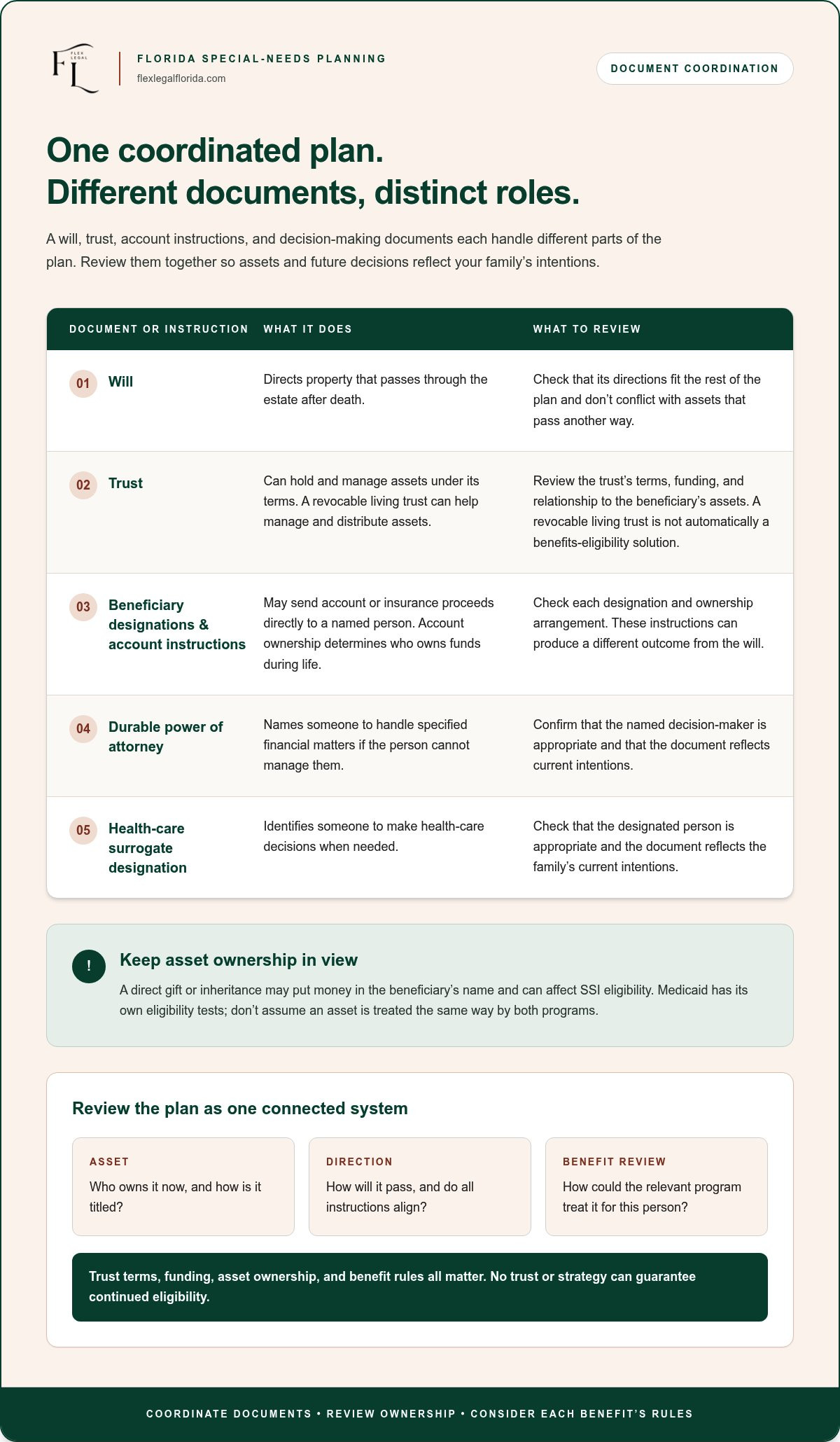
A will can direct property after death, while beneficiary designations on accounts or insurance policies may send assets directly to a named person. Account ownership also determines who owns funds during life. These instructions can produce different outcomes. For example, naming a loved one directly may put an inheritance in their name, while a coordinated plan may direct it elsewhere. The intended recipient, timing, and type of asset all matter.
Review the documents and account instructions together rather than assuming one controls every asset. Florida Medicaid rules also require careful attention, since an asset’s effect can depend on the relevant program and the beneficiary’s circumstances. A plan tailored to the person and family can help reduce avoidable risks while keeping support, benefit eligibility, and decision-making in view.
Build a coordinated estate plan around your loved one’s needs
A coordinated plan starts with a clear picture of your loved one’s life today and the changes the future may bring. List current benefits, support needs, assets they already own, and likely future funds, such as an inheritance, settlement, or family gift. Note who owns each asset and how it is titled or designated to pass. This inventory helps distinguish the beneficiary’s assets from funds relatives may leave for their benefit, a distinction that can shape which planning options deserve closer review.
Estate planning to protect special needs benefits isn’t a single document or a one-size-fits-all trust. A revocable living trust can help manage and distribute assets, but it isn’t automatically a solution for benefits eligibility. Its terms, funding, and relationship to the beneficiary’s assets matter. The Special Needs Alliance’s overview of special needs trusts explains terms such as trustee and beneficiary, along with different trust structures. For help connecting these decisions to your family’s circumstances, see this Florida special needs planning attorney guide.
How should families plan for gifts and inheritances?
Review wills, payable-on-death instructions, and beneficiary designations for accounts or policies. Any of these may direct funds straight to your loved one, even if the rest of the estate plan takes a different approach. Let relatives know how gifts and inheritances should fit the family’s established plan, and share the relevant instructions before they make a gift or update an account designation. Before changing a designation or distributing an asset, seek individualized legal and benefits review. A well-meant gift can have consequences that depend on the beneficiary’s situation and the program involved.
Which estate documents need to work together?
Each document has a distinct role. A will directs assets that pass through the estate; a trust can hold and manage assets under its terms. A durable power of attorney names someone to handle specified financial matters if the person can’t manage them, while a health-care surrogate designation identifies someone to make health-care decisions when needed. Check that the documents name appropriate decision-makers and reflect the family’s current intentions. For broader context on trust planning, read the Florida revocable trust guide.
Review the documents as a connected system, not as separate forms. An individualized plan can align the beneficiary’s needs with asset ownership, future gifts, and decision-making. Families in West Palm Beach can explore special needs planning with Flex Legal as part of that coordinated review.
Compare planning tools for protecting special needs benefits
The right approach depends partly on who owns the money, where it will come from, and what support your loved one needs. A tool that may fit an inheritance from a parent may not fit funds the beneficiary already owns. Use this comparison to identify the questions to address, then review the current SSI and Florida Medicaid rules that apply. For an overview of trust types and their uses, see this Florida Special Needs Trust guide.
When might third-party and first-party trust planning differ?
The key distinction is the source of the funds. A third-party trust is funded with assets belonging to someone other than the beneficiary, often through a parent’s or relative’s estate plan. A first-party trust holds assets that belong to the beneficiary and must meet specific legal requirements, which may include a Medicaid payback provision. Because the funding source, terms, and administration matter, don’t treat these structures as interchangeable.
How can an ABLE account fit into the broader plan?
An ABLE account can give an eligible account owner a way to save for qualified disability expenses, but it doesn’t replace every trust strategy. Families may consider it alongside a trust, expected expenses, and the benefits involved. Confirm current federal and Florida requirements before contributing or relying on a particular benefit treatment. Thoughtful estate planning to protect special needs benefits weighs each option against the beneficiary’s circumstances rather than assuming one tool works for everyone. Families in West Palm Beach can discuss a tailored plan through special needs planning.
Follow these steps to put a benefits-conscious estate plan in place
A practical workflow turns estate planning to protect special needs benefits into manageable tasks. Gather current information first, then review how benefits, assets, documents, and family instructions fit together. Keep the plan adaptable: a new inheritance, settlement, or change in care can shift which questions need attention.
Identify current benefits. Collect recent benefit notices and note which programs the beneficiary receives. Record any upcoming reviews or requests for information.
Inventory assets and expected funds. List accounts and property, who owns each, how it is held, and any anticipated gifts, inheritances, or settlements. Include recurring expenses and the support they help cover.
Gather and review documents. Assemble wills, trusts, beneficiary designations, account instructions, and relevant decision-making documents. Compare where each asset is directed and look for conflicting instructions or outdated information.
Coordinate instructions with family. Make sure relatives understand the established plan before leaving a gift or naming the beneficiary directly on an account. Share practical guidance so well-intended decisions don’t work against the plan.
Set a review routine. Revisit the plan after significant changes and check it periodically against current program rules.
What information should families gather before planning?
Prepare benefit notices, account statements showing ownership, existing estate documents, and details of expected financial gifts. Also write down the beneficiary’s support needs, trusted decision-makers, and regular expenses. Keep sensitive records secure, and share relevant information through appropriate professional channels rather than distributing personal details broadly.
When should an estate plan be reviewed or updated?
Request a review after a benefits notice or eligibility change, inheritance, settlement, marriage, move, or shift in caregiving. These events can affect the family’s plans or call for fresh benefits and legal analysis. Check that wills, trusts, beneficiary designations, and account instructions still work together. Don’t rely on thresholds or assumptions from an old plan; verify the rules that apply now. For an overview of Florida Medicaid eligibility, see this Florida guide to protecting Medicaid eligibility.
There’s no universal timeline or guaranteed outcome. The right steps depend on the beneficiary’s circumstances, current law, and decisions made by the applicable benefit programs. For help coordinating the details, plan a special-needs estate review with Flex Legal.
Get Florida special-needs planning support tailored to your family
You’ve identified the key pieces: benefit information, assets, family instructions, and estate documents. Bring them together for a planning conversation so the legal review can account for the beneficiary’s circumstances and your family’s goals. This provides a practical starting point and helps identify where documents need to work together.
What should a family expect from a planning conversation?
Expect to discuss the beneficiary’s current benefits, support needs, assets, likely gifts or inheritances, and the family’s priorities. Current wills, trusts, beneficiary designations, and decision-making documents can reveal gaps or conflicting instructions. The legal options depend on the facts and the rules that apply to the specific benefits and assets involved. A tailored plan can coordinate special needs planning with trusts and related estate documents without promising a particular eligibility outcome.
Preparation can make the conversation more useful. Gather benefit notices, account ownership details, and existing estate documents, then note questions about future support or who should make financial and health-care decisions. You don’t need to have every answer in advance. The goal is to understand your family’s priorities and develop an adaptable path forward.
How can West Palm Beach families take the next step?
Flex Legal serves families in West Palm Beach with special-needs and estate-planning support. Its planning can bring trusts, wills, and incapacity documents into the broader picture, shaped around the beneficiary and family circumstances. To learn more about the local approach, explore this guide to special needs planning in West Palm Beach.
Use the information you’ve gathered to discuss estate planning to protect special needs benefits in light of current applicable rules. A plan is not a one-time task: revisit it when benefits, assets, caregiving, or family circumstances change, and review it as relevant program rules are updated. Connect with Flex Legal about special-needs estate planning to discuss a plan tailored to your family.
Take the next step toward a coordinated plan
Supporting a loved one starts with aligning the details. The right plan considers who owns each asset, how future gifts are directed, and whether wills, trusts, and decision-making documents reflect the same intentions. Because SSI and Florida Medicaid follow different rules, estate planning to protect special needs benefits should be tailored to the beneficiary’s circumstances and reviewed as those circumstances or applicable rules change.
For families in West Palm Beach, Flex Legal focuses on special needs planning as part of a broader estate plan. The firm can coordinate that planning with related trusts, wills, and incapacity-planning documents, helping families make informed decisions without assuming any strategy guarantees a particular benefits outcome.
Bring current benefit information, asset details, and existing documents together as a starting point. Then explore special needs planning with Flex Legal and discuss an approach shaped around your family’s goals. A thoughtful plan can make the path forward clearer and give your loved one’s support a stronger foundation.
Frequently Asked Questions
Can an inheritance affect SSI or Medicaid eligibility?
Yes, an inheritance can affect eligibility, depending on the program, the assets, and how they’re received. For 2026, SSI’s resource limit is $2,000 for an individual, but whether an asset counts depends on applicable rules and exclusions. Florida Medicaid has different requirements that vary by coverage category. Before accepting, spending, or transferring an inheritance, review the beneficiary’s specific benefits and circumstances with a qualified professional.
Does a special needs trust automatically protect public benefits?
No. A trust doesn’t automatically preserve eligibility for SSI or Medicaid. Its treatment can depend on who contributed the funds, the trust’s terms, how it’s administered, and the benefit program involved. A trustee’s distributions may also have consequences under program rules. Special-needs planning can help coordinate the trust with the beneficiary’s needs and other estate documents, but no trust guarantees a particular benefits outcome.
What is the difference between a first-party and a third-party special needs trust?
The main difference is whose money funds the trust. A third-party trust holds assets belonging to someone other than the beneficiary, such as a parent or relative. A first-party trust holds assets that belong to the beneficiary, such as funds from a settlement. First-party trusts have specific legal requirements and generally must address Medicaid repayment from remaining assets after the beneficiary’s death. Review the proposed trust under current rules.
Can a person with a disability receive money directly from a family member?
Yes, but a direct gift may affect needs-based benefits if it becomes an asset owned by the recipient. The effect depends on the benefit, the amount, timing, and applicable rules. Before giving money, family members should coordinate with the beneficiary’s established plan and review the potential consequences. If the gift has already been made, avoid moving or spending the funds based on assumptions. Get individualized legal and benefits guidance.
Can an ABLE account be used alongside a special needs trust?
Yes. An ABLE account and a special needs trust can serve different planning purposes, though neither fits every situation. In 2026, eligibility generally requires disability onset before age 46; the annual contribution limit is $20,000, and up to $100,000 is excluded from SSI’s resource limit. ABLE funds must be used for qualified disability expenses. Review current eligibility, contribution, expense, and benefit rules alongside the trust and expected costs.
What happens if someone leaves an inheritance directly to a person receiving benefits?
A direct inheritance may become an asset owned by the beneficiary and could affect SSI or Medicaid eligibility. The result depends on the program’s rules, the beneficiary’s circumstances, and the type of inherited asset. Review the will, account beneficiary designations, and any payable-on-death instructions to understand where the funds will go. If an inheritance is already received or expected, seek timely guidance before transferring, spending, or retitling the assets.
How often should a Florida special-needs estate plan be reviewed?
Review the plan after a benefits notice or eligibility change, inheritance, settlement, marriage, move, or change in caregiving. Also revisit it periodically to confirm that wills, trusts, beneficiary designations, and account instructions remain aligned with family intentions and current rules. For West Palm Beach families, estate planning to protect special needs benefits should adapt as circumstances change. A review can identify issues, but it can’t guarantee a program’s eligibility decision.


Comments