
Selling Real Property in Florida Probate: A Step-by-Step Guide

Who can legally sign the papers may matter more than how quickly you find a buyer. Selling real property in Florida probate starts with establishing authority. A will, homestead status, or court requirements can affect who must approve the sale and when it can move forward. Before listing the property or accepting an offer, identify who owns it, who has authority to act, and whether anyone else must participate.
This guide explains how to identify who has authority to sell, what a will’s power-of-sale language may mean, and why homestead property can require additional steps. You’ll also learn how court approval, title review, and closing fit together, and what to gather before a transaction advances. For families handling an estate in Palm Beach County, local filing procedures are part of the process.
With the legal sequence in view, you can make informed decisions before committing the estate to a sale. Flex Legal, PLLC, based in West Palm Beach, helps families with probate administration and the authority and estate issues that can affect a property sale.
Table of Contents
Before selling real property in Florida probate, establish who has authority
How a Florida probate real estate sale moves from authority to closing
As-is sale or property preparation: compare options without skipping legal review
A Florida probate property sale checklist for Palm Beach County families
Get legal guidance for selling real property in Florida probate
Before selling real property in Florida probate, establish who has authority
A probate property sale requires authority grounded in the estate and applicable Florida procedure. Before listing a home or signing an offer, separate three questions: who owns the property, who has possession, and who has legal power to sell it. A relative may live in the home, and a beneficiary may expect to inherit it, but neither fact alone gives that person authority to sign for the estate.
Probate is a court-supervised process for handling a deceased person’s estate. Start with the case record and locate the will, the order appointing a personal representative, and the Letters of Administration documenting the representative’s appointment and authority. The will’s terms, the estate’s status, and any court orders can shape the sale process. Under Florida Statutes § 733.613, a personal representative may sell real property without a separate court order when the will grants a power of sale. If there is no will or it does not grant that power, a court order is required.
Who can authorize a sale during Florida probate?
The personal representative administers estate assets but must act within the authority granted by Florida law, the will, and applicable court orders. A person named as executor in a will is only nominated until the court appoints that person. The nomination alone does not establish authority to sign a contract or deed for the estate.
Beneficiaries also don’t automatically have power to list or convey property held by the estate. Before moving forward, match the proposed signer to the appointment documents and confirm whether the will or a court order permits the sale. In Florida probate, the appointed personal representative may act for the estate only within the authority provided by the will, Florida law, and any required court order. See Fla. Stat. § 733.613.
Why a Florida homestead needs separate attention
Homestead status can affect how a home passes at death and who must participate in a sale. Don’t assume the personal representative alone can sell the property, or that a beneficiary can sell it independently. Review the home’s ownership and use, who occupied it, the will’s provisions, and the family circumstances.
Florida’s homestead protections appear in Article X, Section 4 of the Florida Constitution, with related inheritance rules addressed in Florida Statutes §§ 732.401 and 732.4015. Review these provisions against current law and the specific estate before treating the home as an ordinary probate asset. Clarifying authority at the outset helps prevent avoidable problems later in the transaction.
How a Florida probate real estate sale moves from authority to closing
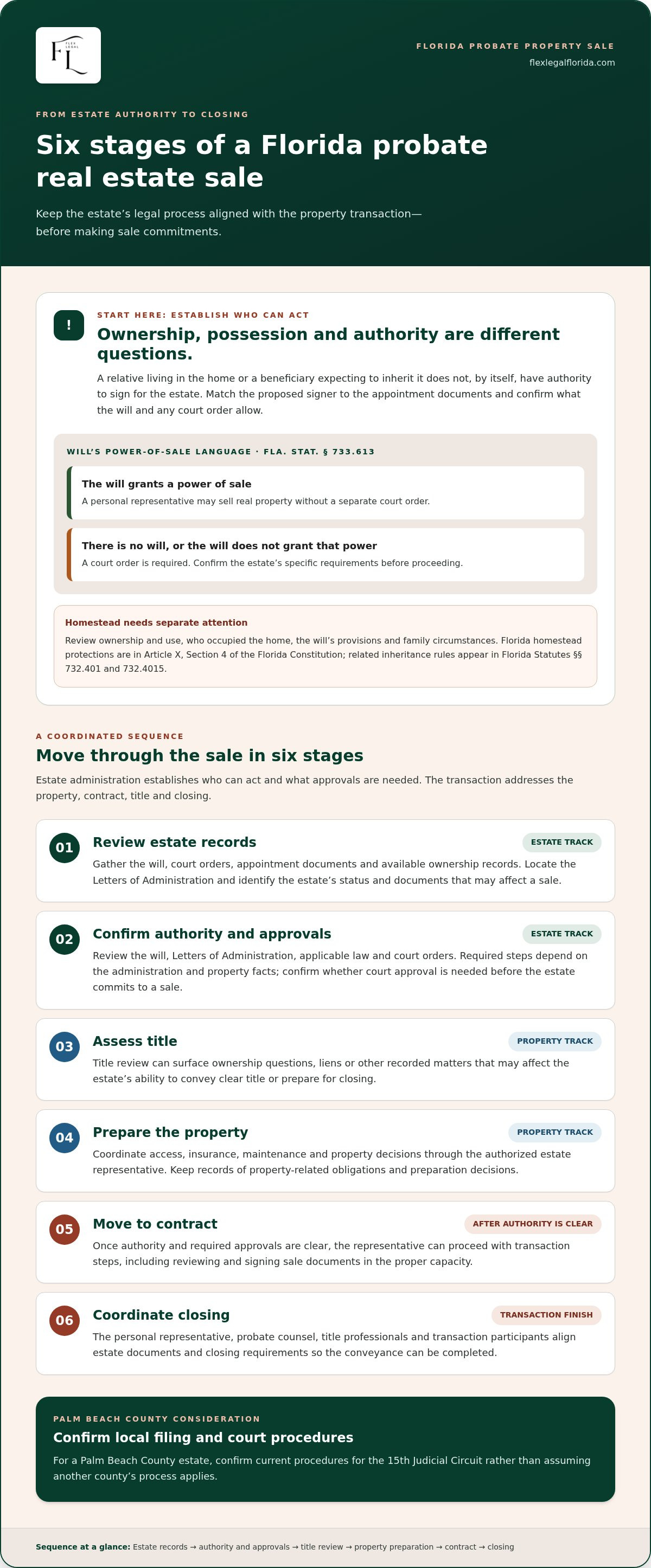
A probate property sale has two connected tracks: estate administration establishes who can act and what approvals are needed, while the transaction addresses the property, contract, title, and closing. Keep the tracks coordinated so a market decision does not move ahead of the estate’s legal process. The Real Property, Probate and Trust Law Section of The Florida Bar is a useful reference for Florida-specific legal resources.
Review estate records. Gather the will, court orders, appointment documents, and available ownership records. Use them to identify the estate’s status and the documents that may affect a sale.
Confirm authority and approvals. The personal representative and probate counsel can review the will, Letters of Administration, applicable law, and court orders before the estate makes sale commitments. Required steps depend on the administration and property facts.
Assess title. Title review can reveal ownership questions, liens, or other recorded matters that may affect the estate’s ability to convey clear title or prepare for closing.
Prepare the property. Coordinate access, insurance, maintenance, and property decisions through the authorized estate representative. Keep records of property-related obligations and preparation decisions.
Move to contract. Once authority and required approvals are clear, the representative can proceed with transaction steps, including reviewing and signing sale documents in the proper capacity.
Coordinate closing. The representative, probate counsel, title professionals, and transaction participants align estate documents and closing requirements so the conveyance can be completed.
Confirm the estate’s sale authority and any approval requirements
Don’t treat a planned sale as an ordinary real estate transaction until the estate’s authority is established. Whether separate court approval is needed depends on the will, court orders, administration, and property circumstances. For a Palm Beach County estate, confirm current filing and court procedures for the 15th Judicial Circuit rather than assuming another county’s process applies. Probate counsel can connect the administration record to the sale steps.
Prepare the property and transaction file
Build a working file with ownership records, probate documents, insurance information, known liens, and property-related bills or obligations. Title review may identify issues that need attention before closing, so address questions early rather than waiting until documents are ready for signature. The personal representative should coordinate property access and transaction decisions, while counsel and title professionals handle their respective legal and closing reviews.
Timelines vary with the estate, approvals, title findings, and transaction details. Flex Legal provides probate administration guidance to help families coordinate the probate process with a proposed property sale.
As-is sale or property preparation: compare options without skipping legal review
Choosing between an as-is sale and preparing the home first is an estate decision shaped by the property’s condition, ongoing responsibilities, available resources, and the representative’s authority. Repairs or cleanup may affect how buyers respond, but they don’t guarantee a higher sale price or better net proceeds. Compare the practical work and expense with the estate’s capacity to manage them, then weigh those considerations against the property and market facts.
When might an as-is sale make sense?
An as-is path may be worth evaluating if the home needs significant repairs, has limited access, or requires ongoing attention that the estate must manage. It can reduce the need to organize improvements, but it doesn’t remove the need to address applicable disclosure obligations, confirm authority, review the contract, or resolve title issues. “As-is” describes the sale condition, not a shortcut around legal and transaction requirements. For practical context on probate real estate sales, Florida Realtors discusses transaction considerations for these properties.
When might preparation before sale be worth considering?
Limited cleanup or targeted repairs may be an option when the work is manageable and the estate can support the related costs and coordination. Consider whether the property can be accessed safely, who will oversee the work, and whether added time or decisions fit the estate’s priorities. Don’t assume improvements will produce a particular price or return. Market advice can help evaluate buyer response, while probate counsel addresses the representative’s authority, court requirements, and estate obligations.
Marketing choices don’t replace legal review. Flex Legal provides probate administration guidance to help assess the estate’s circumstances.
A Florida probate property sale checklist for Palm Beach County families
Use this checklist to organize the estate file before listing, accepting an offer, or preparing for closing. Resolve ownership and authority questions before treating the property as ready for a routine sale. For background on the administration process, see Flex Legal’s probate administration in Palm Beach County. If the deed indicates the property may belong to a trust rather than the probate estate, the Florida revocable trust guide may help frame the next questions.
Before listing or accepting an offer
1. Confirm ownership. Review the deed and available property records to identify the record owner and any co-owners. If a trust appears on the deed, flag it for separate review.
2. Check the estate record. Gather the will, appointment documents, Letters of Administration, and relevant court orders. Confirm the estate’s status and who is appointed to act.
3. Resolve authority questions. Review whether the personal representative can proceed with a sale and whether the will or court orders impose conditions or require approval.
4. Flag property-specific issues. Note possible homestead status, occupancy, insurance coverage, liens, and ongoing property obligations. These facts can affect who participates and what needs attention before closing.
5. Record the decision and keep the file. Preserve estate and property records, and document the representative’s decisions and important communications with beneficiaries or other interested parties.
These early steps help families identify issues before committing the estate to transaction terms. They are especially useful when the home is occupied, jointly owned, or connected to a trust.
Before signing sale documents and closing
6. Review the contract and signing authority. Confirm that the person signing has authority to bind the estate and that the contract reflects the representative’s proper capacity.
7. Address title and signature requirements. Coordinate title review, confirm who must sign the deed, and resolve conditions that could affect the estate’s ability to convey the property.
8. Verify court requirements. Check applicable court approval and current 15th Judicial Circuit procedures for a Palm Beach County estate. Requirements can depend on the case and property.
9. Organize closing and estate records. Coordinate the closing documents and handle sale proceeds and records in line with applicable law and the representative’s administration duties.
For broader local process context, Flex Legal’s probate lawyer in Palm Beach County resource can help orient families to probate questions. If an authority, title, or homestead issue is holding up your next step, discuss your probate property sale with Flex Legal.
Get legal guidance for selling real property in Florida probate
A property in probate isn’t automatically ready for an ordinary sale. Before treating it like a routine transaction, the personal representative needs to understand the estate’s authority, court requirements, and property-specific issues. Resolving those questions early can help the representative make informed decisions and coordinate legal steps with the proposed sale.
What probate counsel can help clarify
Probate counsel can review the administration posture and documents, including the will, appointment records, Letters of Administration, and relevant court orders. Counsel can help identify questions tied to ownership, homestead, title, or required approvals, then explain how those issues may affect the representative’s next steps. The answers depend on the estate and property, not just on whether a buyer is interested.
Sale planning also has a procedural side. A proposed listing, contract, or closing date may need to fit the estate’s legal requirements and administration responsibilities. Probate counsel can help the representative understand those requirements and coordinate legal considerations with transaction milestones. Flex Legal, PLLC provides probate administration and probate litigation services for estate property-sale decisions that raise legal or procedural questions. Counsel’s work does not replace the roles of real estate and title professionals, but it can help keep the estate process in view.
Take the next step with a clear picture of the estate
Before discussing a property sale, gather the documents that show what has happened and what is planned. Helpful records may include:
The will and any codicils
Appointment documents and Letters of Administration
The property deed and available title records
Relevant court orders and probate filings
Any existing listing, offer, or proposed contract
Also note who occupies the property, whether homestead may be involved, and any known co-ownership or title concerns. These details can shape the legal analysis and make a discussion more focused. Guidance should be tailored to the estate’s administration, title, family circumstances, and the property’s facts.
If you’re handling a probate estate in West Palm Beach and need clarity on authority, court procedure, or the property-sale process, contact Flex Legal to discuss the circumstances and next steps.
Move forward with clarity on the estate’s next steps
Selling real property in Florida probate is easier to plan when authority is clear before listing or signing sale documents. Confirm who may act, account for homestead and title questions, and understand whether the estate needs court approval. Then weigh an as-is sale against property preparation based on the home’s condition, estate resources, and practical responsibilities.
Each estate has its own facts. Probate counsel can help connect the administration documents and legal requirements to the property-sale timeline. Flex Legal, PLLC provides probate administration support from its West Palm Beach location. Founding attorney Jennifer L. Flexer, Esq. owns and operates the firm.
If you’re preparing to sell estate property or have questions about authority, court steps, or closing, talk with Flex Legal about your Florida probate property sale.
Frequently Asked Questions
Can a personal representative sell real property during Florida probate?
Yes. An appointed personal representative may sell estate real property when authorized under Florida law and the estate’s documents. Review the will, Letters of Administration, and any court orders to understand the representative’s authority. A person named as executor in a will isn’t authorized to act solely because of that nomination; court appointment is key. The property’s ownership and homestead status may also affect who can convey it.
Does a Florida probate property sale require court approval?
Sometimes. Under Florida Statutes § 733.613, a personal representative may generally sell real property without a separate court order if the will grants a power of sale. If there’s no will or it doesn’t grant that power, a court order is required. The estate’s circumstances and property details matter, so review the will and court record before listing, accepting an offer, or signing sale documents.
How does homestead affect selling a house in Florida probate?
Homestead status can affect whether a home is part of the probate estate, who inherits it, and who must participate in a sale. The outcome depends on facts such as ownership, occupancy, family circumstances, and the will. Florida Constitution Article X, Section 4, and Florida Statutes §§ 732.401 and 732.4015 address related homestead protections and inheritance rules. Review those issues before assuming the personal representative alone can sell.
Can heirs sell a probate house in Florida without the personal representative?
Not simply because they’re heirs or beneficiaries. If the home is an estate asset, the appointed personal representative generally acts for the estate within the authority granted by the will, Florida law, and any court orders. Homestead or other ownership facts may mean the property passes outside probate or that additional owners must join in a conveyance. Confirm the deed, probate record, and required signatures before heirs make a sale commitment.
What documents are needed to sell a house in Florida probate?
Start with the will, Letters of Administration, appointment order, and other relevant court orders. Gather the property deed, available title records, insurance information, and records of known liens or property obligations. A proposed contract or existing offer may also be relevant. The specific documents needed depend on the estate and title review. For West Palm Beach families, confirming current 15th Judicial Circuit procedures is also part of preparing the file.
Can a personal representative sell inherited property as-is in Florida?
A personal representative may consider an as-is sale if the representative has authority to sell and follows applicable legal and court requirements. As-is describes the property’s sale condition, but it doesn’t eliminate contract, title, or applicable disclosure considerations. The representative should weigh the property’s condition, ongoing responsibilities, and estate resources before deciding. The choice doesn’t guarantee a particular timeline, price, or net proceeds.
How long does it take to sell real estate in Florida probate?
There’s no single timeline for a probate property sale. A typical uncontested formal administration in Florida takes about 6 to 12 months, with timing influenced by the required creditor-claim period. The real estate transaction may also depend on the representative’s authority, any court approval, title issues, property condition, and the buyer’s circumstances. A sale can’t be planned accurately from the listing date alone; consider the estate process and closing steps together.
What happens to the sale proceeds from a Florida probate property?
Sale proceeds are handled as part of the estate’s administration when the property is an estate asset. They aren’t automatically paid directly to heirs at closing. The personal representative must account for the funds and administer them according to applicable law, court orders, and estate obligations before distribution. The outcome can differ if the property is homestead, jointly owned, or held in a trust, so confirm ownership and the estate’s status.
For help with probate administration and a property sale in West Palm Beach, contact Flex Legal, PLLC.


Comments