
How to Dissolve an Irrevocable Trust in Florida: Legal Options and Steps

What if an “irrevocable” trust is not as impossible to change as it sounds? If the document appears to lock everyone into the original plan, you are not alone in wondering how to dissolve an irrevocable trust in Florida. The answer depends on the trust’s terms and purpose, who has authority to act, which beneficiary interests are involved, and whether a court needs to review the proposed change. Ending the trust is only one possibility. A modification or another legal option may address the problem without dissolving it.
This guide explains when Florida law may allow an irrevocable trust to be modified or terminated, how trustee and beneficiary consent may affect the process, and when court approval may be needed. It also covers what to review before assets are distributed, since a change can affect taxes, asset protection, special-needs planning, and eligibility for public benefits. A Florida trust attorney can assess the document, beneficiary interests, and practical consequences together before you take action. For families in West Palm Beach, reviewing those issues early can help clarify which legal path may fit.
Table of Contents
Can You Dissolve an Irrevocable Trust in Florida?
Yes, it may be possible to end an irrevocable trust in Florida, but the label alone does not determine the answer. Dissolution ends the trust relationship. Modification changes selected terms, while changing a distribution may affect only how or when assets are paid out. These are distinct legal outcomes. One option may be available even when another is not.
If you are researching how to dissolve an irrevocable trust in Florida, start with the trust instrument and the circumstances around it. The settlor’s status, powers retained by the settlor or granted to another person, beneficiary interests, the trust’s purpose, and applicable Florida law can all affect the options. Florida Statutes Chapter 736 provides legal mechanisms for certain trust changes, but the appropriate route depends on the facts.
What makes a Florida trust irrevocable?
The trust document, the settlor’s circumstances, and any powers reserved when the trust was created help determine whether it can be revoked or amended. “Irrevocable” generally means the settlor cannot simply cancel or rewrite the trust at will. It does not answer every question about who may have authority to act. For a separate overview of revocable trusts, see this Florida revocable trust guide. A general overview of irrevocable trusts can provide background, but it cannot determine the effect of a specific Florida document.
Does irrevocable mean impossible to change?
Not necessarily. Depending on the legal authority and the trust’s purpose, options may include termination, modification, or reformation. Termination ends the trust. Modification changes its terms. Reformation seeks to correct the document when its wording does not reflect the settlor’s intent. A distribution, by contrast, is an action involving trust property and does not automatically change or end the trust.
Agreement among family members may help, but it does not necessarily resolve the legal question. The required participants and process vary by route. The trustee’s duties, beneficiary interests, and a court’s role may also matter. For example, beneficiaries who agree that a trust no longer meets their needs may not, by agreement alone, have authority to direct an immediate payout.
Reviewing the trust terms, interested parties, and possible statutory pathways before anyone acts can help clarify the options. That review is especially important when a change could affect asset protection, special-needs planning, or estate administration. The next step depends on the document and circumstances, not just the trust’s title or a family consensus.
Which Florida Legal Pathways Can Modify or End an Irrevocable Trust?
Start with the trust instrument. It may identify who can act, what conditions apply, and whether a trustee, trust protector, or another person has authority to make particular changes. Those provisions must be read alongside Florida law and the interests the trust was created to serve. The legal definition of an irrevocable trust offers general context, but it cannot establish which powers apply to a specific Florida trust.
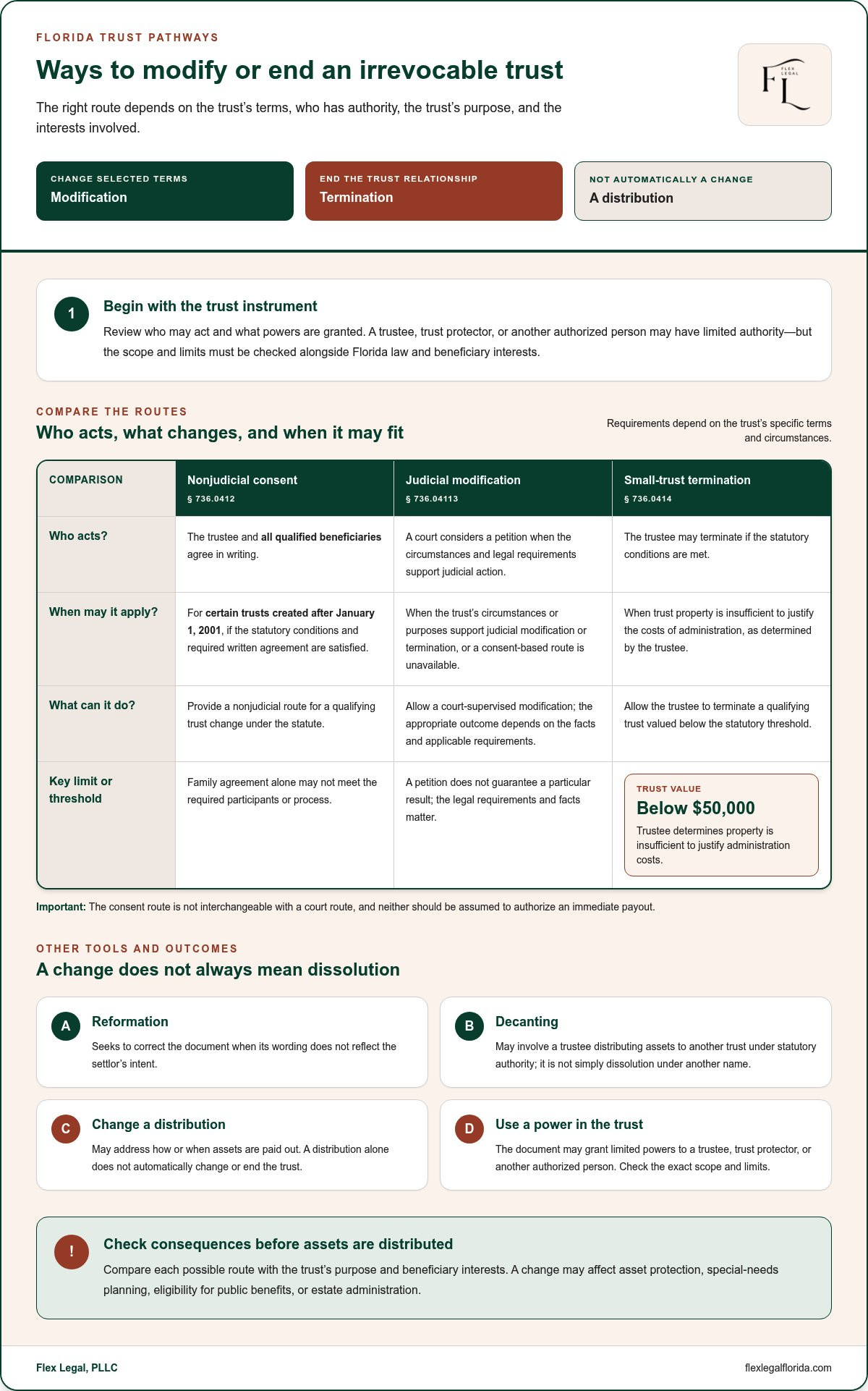
Chapter 736 of the Florida Statutes provides different routes, and they are not interchangeable. Changing a distribution term may address a practical problem without ending the trust. Termination is more substantial: it ends the trust and requires a plan for remaining assets and trustee responsibilities. The key question in how to dissolve an irrevocable trust in Florida is not simply whether someone wants a change, but which legal authority supports it.
When might consent or trust terms provide a route?
For certain trusts created after January 1, 2001, Florida Statute § 736.0412 provides a nonjudicial route when the trustee and all qualified beneficiaries agree in writing. The required parties and statutory conditions matter, so family consensus alone may not satisfy them. The trust document may also grant limited powers to a trustee, trust protector, or another authorized person. Review the scope and limits of those powers before relying on them.
When might a court-supervised option be considered?
A court petition may be appropriate when the trust’s circumstances or purposes support judicial modification or termination, or when a consent-based route is unavailable. Florida Statute § 736.04113 addresses judicial modification of an irrevocable trust, while § 736.0414 allows a trustee to terminate a trust valued below $50,000 if the trustee determines its property is insufficient to justify administration costs. The applicable requirements and facts must be assessed; neither route guarantees a particular result.
Other tools may preserve the trust relationship while changing how assets are managed. Reformation seeks to correct terms to reflect the settlor’s intent, while decanting may involve a trustee distributing assets to another trust under statutory authority. Neither is simply another name for dissolving the original trust, and each has its own limits. Compare these options against beneficiary interests and possible effects on asset protection, special-needs planning, or administration. Flex Legal provides trust and estate legal guidance to help assess the document and potential pathways before a trustee or beneficiary takes action.
How Do Consent, Court Action, and Other Options Compare?
The right route depends on what needs to change, who has authority to act, and whether the trust’s purpose can still be achieved. A modification may solve a problem while preserving useful terms. Full termination may be appropriate only if the trust can legally end and its remaining assets can be handled consistently with the governing rules.
How do modification and termination differ?
Modification changes selected terms; termination ends the trust or, where authorized, a portion of it. Ask whether a targeted change can address the issue while preserving administration, asset protection, or the trust’s original purpose. If a beneficiary relies on public benefits, review possible consequences before changing distributions. This Florida special needs trust guide offers related planning context.
What if beneficiaries disagree or the trust has a special purpose?
Disagreement can affect which route is available and whether court review or representation of other interests is needed. Consent from some beneficiaries does not automatically bind absent, future, or otherwise protected interests. Trusts created for asset protection, tax planning, or a beneficiary with a disability call for careful review of possible effects before changes are pursued.
This table is an orientation tool, not a determination of eligibility or outcome. To decide how to dissolve an irrevocable trust in Florida, evaluate the trust instrument, beneficiary interests, and applicable legal authority together.
What Steps Should Trustees and Beneficiaries Take Before Seeking Termination?
Preparation helps clarify whether termination is worth pursuing and which legal route may fit. Gather the relevant information first. Wait to make decisions about consent, distributions, and court filings until the trust terms and interested parties have been reviewed. If you are exploring how to dissolve an irrevocable trust in Florida, use this sequence to organize the facts without taking steps that could be difficult to undo.
Which documents and facts should be assembled?
Collect the signed trust instrument and every amendment, along with current trustee details, available accountings, asset records, and relevant communications. Note the settlor’s status, the trust’s stated purpose, known beneficiary interests, and any disagreement. Flag potential tax, creditor-protection, or public-benefit concerns for review. This information helps an attorney assess the whole trust rather than relying on a partial document or informal summary.
Preserve the complete record. Keep the trust and amendments together with account statements, property information, accounting records, and communications related to proposed changes. Do not discard drafts or messages that may explain the parties’ understanding.
Build an asset and administration picture. List known trust property, current income or expenses, and ongoing administrative responsibilities. Trustees should document decisions and the information considered, especially if beneficiaries have raised questions or concerns.
Identify people and interests. Record the settlor’s status, current beneficiaries, and any known future or otherwise protected interests. Note who supports a change and who objects, but do not assume agreement among some beneficiaries resolves every legal issue.
Pause before taking action. Do not distribute assets, stop administration, or treat the trust as ended based on an informal family understanding. A trustee should continue documenting fiduciary decisions and following applicable duties while the proposed route is assessed.
What happens during attorney and court review?
An attorney can review the governing instrument, Florida law, beneficiary interests, and practical risks together. That review helps distinguish what information is still needed from whether a consent process, court petition, or another mechanism may be appropriate. Notice, representation, filing requirements, and timing depend on the route and circumstances. For related local estate-administration context, see this Palm Beach County probate administration guide. It does not establish the filing procedure for a particular trust matter.
Once the documents and facts are organized, have a Florida trust attorney review the potential options before making distributions or pursuing a filing.
What Happens After an Irrevocable Trust Is Terminated?
Termination is not the same as completing the trust’s administration. Ending a trust does not, by itself, determine which assets go to whom, whether expenses remain, or what records the trustee must provide. Those details depend on the trust terms, the legal basis for termination, and any applicable court order or agreement.
How may termination affect beneficiaries and protected interests?
Before transferring assets, determine who is authorized to receive them and whether conditions or restrictions apply. Moving property from a trust into a beneficiary’s name can change how it is managed and may affect protections the trust was designed to provide. This is especially important if the trust supports a beneficiary with a disability or is part of public-benefit planning. Termination does not automatically change tax treatment, benefit eligibility, or creditor rights, but a distribution may have consequences that deserve review before it happens.
Trustees should also assess whether a final accounting is appropriate, document distributions and expenses, retain supporting records, and address remaining responsibilities. A final federal fiduciary income tax return may be required for the trust’s final year. Tax obligations and reporting depend on the trust and its circumstances, so distribution should not be treated as the last administrative step.
When should a Florida trust attorney help?
Get legal guidance before assets are distributed if beneficiaries disagree, the trust language is unclear, or a beneficiary’s protected interests may be affected. Review is also useful when the trust has played a role in asset protection, tax planning, or special-needs planning. When considering how to dissolve an irrevocable trust in Florida, evaluate the termination route and the steps afterward together.
Flex Legal assists with estate planning, trust administration, and probate matters. For families in West Palm Beach, the firm can assess trust terms, beneficiary interests, and potential next steps under Florida law. If you are weighing a possible termination, contact Flex Legal for guidance about your Florida trust. A careful review can clarify what may be possible and what to address before property changes hands.
Take the Next Step With a Clear Plan
An irrevocable trust may have more than one possible path forward. The trust’s terms, beneficiary interests, and Florida law help determine whether modification, termination, or another option may fit. Before assets are distributed, review possible effects on administration, asset protection, taxes, and public-benefit planning.
Understanding how to dissolve an irrevocable trust in Florida starts with the specific document and circumstances, not assumptions based on the word “irrevocable.” Flex Legal provides Florida trust administration and estate-planning legal services. Jennifer L. Flexer, Esq. owns and operates the firm and brings those areas of practice to the review of trust terms and possible next steps.
Discuss your Florida trust options with Flex Legal for a clearer view of the legal pathways that may apply. Before taking action, get a focused review of your trust and its potential consequences.
Frequently Asked Questions
Can an irrevocable trust be dissolved in Florida?
Sometimes, yes. Irrevocable status generally limits a settlor’s ability to revoke a trust alone, but the trust instrument and Florida law may provide ways to modify or terminate it. The right path can depend on the trust’s purpose, who has authority, beneficiary interests, and whether consent or court review is required. If you are asking how to dissolve an irrevocable trust in Florida, have a Florida trust attorney review the document before anyone acts.
Can all beneficiaries agree to terminate an irrevocable trust?
Beneficiary agreement may support a termination route, but it does not automatically resolve every legal issue. The applicable statute, the settlor’s status, the trust’s purpose, and interests that cannot be represented by consenting beneficiaries may all matter. A trustee should not treat an informal agreement as ending fiduciary duties or authorizing immediate distributions. Review the trust terms and current law with counsel before treating the trust as terminated.
Does terminating an irrevocable trust require court approval in Florida?
Not necessarily. Some legal pathways may rely on authority in the trust instrument or statutory consent requirements, while other circumstances may call for a court petition. The answer depends on the trust, the people with interests, and the legal basis for the proposed action. Before proceeding, determine which process applies, including any notice or representation requirements. A Florida trust attorney can assess the appropriate route.
What is the difference between modifying and terminating an irrevocable trust?
Modification changes one or more terms while the trust continues. Termination ends the trust, or a portion of it if the law and circumstances permit, and raises separate questions about administration and asset distribution. If the concern can be addressed by changing a distribution term or another provision, ending the whole trust may be unnecessary. Legal review can help compare the options and their effects on beneficiaries and the trust’s purpose.
Can a trustee terminate an irrevocable trust without beneficiary consent?
A trustee’s authority depends on the trust instrument and applicable Florida law. A document or statute may authorize action in specific circumstances, but a trustee should not assume general discretion includes the power to terminate. The trustee’s duties, beneficiary interests, and any required notice or court process may also be relevant. Review the governing document and legal requirements before making distributions, closing accounts, or stopping trust administration.
What happens to trust assets after termination?
Trust assets must be handled under the trust terms, the legal basis for termination, and any applicable court order or statutory requirements. The trustee may still need to complete an accounting, make authorized distributions, retain records, pay expenses, and address remaining duties. Distribution may have tax, creditor-protection, or public-benefit implications, depending on the circumstances. Do not transfer assets until the trustee’s authority and potential consequences have been reviewed.
Can ending a trust affect Medicaid or SSI eligibility?
It can, depending on the trust terms, the beneficiary’s circumstances, the type and timing of a distribution, and current program rules. If a beneficiary receives or may need means-tested benefits, assess possible effects before changing trust terms or distributing assets. The outcome cannot be determined from the trust’s label alone. A Florida trust attorney can review the trust and relevant benefit considerations before the trustee takes action.


Comments