
Florida Probate Process Timeline: What to Expect in 2026
- Kelly Mata
- Jul 14
- 12 min read

Updated: Jul 22
What if the difference between waiting eight weeks and twelve months for an inheritance came down to a single legislative update? For many families, the Florida probate process timeline changed significantly on July 1, 2026, when the threshold for fast-track summary administration doubled to $150,000. This shift means more estates can bypass the lengthy formal process; however, it doesn't eliminate the anxiety of missing a strict court deadline or the confusion of deciphering jargon like "Letters of Administration."
It's natural to feel overwhelmed by the threat of court delays or the pressure of mounting estate debts. We believe you deserve a partnership that prioritizes clarity and speed over rigid, traditional hurdles. This guide provides a clear, week-by-week roadmap to manage estate administration with confidence. You'll learn how to distinguish between fast-track and full probate, identify ways to minimize your time in court, and establish a predictable schedule for asset distribution that protects your peace of mind.
Table of Contents
Understanding the Florida Probate Process Timeline
Probate is the court-supervised transition of assets from a deceased individual to their rightful heirs or beneficiaries. It serves as a legal bridge, ensuring that debts are settled, taxes are paid, and property is distributed according to the law or a valid Will. The Probate process provides a structured environment to resolve these financial loose ends, but the speed of that resolution depends on several moving parts. While the court provides the framework, the efficiency of the transition often depends on the type of administration you choose.
The Florida probate process timeline isn't a one-size-fits-all schedule. It fluctuates based on the total value of the estate, the complexity of existing debts, and whether the decedent left a valid Last Will and Testament. In Florida, the law generally requires a Personal Representative to be represented by a licensed attorney. This isn't just a formality; it's a vital safeguard. Professional legal representation prevents common mistakes that often lead to costly delays or personal liability for the person managing the estate.
Formal vs. Summary Administration: Which path are you on?
Choosing the right path is the most significant factor in your schedule. Your choice will largely depend on the value of the assets involved and how long ago the individual passed away.
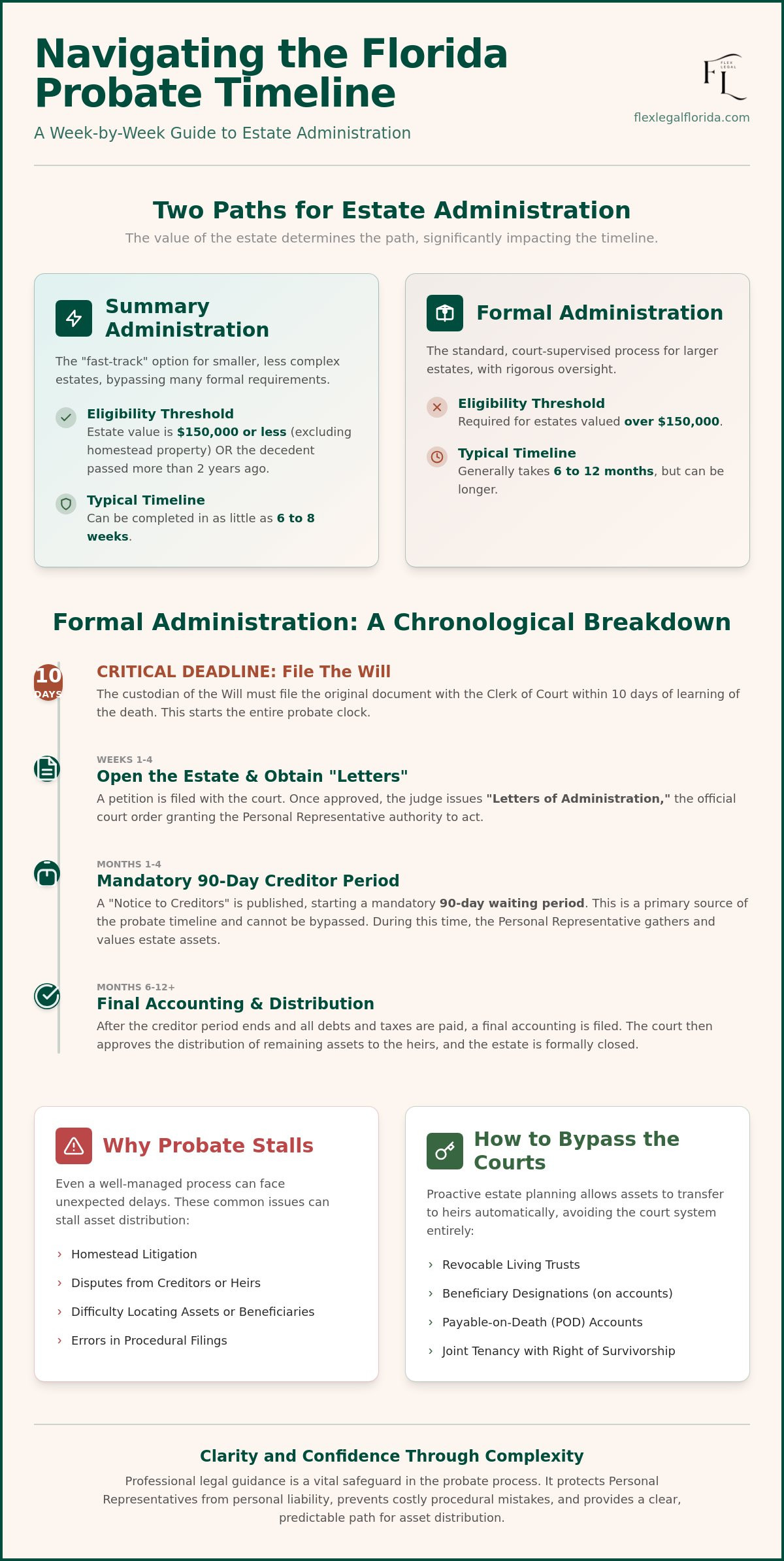
Summary Administration: Think of this as the "fast track" option. As of July 1, 2026, Florida law increased the threshold for this streamlined process to estates valued at $150,000 or less, excluding exempt property like a homestead. It's also available if the decedent has been deceased for more than two years.
Formal Administration: This is the standard procedure for larger estates. It requires the appointment of a Personal Representative and involves more rigorous court oversight.
Disposition Without Administration: This is a very narrow, rare option. It's typically reserved for cases where the estate's only assets are used to reimburse funeral expenses or medical bills from the last 60 days of life.
The 10-Day Rule: Your first critical deadline
The clock starts ticking almost immediately after a loss. Florida law requires the custodian of a Will to file the original document with the Clerk of Court within 10 days of learning about the death. Meeting this deadline is vital for establishing the Florida probate process timeline early and avoiding potential legal friction with the court or other heirs.
If you can't locate the original Will immediately, don't panic, but don't delay. While the court prefers the original document, there are specific legal procedures for proving a lost Will. Missing this initial window can create procedural hurdles that reset the probate clock or complicate the appointment of the Personal Representative. Starting the process with an agile legal ally ensures these early deadlines don't become permanent roadblocks.
Formal Administration: A Step-by-Step Chronological Breakdown
When an estate doesn't qualify for the fast-track summary option, it enters Formal Administration. This is the traditional, comprehensive path that ensures every financial and legal detail is addressed before assets reach the heirs. Understanding the Florida probate process timeline requires looking at this journey as a series of active phases and mandatory waiting periods. While some steps require heavy lifting from your legal team, others are dictated by statutory clocks that simply cannot be bypassed.
The process generally unfolds in four distinct phases. First, you open the estate (Weeks 1 to 4) by filing a petition. Second, you enter the mandatory creditor period (Months 1 to 4). Third, you engage in ongoing asset management and valuation. Finally, you move toward closing the estate (Months 6 to 12 or longer). Each phase has its own set of requirements, and missteps in the early weeks can cause a ripple effect of delays later in the year.
The Role of Letters of Administration
The most important document you'll receive in the first month is the "Letters of Administration." Despite the name, this isn't a letter in the traditional sense; it's a court order. This document serves as the official "key" to the decedent's life. Without it, you cannot sell a vehicle, access a locked bank account, or list a home for sale. Once legal authority is granted, families often coordinate with Vision Movers to manage the physical transition of the estate's contents. In the 15th Judicial Circuit serving West Palm Beach, judges typically issue these letters within two to four weeks, provided your initial filing is accurate and complete.
The Mandatory 90-Day Creditor Period
Once the court appoints a Personal Representative, the law requires a "Notice to Creditors" to be published in a local newspaper. This starts a 90-day clock, which is the primary reason probate cannot be completed instantly. This window allows anyone the decedent owed money to—from credit card companies to medical providers—to file a claim against the estate. Under Florida probate rules, you must also provide direct notice to known creditors, who then have 30 days to respond. If you're feeling overwhelmed by the paperwork involved in these notifications, seeking professional probate administration support can ensure no deadlines are missed.
While the creditor clock runs, the Personal Representative remains busy. This "active" period involves identifying all property, obtaining professional appraisals, and protecting assets from loss or damage. If no disputes arise and all debts are settled, the final phase involves a formal accounting and the distribution of the remaining inheritance. For an uncontested estate in 2026, you can generally expect the Florida probate process timeline to conclude within six to nine months, though complex tax issues or real estate sales can push this closer to a year.
Summary Administration: The 'Fast-Track' Probate Option
Not every estate requires the full, year-long journey of formal administration. For many families, summary administration offers a streamlined alternative that significantly compresses the Florida probate process timeline. This "fast-track" option is designed for simplicity, allowing assets to reach beneficiaries in weeks rather than months. However, eligibility is strictly defined by the value of the estate and the time elapsed since the individual's passing.
As of July 1, 2026, Florida law increased the threshold for summary administration to estates valued at $150,000 or less, excluding exempt property like the primary homestead. This legislative shift allows more families to resolve estate matters quickly. Additionally, the "2-Year Rule" provides a secondary path: any estate, regardless of its total dollar value, can qualify for summary administration if the decedent has been passed for more than two years. While this path is faster and typically less expensive, it comes with a major caveat. The court does not appoint a Personal Representative, meaning there's no one with the legal authority to manage complex business interests or litigate disputes.
When is Summary Administration the right choice?
This path is ideal for estates consisting of straightforward assets like small bank accounts, single vehicles, or unencumbered real estate. It works best when the family is in total agreement, as Florida requires all beneficiaries to sign the petition or be formally served with notice. If there are significant debts or missing heirs, the "fast track" can quickly hit a wall. Without a Personal Representative to negotiate with creditors, the summary process may not provide the protection or flexibility needed to settle more complicated financial obligations.
Timeline Comparison: Formal vs. Summary
The contrast in speed is the primary draw for this method. While a formal administration typically spans six to twelve months, a summary proceeding is often completed in three to eight weeks. This accelerated Florida Probate Timeline depends heavily on the current court backlog in Palm Beach County and the accuracy of your initial filings. Even a minor clerical error can reset your progress, turning a two-month plan into a much longer ordeal.
Choosing between these paths requires a strategic look at the estate's unique footprint. While speed is a benefit, complex assets like a family-owned business or contested property titles often necessitate the oversight provided by the formal process. An experienced probate lawyer in Palm Beach County can help you weigh these factors to determine which version of the Florida probate process timeline best serves your family's needs. We focus on finding the most efficient route forward, ensuring you don't spend more time in court than absolutely necessary.
Why Probate Stalls: Common Roadblocks and Delays
Even a well-prepared estate can hit unexpected friction. While the Florida probate process timeline follows a logical sequence, external variables often pause the clock. These stalls aren't just frustrating; they can be expensive. Identifying these potential roadblocks early allows you to pivot quickly and keep the administration moving forward.
Tax obligations represent one of the most common external delays. An estate cannot formally close until the decedent's final income tax return (Form 1040) is processed. For larger estates, the IRS may also require an Estate Tax Return (Form 706), which can take months to review. Creditor disputes also create significant hurdles. If the Personal Representative objects to a claim filed during the 90-day window, the court must schedule a separate hearing to resolve the matter. These procedural detours are why a professional partnership is vital; we act as your agile ally to resolve disputes before they consume your schedule.
The 'Homestead Trap' in Florida
Florida's Constitution treats a primary residence with a level of protection found in few other states. While this "homestead" status offers tax benefits and creditor protection, it creates a unique procedural hurdle during probate. You must file a "Petition to Determine Homestead" to confirm these protections and clear the title for a future sale. Homestead property technically passes outside of probate but still requires a court order to clear title. This step is essential for any family looking to sell the decedent's home, and failing to file this petition early can add months of waiting to your timeline.
Managing Family Conflict to Save Time
Internal friction is often more damaging to a timeline than court backlogs. When a "Will Contest" occurs or heirs argue over specific pieces of personal property, the distribution clock freezes. Litigation moves the case into a different legal category that can last years rather than months. The cost of delay is high; every month spent in a dispute is a month where litigation fees eat into the eventual inheritance. Working with a solution-oriented estate planning attorney in West Palm Beach helps mediate these conflicts before they escalate. If you are currently facing a stall in your case, you can discuss your case with our team to find a clear path forward. We focus on transparent communication to keep all parties aligned and minimize the time spent in a courtroom.
How to Streamline or Avoid the Florida Probate Timeline
Navigating the Florida probate process timeline can feel like a full-time job for a grieving family. Fortunately, several legal tools allow your assets to move directly to your loved ones without ever touching a courtroom floor. By implementing these strategies now, you can transform a months-long legal ordeal into a private, efficient transition. The goal is to provide your heirs with immediate access rather than a seat in a waiting room.
Simple administrative steps often yield the fastest results. Ensuring your bank accounts and life insurance policies have "Payable on Death" (POD) or "Transfer on Death" (TOD) instructions allows those funds to bypass probate entirely. Similarly, holding property as "Joint Tenancy with Right of Survivorship" ensures that the title transfers the moment a death certificate is recorded. For homeowners, an Enhanced Life Estate Deed, often called a Lady Bird Deed, allows you to maintain control of your property during your life while passing it to beneficiaries automatically upon your death.
The Power of the Revocable Living Trust
A revocable trust remains the gold standard for those looking to opt out of the court system. The timeline contrast is stark. While probate heirs in Palm Beach County may wait nearly a year for a final distribution, a successor trustee can often begin managing assets and distributing funds within days. Beyond speed, you gain the benefit of privacy. Because a trust is a private contract, your family's financial details stay out of the public record. While there's an upfront cost for planning, it's significantly lower than the statutory fees and court costs associated with a full formal administration later.
Next Steps for Palm Beach County Families
In the 15th Judicial Circuit, where court dockets can fluctuate based on seasonal filing surges, having private mechanisms in place is the most reliable way to ensure a predictable schedule. We act as an agile ally for families, managing the heavy administrative lifting so you can focus on what matters. Our team at Flex Legal, PLLC specializes in alleviating the stress of settling an estate, whether you're currently in the middle of probate or looking to avoid it in the future.
Comprehensive protection requires looking at the big picture. This includes working with a durable power of attorney specialist to ensure your affairs are managed if you become incapacitated. We offer flat-fee structures for estate planning to help families bypass the Florida probate process timeline entirely. By choosing a partnership-based approach to your planning, you ensure your legacy is handled with the speed and transparency your family deserves.
Take Control of Your Florida Probate Journey
The landscape of estate administration in 2026 offers more opportunities for efficiency than ever before. Whether you qualify for the expanded $150,000 summary administration threshold or need the comprehensive oversight of formal administration, understanding the Florida probate process timeline is your first step toward a successful distribution. You now have the tools to recognize common roadblocks like homestead litigation and the strategic advantages of planning with a revocable living trust.
Moving through these legal phases doesn't have to be an isolating experience. At Flex Legal, PLLC, we combine deep expertise in Palm Beach County probate courts with modern, adaptable legal strategies to protect your interests. Our mission is to alleviate family stress by acting as your agile ally in every court filing and creditor negotiation. Schedule a consultation with Flex Legal, PLLC to streamline your Florida probate process today.
You don't have to navigate these deadlines alone. We're here to help you move forward with confidence and clarity.
Frequently Asked Questions
How long does probate take in Florida if there is a Will?
Formal administration typically takes six to twelve months even when a valid Will exists. Having a Will clarifies the decedent's wishes, but it doesn't bypass the mandatory 90 day creditor period. This window is a fixed part of the Florida probate process timeline that ensures all debts are settled before heirs receive their inheritance.
Can the Personal Representative sell the house before probate is finished?
Yes, the Personal Representative can sell real estate once the court issues Letters of Administration. These documents grant the legal authority to sign closing paperwork and manage estate assets. If the home is a protected homestead, you'll likely need a specific court order to clear the title for the buyer.
Once the property is ready for sale, you may also need to coordinate the physical relocation of the estate's contents; to see how a professional team handles these transitions, you can learn more about Clear Lake Movers, Inc..
What is the fastest way to get through probate in West Palm Beach?
Summary administration is the quickest path, often concluding in three to eight weeks. As of July 2026, estates valued at $150,000 or less qualify for this streamlined process. It's also available for any estate regardless of value if the individual has been deceased for more than two years.
What happens if I miss the 10 day deadline to file the Will?
Missing the 10 day window rarely results in immediate penalties, but it does stall the start of the Florida probate process timeline. Delays can lead to friction with beneficiaries or complications if assets need urgent management. Filing as soon as possible prevents procedural hurdles and keeps the administration on a predictable schedule.
Does every estate in Florida have to go through probate?
No, only assets held solely in the decedent's name require court intervention. Property placed in a revocable living trust or accounts with designated beneficiaries pass directly to heirs. Jointly held assets with rights of survivorship also bypass the courtroom, allowing for a much faster transition of ownership.
How long does a creditor have to file a claim against a Florida estate?
Creditors have 90 days from the date of the first publication of the Notice to Creditors to file a claim. If you provide a known creditor with direct notice, their window shrinks to 30 days from the date they receive it. Once these windows close, most late claims are barred forever.
Why is my Florida probate taking longer than a year?
Complexity is the usual culprit for extended timelines. If the estate requires a federal estate tax return or faces litigation from a disgruntled heir, the process can easily stretch to 18 months. Disputes over the valuation of a family business or difficulties locating missing beneficiaries also create significant delays.
Is an attorney required for probate in Palm Beach County?
Yes, Florida law requires almost every Personal Representative to be represented by a licensed attorney. This rule protects the estate and the representative from costly procedural errors. Having an expert ally ensures you meet all court deadlines while shielding yourself from personal liability for administrative mistakes.


Comments