
Florida Designation of Health Care Surrogate: The 2026 Legal Guide
- Kelly Mata
- 9 hours ago
- 12 min read

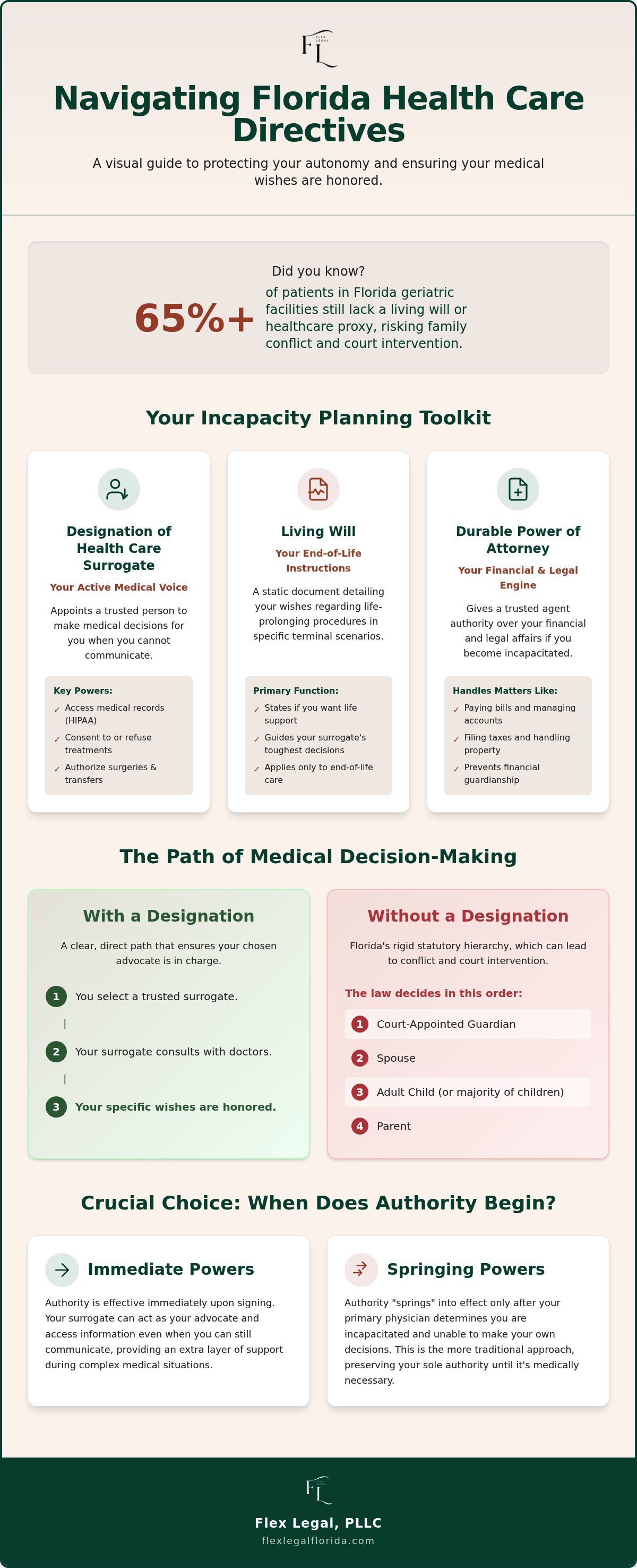
Did you know that over 65 percent of patients at Florida geriatric facilities still don't have a living will or a healthcare proxy on file? It’s a staggering figure, especially when you consider the emotional toll a medical crisis takes on a family. You likely worry about your loved ones arguing over your care or being kept on life support against your specific wishes. A Florida designation of health care surrogate replaces that uncertainty with a clear, legally binding plan.
This 2026 guide empowers you to master the Florida designation of health care surrogate so your medical wishes are honored without court intervention. We'll walk through the strategic choices between immediate advocacy and incapacity-contingent power, ensuring you understand exactly how to appoint a trusted representative. You’ll learn the current witness requirements under Chapter 765 and how this single document provides a modern, adaptable solution to avoid the stress and expense of guardianship proceedings in Palm Beach County. By the end, you'll have the clarity needed to protect your autonomy and your family's peace of mind.
Table of Contents
What is a Florida Designation of Health Care Surrogate?
A Florida designation of health care surrogate is a legal document established under Florida Statute Chapter 765. It's your way of naming a trusted representative to make medical decisions on your behalf if you're ever unable to communicate your wishes. Think of this person as your advocate and agile ally in the hospital room. They ensure your values and preferences remain the priority, even when you can't speak for yourself. Without this document, your medical care could become a matter of public record through court-ordered Guardianship Proceedings, which are often expensive and emotionally draining for your family.
The primary goal of this designation is clarity. It provides a modern, streamlined path for your medical team to follow, removing the guesswork from urgent situations. By formalizing this choice now, you protect your autonomy and keep your private medical decisions out of a courtroom. It's a proactive step that transforms a potential family crisis into a managed, respectful process.
The Legal Authority of a Surrogate in Florida
Once you've signed a Florida designation of health care surrogate, your chosen representative gains specific legal powers. They can access your sensitive medical records under HIPAA regulations, ensuring they have the same information your doctors do. They don't just wait for instructions; they consult with your medical team, consent to or refuse specific treatments, and authorize surgeries. If your care needs change, your surrogate has the authority to manage transfers to specialized facilities or arrange for hospice care. They step into your shoes to navigate the healthcare system with your specific goals in mind.
Surrogate vs. Next of Kin: The Proxy Hierarchy
Many Florida residents assume their spouse or adult children will automatically have the final word. While Florida law does provide a default hierarchy for a health care proxy, relying on this statutory "safety net" is a common trap. If you haven't designated a surrogate, the law follows a rigid order: a court-appointed guardian first, followed by a spouse, then adult children, and then parents.
This default system is a recipe for family conflict. If your children disagree on a treatment plan, the hospital may be forced to wait for a legal resolution before moving forward. A formal designation overrides this statutory list entirely. It allows you to pick the person best suited for the role, regardless of their position in the family tree. This simple choice prevents disputes and ensures that your voice is the only one that truly matters in the end.
Surrogate vs. Living Will vs. Power of Attorney: Knowing the Difference
Many people assume a single document covers every "what if" scenario, but a truly adaptable estate plan relies on an ecosystem of tools. A Florida designation of health care surrogate is your active voice for medical decisions. It's designed for situations where you're temporarily or permanently unable to communicate, allowing a trusted person to speak with doctors on your behalf. While it's a cornerstone of incapacity planning, it works best when paired with two other distinct legal instruments.
The Health Care Surrogate: Your advocate for active medical choices, from consenting to surgery to choosing a rehabilitation facility.
The Living Will: Your static set of instructions specifically for end-of-life scenarios, such as when you have a terminal condition and cannot survive without life-prolonging procedures.
The Durable Power of Attorney: Your financial and legal engine, giving someone the authority to pay your bills, manage your taxes, and handle your property while you're incapacitated.
These documents must work in tandem. If you only have a living will, doctors might know your end-of-life preferences but won't know who has the authority to approve a life-saving surgery that doesn't fall under "terminal" care. A comprehensive Florida designation of health care surrogate ensures there's never a gap in your advocacy.
The Interaction Between a Surrogate and a Living Will
Your surrogate acts as the interpreter of your living will. Under Florida Statutes Chapter 765, if you've documented specific wishes regarding life support, your surrogate is legally bound to follow them. If a medical situation arises that isn't explicitly covered in your living will, the surrogate uses their knowledge of your values to make the best possible choice. The living will provides the specific instructions, while the surrogate provides the human judgment to apply them to real-world scenarios, creating a reliable check-and-balance system.
Coordinating with a Durable Power of Attorney
Medical decisions don't happen in a vacuum; they almost always involve a financial cost. Your health care surrogate might decide that a specific private memory care facility is the best environment for your recovery. However, if they don't have access to your bank accounts, they can't secure your spot. This is why your surrogate must be able to coordinate with the person named in your Durable Power of Attorney in West Palm Beach. When your medical advocate and your financial agent are on the same page, your care transitions remain smooth and your bills get paid on time. If you're looking for a streamlined way to organize these roles, our flat-fee incapacity planning packages provide the clarity you need.
Immediate vs. Springing Powers: The Crucial Choice for Florida Residents
The choice between immediate and springing authority is one of the most significant decisions you'll make when drafting your Florida designation of health care surrogate. Historically, most documents were "springing," meaning your surrogate had no power until a physician officially certified that you lacked the capacity to make your own decisions. While this sounds logical, it often creates a bottleneck during medical crises. The 2015 legislative update in Florida changed this by allowing for "immediate" designations, offering a more agile and responsive way to manage your care.
Selecting an immediate designation doesn't mean you lose your right to choose. It simply creates a partnership where your surrogate can assist you with administrative burdens while you focus on recovery. You remain the primary decision-maker as long as you are competent. For West Palm Beach residents, this choice often comes down to how much support you want during the "gray areas" of health, such as early-stage cognitive decline or recovery from major surgery.
Why Choose Immediate Authority?
The primary benefit of immediate authority is speed. In an emergency, waiting for an official incapacity determination can take hours or even days, depending on doctor availability. An immediate designation allows your surrogate to step in instantly to talk to insurance companies, access HIPAA-protected records, or clarify your history with a new medical team. This is particularly helpful during surgery recovery when you might be conscious but groggy and unable to handle complex insurance disputes. It provides a seamless transition of advocacy without the need for a doctor's signature to "unlock" the document.
The Safeguards of Florida Law
You don't need to fear losing control with an immediate designation because Florida law includes built-in protections for your autonomy. Your attending physician still plays a vital role in verifying your capacity, and your surrogate is legally required to follow your instructions. If you are awake and alert, you can override any decision your surrogate makes. Florida law ensures that your personal choices always take precedence over a surrogate’s actions as long as you have the capacity to communicate them. This balance of power allows you to accept help with the paperwork while keeping the final word on your actual treatment.
Springing Pro: Ensures your surrogate only acts when it's absolutely necessary.
Springing Con: Can cause dangerous delays in care while waiting for a formal medical diagnosis of incapacity.
Immediate Pro: Provides instant advocacy and help with insurance or medical records while you are still competent.
Immediate Con: Requires a high level of trust in your surrogate, as they technically have access to your information right away.
How to Choose and Appoint Your Health Care Surrogate in West Palm Beach
Selecting the right person for your Florida designation of health care surrogate is a strategic decision that goes beyond family loyalty. You need an advocate who possesses the emotional resilience to make difficult choices under pressure. Ideally, your surrogate should live near West Palm Beach or be willing to travel here quickly. While digital communication helps, having someone physically present at the hospital to speak with doctors face to face is often more effective. Shared values are the most critical factor. Your surrogate doesn't need to agree with your choices, but they must be willing to enforce them faithfully.
Always name at least one successor. Life is unpredictable; your primary choice might be unavailable or incapacitated themselves when a crisis hits. A "Plan B" ensures your medical wishes don't fall back into the default statutory hierarchy. This proactive approach keeps your care in the hands of people you trust rather than leaving it to a court-appointed stranger.
Logistics for Palm Beach County Residents
Your surrogate needs to be ready to navigate local systems like JFK Medical Center or St. Mary’s Medical Center. Provide them with digital access to your documents via a secure cloud folder. This ensures they can pull up your legal paperwork on a smartphone the moment they arrive at the emergency room. It's also a best practice to provide a copy to your primary care physician in West Palm Beach. When your designation is already part of your electronic health record, there's less friction during an admission.
The Formal Execution Requirements
To make the document legally binding, you must sign it in the presence of two adult witnesses. Florida law has strict exclusions for this process. At least one witness cannot be your spouse or a blood relative. Additionally, the person you are naming as your surrogate cannot serve as a witness. While Florida law doesn't strictly require a notary for this specific document, many local healthcare facilities prefer it. Having a notary's seal can prevent unnecessary delays when a hospital's legal department reviews your paperwork. If you want to ensure your documents are prepared correctly the first time, you can schedule a flat-fee consultation to finalize your Florida designation of health care surrogate.
Integrating Your Health Care Surrogate into a Comprehensive Florida Estate Plan
A Florida designation of health care surrogate is a powerful tool, but it works best when integrated into a broader strategy. Your medical advocate is just one piece of a puzzle that includes financial management and asset protection. When these documents are synchronized, they form a robust defense against the unpredictability of life. By linking your health care surrogate to a revocable trust, you ensure that your trustee has the medical context needed to authorize payments for specific care needs or facility admissions. This alignment prevents the friction that often occurs when health and money are handled in silos.
This integration is especially vital for families involved in special needs planning. For parents of adult children with disabilities, a surrogate designation ensures that care transitions remain seamless if the primary caregiver becomes incapacitated. At Flex Legal, our flat-fee approach to incapacity planning prioritizes these connections. We don't just hand you a stack of forms; we help you build an adaptable system where every role is clearly defined and supported.
Avoiding the 'Homestead Trap' and Guardianship
One of the most overlooked risks of incapacity is the "Homestead Trap." If you and your spouse own a home in Palm Beach County and one of you becomes incapacitated without a Florida designation of health care surrogate and a complementary power of attorney, you may be unable to sell or refinance the property. The healthy spouse is often forced into court to seek Guardianship Proceedings just to manage their own home. This process can cost thousands of dollars in legal fees and court costs, whereas a private designation costs only a fraction of that amount. Private planning also keeps your medical history and family dynamics out of public court records, offering a level of privacy that guardianship simply cannot provide.
Next Steps: Creating Your Agile Ally Plan
If your estate plan was drafted before the 2015 legislative updates, it likely lacks the "Immediate" designation option discussed earlier. Reviewing your current documents is the first step toward ensuring your plan remains responsive to modern medical needs. Don't wait for a crisis to find out your documents are outdated or disconnected from your financial goals. You can secure your future with a flat-fee estate plan from Flex Legal that covers every angle of your health and legacy. Scheduling a consultation allows us to act as your agile ally, refining your plan to reflect your current values and the latest Florida legal standards.
Securing Your Medical Advocacy Today
A well-crafted Florida designation of health care surrogate is more than just a form; it's a commitment to your future autonomy. By choosing between immediate and springing powers, you decide exactly how your advocate steps in during a crisis. This document remains your most effective shield against the delays and public nature of court-ordered guardianship proceedings in Palm Beach County. When your medical directives are synchronized with your financial tools, you create a seamless support system that protects both your health and your assets.
Our team at Flex Legal acts as your agile ally, providing modern and accessible legal advice right here in West Palm Beach. We specialize in navigating complex Florida incapacity laws to build plans that reflect your unique values. With our flat-fee pricing model, you'll benefit from total transparency without the worry of unexpected costs. Book a Flat-Fee Estate Planning Consultation with Flex Legal to secure your medical advocacy and gain lasting peace of mind. Your future self will thank you for the clarity you provide today.
Frequently Asked Questions
Can I have more than one health care surrogate in Florida?
You can legally name more than one person to serve as co-surrogates in Florida. While this is allowed, it often leads to delays if your surrogates disagree on a course of treatment. Most medical professionals prefer a clear chain of command. A more adaptable approach is naming one primary surrogate and listing several successors in order. This ensures a single, decisive voice is always available to speak with your doctors.
What is the difference between a health care proxy and a health care surrogate?
The main difference lies in who makes the choice. A health care surrogate is a person you specifically select and name in a legal document. Conversely, a health care proxy is a person appointed by a healthcare facility based on a statutory priority list when you haven't made a formal designation. Relying on a proxy can lead to family disputes, whereas a formal Florida designation of health care surrogate ensures your hand-picked advocate has the final word.
Does a Florida health care surrogate document need to be notarized?
Florida law does not strictly require this document to be notarized to be legally valid. However, many hospitals and long-term care facilities in West Palm Beach prefer a notarized signature to verify authenticity quickly. While the law only mandates the signatures of two adult witnesses, adding a notary seal is a modern best practice. It helps avoid administrative friction during an emergency admission, ensuring your surrogate’s authority is recognized without hesitation by hospital legal departments.
Can my health care surrogate decide to take me off life support?
Yes, your surrogate can make this decision if you have granted them the authority to do so. In Florida, this power is typically exercised in conjunction with a living will. If you have specific wishes regarding life-prolonging procedures, your surrogate is legally bound to follow those instructions. Their role is to enforce your values, acting as your voice to ensure doctors respect your choices regarding end-of-life care and terminal conditions.
What happens if my designated surrogate is unable or unwilling to act?
If your primary surrogate is unavailable, your named successor surrogate will step in to take their place. This is why naming a "Plan B" is a mandatory part of a resilient estate plan. If you haven't named a successor and your primary surrogate cannot act, the court or hospital may have to appoint a proxy based on Florida’s default legal hierarchy. This could result in a family member you didn't intend to choose making your medical decisions.
How often should I update my Florida designation of health care surrogate?
You should review your Florida designation of health care surrogate every three to five years or after significant life changes. Events like a divorce, the death of a named surrogate, or a surrogate moving out of state are clear signals to update your paperwork. It’s also vital to check if your documents reflect the 2015 legislative updates regarding immediate versus springing powers. Regular reviews ensure your plan remains an agile reflection of your current relationships and health needs.
Can I change my surrogate after the document is signed?
You can change your surrogate at any time as long as you have the mental capacity to do so. To make a change, you must sign a new designation and explicitly revoke any previous versions. It isn't enough to just tell your family about the change; you need a new, properly witnessed document. Once the new version is signed, ensure you provide updated copies to your doctors and your new surrogate to avoid any confusion.
Does a Florida health care surrogate designation work in other states?
Most states recognize a Florida health care surrogate designation under reciprocity laws, provided the document was validly executed in Florida. While your Florida document should be honored during a vacation or short trip, it’s a good idea to update your directives if you move permanently to another state. Different jurisdictions have unique witness or notary requirements. Having local documents ensures your medical team won't face any legal hurdles when following your surrogate's instructions.


Comments