
Convincing My Spouse We Need an Estate Plan: A Practical Guide

Updated: 6 days ago
What if the easiest way to talk about estate planning is to stop making it about death? If you’re thinking about convincing my spouse we need an estate plan, you may already know that raising the subject can feel uncomfortable, especially when one of you would rather avoid it. That hesitation is understandable. Planning can sound complicated, expensive, or meant only for wealthy families. Its purpose is to help you make important decisions together before a crisis forces them.
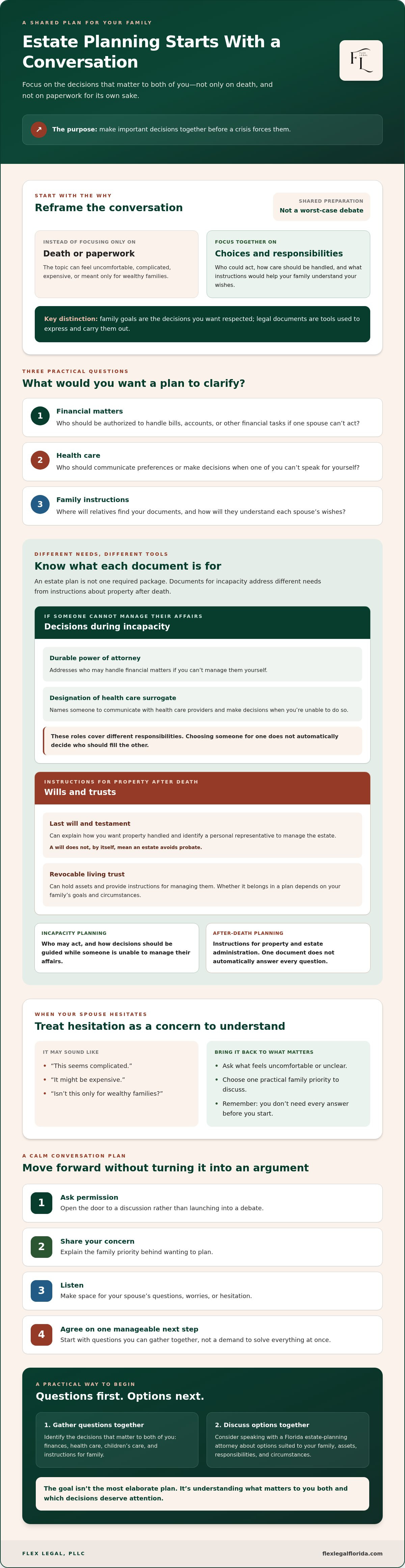
You don’t need every answer before you start. Focus on questions that matter to both of you: who could handle financial or health care decisions if one of you couldn’t, how you’d want your children cared for, and what instructions would help your family understand your wishes.
This guide offers a way to open the discussion without turning it into an argument. You’ll learn how documents such as wills, powers of attorney, and health care designations address different needs, and how to choose one manageable next step. Start by gathering questions, then consider speaking with an estate-planning attorney together about options for your circumstances.
Table of Contents
Why an Estate Plan Matters to Both Spouses, Even Before a Crisis
Talking about death or incapacity can feel uncomfortable, even when you and your spouse usually handle difficult topics well. You don’t have to begin with worst-case scenarios. Start with the practical purpose: an estate plan is a coordinated set of decisions and legal documents for managing affairs if someone can’t act for themselves, and for addressing property and responsibilities after death. For a neutral introduction to what an estate plan is, see this overview.
A plan can clarify who may handle financial matters, who should communicate health care preferences, and who is intended to receive property. It can also make your wishes easier for family members to find and understand. It can’t promise a particular outcome, but it gives you and your spouse the opportunity to make decisions instead of leaving every question unanswered.
Family planning goals are the decisions you want respected; legal documents are the tools used to express and carry out those decisions. That distinction can make “convincing my spouse we need an estate plan” feel less like pushing paperwork and more like starting a shared conversation about responsibilities.
The practical questions a plan can answer
Before debating documents, consider the situations you’d want a plan to address. For example:
Financial matters: Who should be authorized to handle bills, accounts, or other financial tasks if one spouse can’t act?
Health care: Who should communicate your preferences or make decisions when you can’t speak for yourself?
Family instructions: Where will relatives find your documents, and how will they understand each spouse’s wishes?
Why putting it off can leave decisions unclear
If you haven’t made your wishes clear through appropriate planning, default legal processes may not reflect your family’s preferences. What applies depends on the circumstances and governing law, so don’t assume one rule fits every household.
The right planning approach depends on your family, assets, responsibilities, and applicable law. The goal isn’t to create the most elaborate plan. It’s to identify what matters to you both and understand which decisions deserve attention. For couples seeking a holistic overview of their finances, pairing legal preparations with strategies from advisory firms like Financial Mentors Wealth Management can help align estate goals with long-term wealth planning.
What an Estate Plan Can Include, and What Each Document Is For
An estate plan isn’t one required package. It’s a set of documents and decisions that can be tailored to your family’s needs. Documents for managing affairs during incapacity serve a different purpose from instructions about property after death. The University of Arkansas System Division of Agriculture offers an overview of the basic steps in the estate planning process, including how families can begin planning conversations.
Documents for decisions during incapacity
A durable power of attorney addresses who may handle financial matters if you can’t manage them yourself. A designation of health care surrogate names someone to communicate with health care providers and make decisions when you’re unable to do so. These documents cover different responsibilities. Choosing a trusted person for one role doesn’t automatically answer who should fill the other. For more Florida-specific information, see this durable power of attorney guide.
Documents for wishes after death
A last will and testament can explain how you want property handled and identify a personal representative to manage the estate. A will doesn’t, by itself, mean an estate avoids probate. A revocable living trust is another planning tool. It can hold assets and provide instructions for managing them, but whether it belongs in a plan depends on your family’s goals and circumstances. Explore this Florida revocable trust guide for a deeper explanation.
Parents of minor children may also want to discuss naming a preferred guardian in their planning documents. A nomination communicates a preference, but it doesn’t guarantee a particular court outcome.
As you consider convincing my spouse we need an estate plan, compare documents by the questions they address rather than treating them as an all-or-nothing decision. You can review Florida estate-planning options as a starting point for discussing which documents may fit your family.
How to Respond to Common Reasons a Spouse Hesitates
If your spouse resists estate planning, try to understand the reason before offering arguments to change their mind. They may worry about cost, complexity, or having to make decisions they’re not ready to face. Listening first keeps the conversation collaborative. The goal isn’t to win an argument. It’s to learn what information or reassurance could make the next step feel manageable.
The right plan depends on your family’s goals and circumstances, not a one-size-fits-all checklist. A household with young children, a family member with support needs, or a business may have different questions from a couple with different responsibilities. Estate planning isn’t only about wealth. It can also clarify who may act, how to communicate wishes, and what responsibilities need attention.
“We are too young or healthy to need this”
Acknowledge that planning can feel distant when life is going well. Then broaden the discussion gently: planning can address incapacity as well as decisions later in life. You don’t have to predict when circumstances might change to discuss what would help each of you feel prepared.
Try asking, “If one of us couldn’t manage things for a while, what would we want the other to know or be able to handle?” That question is about supporting each other, not expecting a crisis. It may also reveal different assumptions about financial responsibilities, health care preferences, or where important information is kept.
“A plan will cost too much or take too long”
Cost and effort are reasonable concerns. Rather than guessing what a plan involves, gather information first. Ask what documents are included, how the process works, what information each spouse needs to provide, and whether the plan can be reviewed or updated as circumstances change. Comparing the scope and process helps you understand what is included, rather than looking at price alone.
Flex Legal offers fixed-fee estate-planning packages. Confirm the current scope and which documents are included for your circumstances. Ask how the fee is structured and what happens if your needs fall outside the described scope. You can clarify cost expectations before deciding whether to move forward.
Gathering questions is separate from hiring an attorney. You might first make a shared list of concerns, then decide whether to discuss them with counsel. If you’re searching for “convincing my spouse we need an estate plan,” keep the first goal modest: agree to learn what planning could involve, not to settle every decision at once.
How to Start the Estate-Planning Conversation Without Creating Conflict
A productive conversation doesn’t require agreement on every document or legal strategy. Start with shared values and practical responsibilities, such as how you’d support each other and what information your family might need. If you’re thinking about “convincing my spouse we need an estate plan,” shift the aim from persuasion to understanding. You’re exploring decisions together, not asking your spouse to approve a finished plan.
A simple way to open the discussion
Choose a calm moment when neither of you is rushed. You might say, “I’ve been thinking about how we can make things easier for each other if circumstances change. Could we talk about what we’d want our family to know?” Keep the opening personal and brief. If the topic feels overwhelming, invite your spouse to choose another time to continue.
Ask open-ended questions, then give each other room to answer. For example: “Who would we trust to help with important decisions?” or “What would we want our family to understand about our wishes?” You’re gathering perspectives, not making binding decisions in the moment.
Turn shared priorities into a short planning checklist
Once you’ve both agreed to explore the topic, write down the details and questions you want to consider. A short shared list can keep the conversation focused:
Family and responsibilities: Note children, other dependents, property, and business interests that may affect your planning.
Decisions to discuss: Record questions about who should handle financial matters, communicate health care preferences, and receive property.
Questions for professional advice: Mark legal questions separately, including which documents may fit your situation and how your wishes can be expressed.
Keep unanswered questions on the list instead of trying to solve them all together. You and your spouse can decide what matters to you, while an attorney can explain how applicable law and planning documents relate to those goals. Separating the two can prevent an early conversation from becoming a debate about legal details neither of you has had a chance to understand.
Try this five-step approach: 1. Choose a calm time. 2. Ask permission to talk. 3. Share one personal concern. 4. Listen to your spouse’s priorities. 5. Agree on one next step, such as adding questions to your list or exploring a legal consultation together. Small progress counts.
If you’re ready to discuss your questions with counsel, explore estate-planning options together and learn what may suit your family.
Agree on a Next Step: Explore Florida Estate Planning Together
You don’t have to leave your first conversation with every legal choice settled. A useful next step is to gather your questions and, when practical, meet with an estate-planning attorney together. A consultation gives both spouses the chance to explain what matters, hear how different options work, and identify questions that still need attention.
A Florida attorney can review your family’s circumstances and explain which documents or strategies may fit. The right approach can depend on your family responsibilities, assets, and goals, so general information isn’t a substitute for advice about your specific situation. For couples in West Palm Beach, a local conversation can put Florida planning questions in context.
Questions to ask before choosing a planning approach
Bring a shared list so each spouse has room to raise concerns. You might ask:
Which documents could address each spouse’s priorities, including who may need authority to act?
How could the plan be reviewed or updated if our family, assets, or goals change?
What does the legal service include, how are fees structured, and what information should we prepare?
These questions help you compare the proposed scope and process, not just a document name or a price. Ask the attorney to explain unfamiliar terms in plain language, and note anything you want to discuss privately or revisit later.
Make the first step manageable for both partners
Start with the concerns you’ve already listed together. You might agree to learn about options without committing to a particular document, strategy, or provider. That keeps the next step focused on clarity rather than pressure. If one spouse feels unsure, ask what information would help them feel comfortable continuing.
Compare approaches based on how well they address your family’s needs, how clearly the process is explained, and whether you understand the professional guidance being offered. You can decide together what to explore now and what can wait for a more detailed discussion. That’s a practical way to move forward when you’re thinking about convincing my spouse we need an estate plan: make the first decision about learning, not agreeing to everything at once.
When you’re ready to discuss your questions with an attorney, explore estate-planning guidance in West Palm Beach. A shared conversation can help you understand possible next steps and decide what feels right for your family.
Take One Shared Step Toward a Plan
Estate planning doesn’t have to begin with agreement on every detail. Start by listening to each other’s concerns, naming the decisions that matter to your family, and choosing one question to explore together. Documents can address different needs, and a Florida estate-planning attorney can help you understand which options may fit your circumstances.
If you’re thinking about convincing my spouse we need an estate plan, keep the goal practical: make space for a calm conversation, not a rushed decision. Flex Legal, PLLC serves West Palm Beach and is founded and operated by Jennifer L. Flexer, Esq. The firm offers fixed-fee estate-planning packages with predetermined fees for covered document preparation. Ask about the current scope and process so you both know what to expect.
Explore estate planning with Flex Legal in West Palm Beach and take a first step toward understanding your options. A thoughtful conversation today can help you move forward as a team, at a pace that works for both of you.
Frequently Asked Questions
Is estate planning only for wealthy people?
No. Estate planning can help couples make decisions about financial authority, health care wishes, dependents, and property, regardless of wealth. For example, parents may want to discuss who should care for minor children, while spouses may want to identify who can manage finances if one becomes unable to act. The documents and strategies that make sense depend on your family’s responsibilities and circumstances, not a specific level of assets.
How do I talk to my spouse about making an estate plan?
Choose a calm time, ask whether your spouse is open to talking, and explain why planning matters to you personally. Focus first on shared priorities, such as supporting each other and making wishes easier to understand. If your concern is “convincing my spouse we need an estate plan,” listen for what feels difficult to them instead of trying to win agreement. You could begin by suggesting that you simply gather questions together.
Can we make an estate plan if we do not have children?
Yes. Couples without children may still want to clarify who can handle financial or health care decisions if one spouse becomes incapacitated, and who they intend to receive property after death. You might also consider other dependents, relatives, charitable intentions, or business responsibilities. Not every couple needs the same documents. A Florida estate-planning attorney can help you understand which options may fit your priorities and circumstances.
What happens if one spouse dies without an estate plan in Florida?
If someone dies without a will, Florida’s intestacy laws generally determine how probate assets are distributed. A surviving spouse doesn’t necessarily inherit everything, particularly when the deceased spouse has children from another relationship. Florida homestead rules can also affect a primary residence. The outcome depends on family and property details, so don’t assume default rules match your wishes. An attorney can explain how Florida law may apply to your circumstances.
Is a will enough for a married couple in Florida?
It depends on what you want your plan to address. A will can state instructions for property after death and nominate a personal representative, but it doesn’t provide authority for someone to manage your finances or communicate health care decisions during incapacity. A couple may also consider documents such as durable powers of attorney and health care surrogate designations. Whether a trust or other planning tool is appropriate depends on individual circumstances.
Can my spouse change an estate plan later?
Often, an individual can update or replace their own estate-planning documents, but the process and limits depend on the document, its terms, the person’s capacity, and applicable law. A revocable living trust is generally designed to be changeable by its creator, subject to its terms and legal requirements. Spouses shouldn’t assume one can change the other’s documents. Ask an attorney how to make valid updates and keep related documents consistent.
When should married couples make an estate plan?
There’s no single ideal time. Couples can start when they want to clarify decision-makers, health care preferences, or instructions for property, and revisit their plans as family, assets, or goals change. You don’t need to wait for a particular milestone or crisis to gather questions. In West Palm Beach, a Florida estate-planning attorney can help you explore options suited to your circumstances and explain what information to prepare.


Comments