
Avoiding Probate with a Transfer on Death Deed in Florida: What Works Instead

What if the transfer-on-death deed you’re searching for isn’t an option under Florida law? If you’re researching “avoiding probate with transfer on death deed Florida,” the key distinction is that Florida doesn’t authorize statutory transfer-on-death deeds for real estate. That doesn’t leave you without options. An enhanced life estate deed, commonly called a Lady Bird deed, may let eligible real estate pass outside probate while you retain important rights during your lifetime.
Wanting a straightforward way to pass your home to loved ones is understandable. But the wrong deed can create complications rather than prevent them. Homestead status, a spouse’s rights, co-owners, and your intended beneficiaries can all affect whether a deed fits your plan.
This article explains how a Lady Bird deed differs from a transfer-on-death deed, when a revocable living trust may be a better fit, and what property and family details to review before changing title. You’ll get a practical starting point for comparing options and coordinating them with your broader estate plan.
Table of Contents
Does Florida Allow a Transfer on Death Deed for Real Estate?
How a Florida Lady Bird Deed Transfers Property and May Avoid Probate
Lady Bird Deed vs. Revocable Living Trust: Which Florida Strategy Fits?
What Florida Homeowners Should Review Before Using a Lady Bird Deed
Build a Florida Probate-Avoidance Plan Around Your Property and Family
Does Florida Allow a Transfer on Death Deed for Real Estate?
No. As of October 2026, Florida law doesn’t authorize a statutory transfer-on-death deed for real estate. Florida property owners may consider other deed-based planning, including an enhanced life estate deed, commonly called a Lady Bird deed. The distinction matters: a deed intended to transfer property at death doesn’t necessarily have the same legal effect as a statutory transfer-on-death deed recognized in another state.
That distinction is central to understanding avoiding probate with transfer on death deed Florida. A deed may help eligible real estate pass outside probate, but it doesn’t automatically avoid probate for every asset or resolve every issue in an estate. Bank accounts, investments, jointly owned property, and other assets may follow different transfer rules. Florida does permit certain transfer-on-death or payable-on-death designations for financial assets, but those designations aren’t real estate deeds.
What does “transfer on death deed” mean?
A transfer-on-death deed is a general term for a deed that names one or more beneficiaries to receive real property when the owner dies, typically without transferring ownership during the owner’s lifetime. Whether a state recognizes this type of deed, and the rules that apply, depend on that state’s law.
A Lady Bird deed is an enhanced life estate deed used in Florida. A statutory transfer-on-death deed is a distinct legal instrument available only where state law authorizes it. The underlying concept of a life estate involves rights to use property during someone’s lifetime and interests that take effect afterward. For background, see what is a life estate.
Is a Lady Bird deed the Florida alternative?
It may be an option for the right property and circumstances. With a properly drafted enhanced life estate deed, the owner generally retains control during life, including the ability to sell or mortgage the property without the named beneficiaries’ consent. The beneficiaries’ interest takes effect at the owner’s death, which may allow the real estate to pass outside probate.
That result isn’t automatic. The deed’s language, execution and recording, current ownership, and property-specific rules all matter. Homestead property can raise additional questions, including a spouse’s rights. Before changing title, review the requirements and how the proposed deed fits the property and the owner’s wider estate plan.
How a Florida Lady Bird Deed Transfers Property and May Avoid Probate
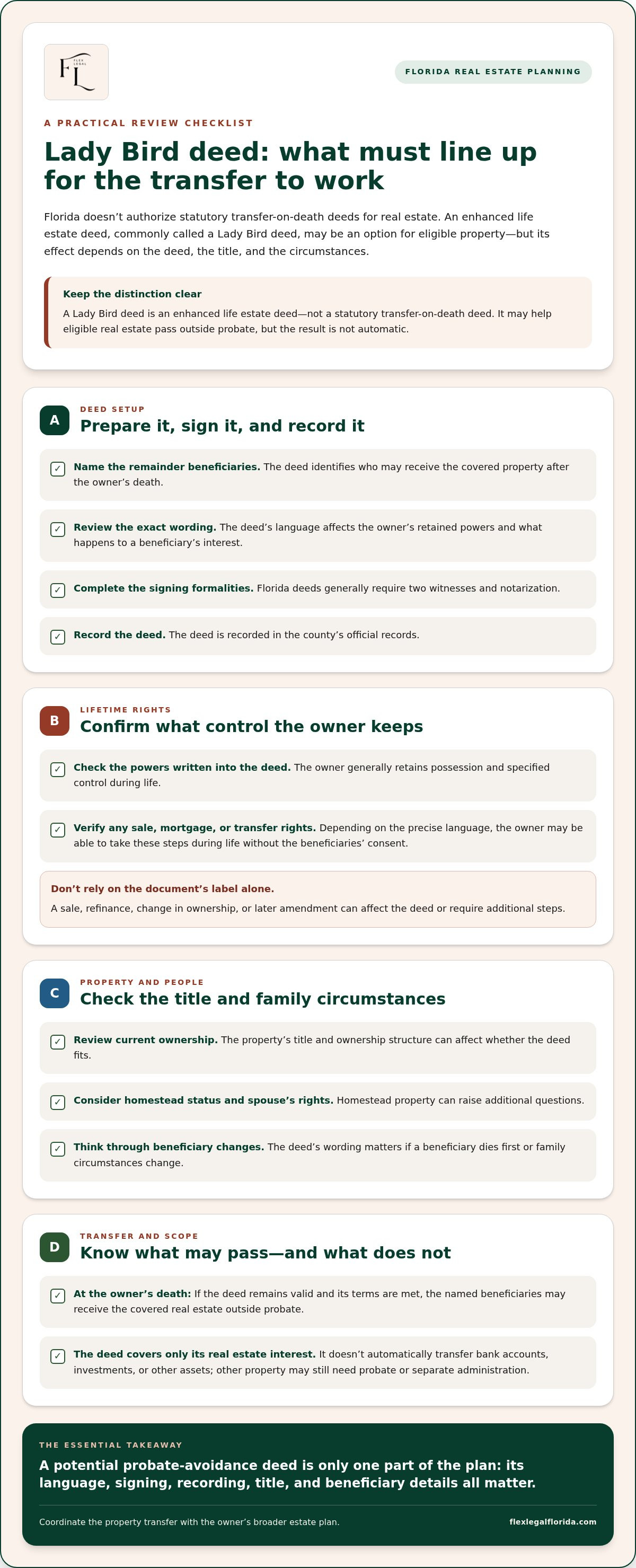
A Lady Bird deed involves planning and title steps. The owner prepares a deed naming remainder beneficiaries, signs it with the required formalities, and records it in the county’s official records. The owner generally keeps possession and specified control during life. After the owner dies, the named beneficiaries may receive the covered property without probate if the deed is valid and the transfer requirements are met.
This describes one possible route for avoiding probate with transfer on death deed Florida, but the deed doesn’t bypass probate for an entire estate. Its potential effect is limited to the real estate interest it covers. The Florida Bar’s explanation of Probate in Florida offers context about the court process a valid deed may help avoid for that property.
What control does the property owner retain?
An ordinary life estate generally gives someone the right to use property during life while others hold a future interest. An enhanced life estate deed is designed to preserve broader powers for the owner. Depending on the deed’s precise language, the owner may retain the right to sell, mortgage, or transfer the property during life without the beneficiaries’ consent. Don’t assume those powers are included based on the document’s label alone.
Specific drafting matters. A sale, refinance, change in ownership, or later amendment can affect the deed or require additional steps. The deed must also be properly executed and recorded. Florida deeds generally require two witnesses and notarization. Errors in the deed or signing process can undermine the intended transfer.
What happens to the property when the owner dies?
If the deed remains valid and the named remainder beneficiaries meet its terms, the covered real estate may pass to them outside probate at the owner’s death. The wording can affect what happens if a beneficiary dies first, so consider beneficiary survival and changes in family circumstances or ownership. A later deed or transaction may also alter the plan.
Think of the deed as one part of an estate plan, not a universal probate solution. It won’t automatically transfer assets that aren’t covered by it, and other property may still need probate or separate administration. Review the title, beneficiary provisions, and related estate documents together to help keep the intended transfer aligned with the rest of the plan. For a review of how property title fits into an estate plan, explore Florida estate planning guidance.
Lady Bird Deed vs. Revocable Living Trust: Which Florida Strategy Fits?
Choosing between a Lady Bird deed and a revocable living trust depends on what you own and what you want your plan to accomplish. For avoiding probate with transfer on death deed Florida, a deed may address a specific property, while a trust may coordinate multiple assets if they’re properly transferred to it or designated to work with it. Neither strategy automatically covers every asset or suits every family.
When might a deed-focused approach be considered?
A deed may be worth evaluating when your goal centers on a particular property and a relatively straightforward transfer to named beneficiaries. That alone doesn’t establish whether it’s suitable. The current title, co-owner interests, homestead status, spouse’s rights, and beneficiary circumstances can all affect the analysis. A deed also doesn’t replace a will or documents for incapacity planning, such as a durable power of attorney or health care directives.
When might a revocable living trust deserve consideration?
A trust may be worth considering when your plan involves several assets, ongoing management, or more detailed instructions for beneficiaries. It can support continuity if the owner becomes incapacitated, but only assets properly transferred to or coordinated with the trust receive the intended treatment. Funding and administration matter. A trust doesn’t automatically prevent probate for property that remains outside it.
Start the comparison with your goals, family structure, and asset titles, not a blanket rule that one option is better. A revocable living trust guide can explain how trust planning works in greater depth, while a Palm Beach County probate guide can provide broader context about the process a plan may address.
What Florida Homeowners Should Review Before Using a Lady Bird Deed
Before planning a transfer, get a clear picture of the property, its title, and the people the deed is meant to benefit. A careful review can identify issues a deed form alone won’t resolve. For homeowners considering avoiding probate with transfer on death deed Florida, use this sequence as a starting point, not as a do-it-yourself deed template:
Get the current deed. Confirm who owns the property and how ownership is held. A co-owner’s interest may affect what one owner can transfer.
Check the legal description. Compare it with the property records and make sure the intended parcel is clearly identified.
Review recorded interests. Note mortgages, liens, or other recorded claims for case-specific review. Their effect depends on the circumstances.
Clarify the intended beneficiaries. Check that they’re correctly identified and consider whether the plan accounts for changes in family circumstances.
Review homestead and family rights. Determine whether the property is a Florida homestead, whether the owner has a spouse, and whether minor children or other family circumstances may affect the plan.
How do title and homestead affect the decision?
The current title is the starting point. Sole ownership, co-ownership, and the way co-owners hold title can shape what a deed can accomplish. A beneficiary designation doesn’t automatically override another owner’s rights or Florida homestead restrictions. Homestead rules can involve constitutional protections and family-specific limits. For example, a spouse’s rights may matter even if the spouse isn’t listed on the deed. The right analysis depends on the property and family situation.
Which family and financial details matter?
Consider whether a beneficiary is a minor, whether there’s a surviving spouse, and whether you intend to divide the property among multiple beneficiaries. A change in relationships, ownership, or goals may mean the estate plan needs review. Existing mortgages, liens, and other recorded interests also deserve attention before changing title.
Tax, creditor, and public-benefit consequences can depend on current law and individual facts. Don’t assume a deed will create a particular result in any of these areas. Review how it fits with your will, incapacity documents, and broader estate plan, especially if your circumstances are complex.
For an individualized review of title, homestead, and beneficiary considerations, explore estate planning guidance with Flex Legal.
Build a Florida Probate-Avoidance Plan Around Your Property and Family
A Lady Bird deed can be useful, but it’s only one possible part of a probate-avoidance plan. Start by mapping what you own, who you want to benefit, and how each asset is titled. This helps coordinate decisions about a home with the rest of your estate plan instead of treating a deed as a standalone fix.
How can you coordinate a deed with the rest of your estate plan?
Review real estate alongside your will, any revocable living trust, powers of attorney, health care documents, and beneficiary designations. Each serves a different purpose. A deed addresses title to identified property, while a will may direct other assets and name a personal representative. A durable power of attorney and health care documents address decision-making during life, not the transfer of property at death.
Documents also need to reflect current ownership and family circumstances. For instance, a home deed naming one set of beneficiaries could conflict with a trust or other instructions that reflect a later change in family plans. A revocable trust may be part of a coordinated approach when multiple assets or more detailed beneficiary instructions are involved, but assets generally need to be properly transferred to or coordinated with the trust. A revocable living trust guide can help you understand how that strategy fits into broader planning.
What should a West Palm Beach homeowner do next?
Before signing or recording a deed, gather the current property deed, legal description, information about co-owners and recorded interests, and relevant estate-planning documents. Make a short list of your goals and note family changes that could affect who should receive the property. An estate-planning attorney can review how the title, homestead considerations, beneficiary plan, and related documents work together.
For homeowners considering avoiding probate with transfer on death deed Florida, that review can clarify which strategy fits the property and the wider plan. It can also identify assets that may need separate attention. Flex Legal provides estate-planning and probate services for clients in West Palm Beach, with planning tailored to individual property and family circumstances. A deed is one part of the review, not a guaranteed solution. Readers seeking local context can also explore the Palm Beach County probate attorney guide.
Take the Next Step Toward a Coordinated Estate Plan
Florida doesn’t authorize statutory transfer-on-death deeds for real estate, but a Lady Bird deed may help eligible property pass outside probate. A revocable living trust may be worth considering when your plan involves multiple assets or more detailed beneficiary instructions. Neither approach is one-size-fits-all. The right fit depends on property title, homestead considerations, and your family’s goals.
If you’re researching avoiding probate with transfer on death deed Florida, focus on how each asset will transfer and whether your deed, will, trust, and beneficiary designations work together. Reviewing those pieces before changing title can help you make a more informed plan.
Flex Legal is a Florida estate-planning and probate practice founded and operated by Jennifer L. Flexer, Esq. Its planning work includes fixed-fee packages for comprehensive estate document preparation, tailored to individual circumstances. Explore estate planning with Flex Legal to plan around your property and priorities. A clear, coordinated approach can help you move forward with greater confidence.
Frequently Asked Questions
Is a transfer on death deed valid for real estate in Florida?
No. As of October 2026, Florida doesn’t authorize a statutory transfer-on-death deed for real estate. A deed created under another state’s law may not have the same effect for Florida property. Florida homeowners may consider other planning tools, including an enhanced life estate deed, often called a Lady Bird deed. Whether that approach works depends on the deed’s wording, the property’s title, and the owner’s circumstances.
Can a Lady Bird deed help avoid probate in Florida?
Yes, a properly prepared and executed Lady Bird deed may allow the covered real estate to pass to named beneficiaries outside probate. The result depends on the deed’s language, ownership, and other relevant facts, so it isn’t guaranteed for every property. It addresses only the real estate interest described in the deed. Other assets may need separate beneficiary arrangements, trust planning, or probate administration.
What is the difference between a transfer on death deed and a Lady Bird deed?
A statutory transfer-on-death deed is a specific legal tool authorized by some states to transfer real estate to named beneficiaries at the owner’s death. Florida doesn’t authorize that deed for real estate. A Lady Bird deed is an enhanced life estate deed. It may name future beneficiaries while reserving broad powers for the owner during life. The terms aren’t interchangeable, and legal effects depend on Florida law and the document.
Does a Lady Bird deed avoid probate for all of my assets?
No. A Lady Bird deed applies to the real estate interest identified in the deed, not automatically to bank accounts, investments, vehicles, or other property. Those assets may pass through beneficiary designations, joint ownership, a trust, or probate, depending on how they’re held and the documents in place. A complete plan reviews each asset and coordinates its transfer method with your will and other estate-planning documents.
Can I change or revoke a Florida Lady Bird deed?
Often, the owner’s retained powers under a properly drafted enhanced life estate deed include the ability to sell, transfer, or change the plan during life. But don’t assume every deed allows the same action or that a beneficiary can be changed informally. The deed’s language, current title, and later transactions matter. Have the document reviewed before signing or recording a change so the revised plan reflects your intent.
What happens if a Florida home has more than one owner?
Co-ownership can affect what a Lady Bird deed accomplishes. Generally, an owner can’t use a deed to transfer another owner’s interest, and the form of co-ownership may affect what happens at death. For example, rights may differ depending on whether ownership includes a survivorship feature. Review the current deed, all owners’ interests, and the intended beneficiaries before making changes. A title-specific review can help clarify the options.
Does a Lady Bird deed affect Florida homestead rights?
It can raise important homestead and family-rights questions. A properly drafted Lady Bird deed may allow the owner to retain Florida homestead benefits during life, but homestead rules can limit how property is transferred, particularly when the owner has a spouse or minor children. A spouse may need to join in a deed even if not named on title. West Palm Beach homeowners should review their specific family and property circumstances before proceeding.


Comments