
Special Needs Planning Lawyer West Palm Beach: A 2026 Family Guide
- Kelly Mata
- 6 days ago
- 12 min read

For families in South Florida, a single dollar can be the difference between essential healthcare and a total loss of benefits. This is the high-stakes reality of the $2,000 asset limit, often called the "Medicaid cliff," which remains a strict barrier in 2026. Partnering with a special needs planning lawyer West Palm Beach allows you to bypass these rigid hurdles using modern, agile legal strategies. You likely worry that leaving a traditional inheritance will inadvertently disqualify your child from SSI or Florida’s iBudget waiver program. It's a valid fear, but it doesn't have to be your family's reality.
We promise to show you how to secure your loved one’s future while maintaining their vital government support. This guide breaks down the latest 2026 updates, including the expanded ABLE account eligibility for those with disability onset before age 46. You'll learn how to establish a Special Needs Trust, choose a reliable trustee, and create a roadmap that adapts as your family’s needs evolve. From managing the new $994 monthly SSI federal benefit rate to understanding the current guardianship landscape in Palm Beach County, we provide the clarity you need to move forward with confidence.
Table of Contents
Navigating Special Needs Planning in West Palm Beach: Why a Standard Will is Not Enough
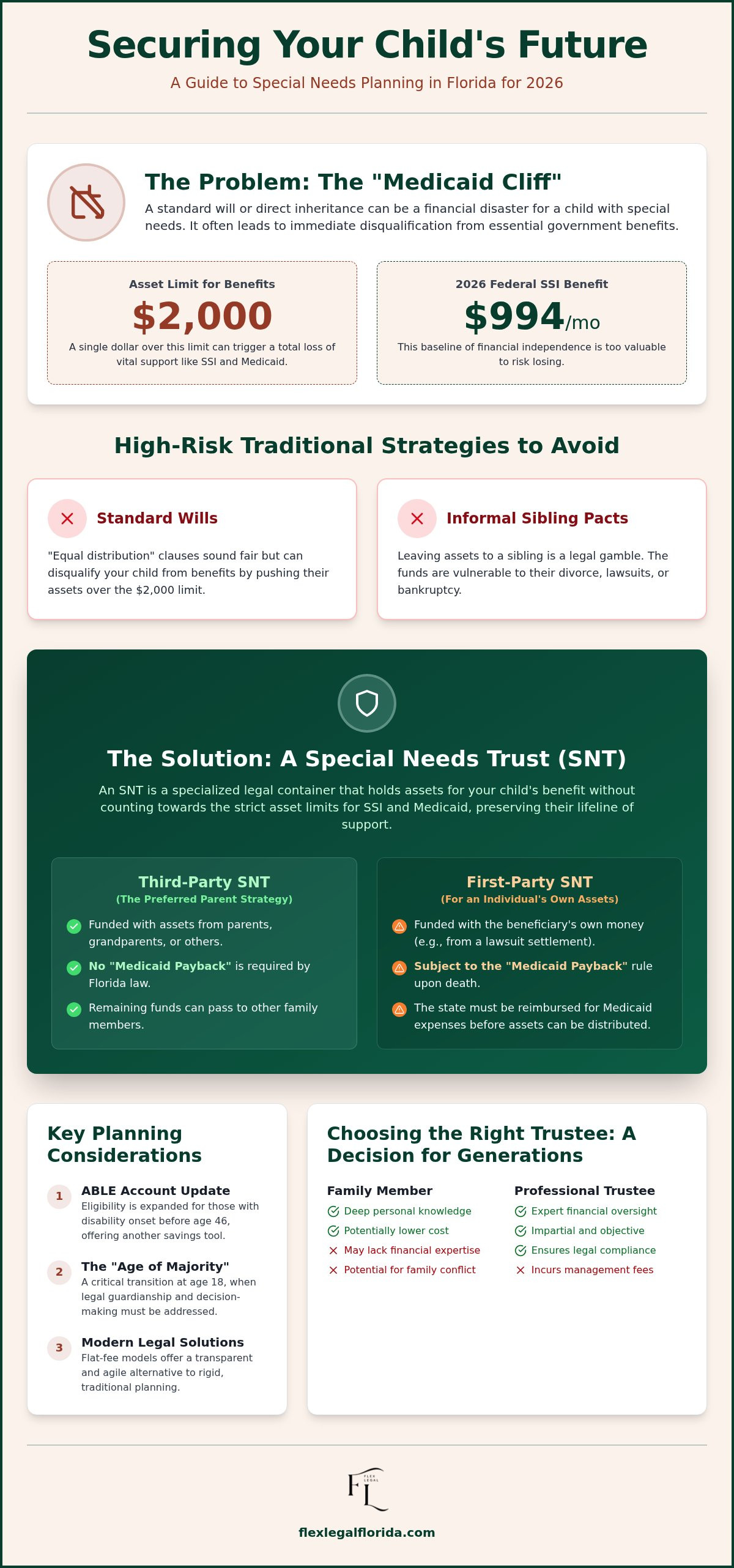
Many parents believe they face a binary choice: either disinherit their child to protect their benefits or leave them a direct inheritance and hope for the best. Neither option is effective. A standard will treats all beneficiaries the same, but for a child with a disability, an "equal" share can be a financial disaster. Working with a special needs planning lawyer West Palm Beach helps you avoid the "Medicaid cliff," where a single dollar over the $2,000 asset limit triggers a total loss of essential support. This isn't just about money; it's about preserving a lifeline of healthcare and housing.
One of the most common mistakes is leaving assets to a sibling with the "understanding" that they'll use the money for their disabled brother or sister. This is a high-risk legal gamble. Once those funds are in the sibling's name, they're legally their property. If that sibling faces a divorce, a lawsuit, or a bankruptcy, the money intended for your child's care could be seized by creditors. A specialized lawyer creates a protective firewall, ensuring assets are used exactly as you intended without becoming vulnerable to someone else’s legal or financial troubles.
Understanding the Impact on Florida Government Benefits
Direct inheritances often cause an immediate disqualification from Supplemental Security Income (SSI). In 2026, the maximum federal SSI payment is $994 per month, which provides a baseline of financial independence that's too valuable to lose. Because SSI eligibility is typically the gateway to Florida Medicaid, losing one usually means losing the other. Florida social programs are means-tested, which means they're strictly reserved for individuals who fall below specific income and asset thresholds. Without a proactive plan, a well-meaning gift can unintentionally strip away your loved one’s access to doctors and medications.
Why Traditional Estate Planning Falls Short
Standard estate plans often rely on "equal distribution" clauses. While this sounds fair, it's frequently the wrong choice for a beneficiary with special needs. A generic document doesn't account for the complex interplay between private assets and public support. Additionally, the probate process in Palm Beach County can be slow. Delays in court can interrupt the flow of funds needed for daily care, therapy, and specialized equipment. Choosing special needs planning over generic document drafting ensures your child has an agile support system. This often involves creating a Supplemental Needs Trust, which allows you to provide a high quality of life while keeping government benefits fully intact.
The Special Needs Trust (SNT): The Foundation of Your Child’s Future
A Special Needs Trust (SNT) acts as a specialized legal container for assets. It ensures that money intended for your child doesn't count toward the strict asset limits that govern SSI and Medicaid. By working with a special needs planning lawyer West Palm Beach, you can build a structure that provides for your loved one without risking their basic safety net. This arrangement is governed by the "Sole Benefit" rule. This rule requires that all trust distributions exclusively benefit the person with the disability. It prevents the money from being used for other family members, which protects the trust’s legal integrity and keeps regulators satisfied.
Third-Party SNTs: The Preferred Parent Strategy
Third-Party SNTs are often the ideal choice for parents and grandparents. Because these trusts are funded with someone else’s money, Florida law doesn't require a "Medicaid Payback" when the beneficiary passes away. This means any remaining funds can stay within the family or go to other siblings. Integrating this tool with a revocable trust creates a cohesive plan. It covers your entire estate while pinpointing the specific needs of your child. It's a streamlined way to ensure your legacy provides lifelong support.
First-Party SNTs and the Medicaid Payback Rule
Sometimes, a child receives money directly through a personal injury settlement or an unplanned inheritance. In these cases, a First-Party SNT is necessary under federal guidelines like 42 U.S.C. § 1396p(d)(4)(A). While these trusts preserve benefit eligibility, they come with a catch: the Medicaid Payback rule. After the beneficiary passes, the state has a right to be reimbursed for the cost of medical care provided during their lifetime. It's a complex trade-off that requires precise drafting to satisfy Florida regulators and protect the beneficiary's immediate needs.
The true power of an SNT lies in its incredible flexibility. Government benefits cover the basics like food and shelter, but the trust fills the gaps that make life enjoyable. Funds can pay for specialized tutoring or supplemental services through Florida Department of Education's ESE Programs. You can also use the money for new laptops, modified vehicles, or even family vacations. These "quality of life" expenses are essential for a thriving life. If you're ready to explore these modern solutions, Flex Legal can help you design a trust that mirrors your family's unique goals and values.
Life Stage Planning: Adapting to Your Loved One’s Evolving Needs
Special needs planning isn't a static event; it's a dynamic process that must evolve alongside your family. As your child grows, their legal and financial requirements shift from early intervention support to adult independence. A special needs planning lawyer West Palm Beach helps you anticipate these transitions before they become crises. By building an agile framework today, you ensure that your loved one’s support system remains uninterrupted through every phase of life.
Step 1: Early Intervention (Ages 0-17): Focus on establishing the foundational Special Needs Trust and coordinating with educational advocates. This period is about building a reservoir of resources for the future.
Step 2: The Transition to Adulthood (Age 18): This is a critical legal milestone. In Florida, once a child turns 18, the law presumes they're a fully independent adult. You must have legal authority in place to continue making medical or financial decisions.
Step 3: Choosing the Right Authority: You'll need to decide if your child requires a full guardianship or if less restrictive alternatives can protect their interests while preserving their dignity.
Step 4: Caregiver Succession: You must designate who'll step into your shoes when you're no longer able to provide care. This ensures a seamless transition of both management and emotional support.
The "Letter of Intent": Your Emotional Legacy
While trusts and wills handle the money, the Letter of Intent handles the life. This document is the most important non-legal piece of your plan. It serves as a comprehensive instruction manual for future caregivers and trustees. It should detail your child’s daily routines, medical history, specific food preferences, and social goals. It’s where you record the small details that only a parent knows, like what calms them during a sensory overload. You should update this letter annually to ensure it reflects your child’s current reality and evolving personality.
Guardianship and Its Alternatives in Palm Beach County
When your child reaches the age of majority, you don't automatically retain the right to manage their affairs. For many, a durable power of attorney is a sufficient and less intrusive way to help an adult child manage their life. However, if your loved one lacks the capacity to sign legal documents, you may need to petition the 15th Judicial Circuit Court for guardianship. This process can be limited, where the child retains some rights, or plenary, where the guardian manages all aspects of their life. To avoid future uncertainty, you can also designate a pre-need guardian. This legal step prevents the court from appointing a stranger to take control of your child's care if an emergency occurs. Partnering with an experienced special needs planning lawyer West Palm Beach ensures you select the most respectful and effective path for your family’s unique situation.
Choosing the Right Trustee: A Decision for Generations
Selecting a trustee is just as critical as drafting the trust document itself. Many families confuse the role of a Guardian with that of a Trustee, but they're distinct legal responsibilities. A Guardian manages the daily care, medical decisions, and personal well-being of your loved one. In contrast, a Trustee manages the money, investments, and distributions. While one person can technically hold both roles, separating them often provides a better system of checks and balances. A special needs planning lawyer West Palm Beach can help you weigh these options to ensure your child’s financial future is managed by someone with the right temperament and expertise.
Family members are the most common choice for trustees because of their deep emotional connection and personal knowledge of the beneficiary. However, the administrative burden is significant. Family trustees may struggle with the complex reporting requirements or find it difficult to say "no" to inappropriate spending requests. Modern planning often incorporates a Trust Protector. This is an agile oversight role that allows a neutral third party to remove a trustee or amend the trust if Florida’s laws change. It adds a layer of adaptability that traditional, rigid trusts often lack.
The Duties of a Special Needs Trustee
The primary job of a trustee is to enhance the beneficiary’s life without accidentally triggering a loss of benefits. This requires a deep understanding of Social Security’s "In-Kind Support and Maintenance" (ISM) rules. If a trustee pays for food or shelter directly, the beneficiary’s SSI payment, which is $994 per month in 2026, could be reduced by up to one-third. Trustees must also file annual tax returns and maintain meticulous accounting records for the court or state agencies. A trustee holds a fiduciary duty to the beneficiary, meaning they must legally act with the highest standard of care and in the beneficiary’s absolute best interest.
Family Succession: Naming Successor Trustees
You should never name just one person to manage a trust. Life is unpredictable, and your first choice may eventually become unable or unwilling to serve. We recommend naming at least two levels of successor trustees to ensure continuity. When evaluating a sibling for this role, honestly assess if they're ready for the lifelong administrative commitment. A popular alternative is a "Co-Trustee" arrangement. This pairs a family member, who provides the emotional insight, with a professional corporate trustee in West Palm Beach, who handles the heavy lifting of taxes and compliance. This hybrid model offers the best of both worlds: professional expertise and a personal touch. If you're unsure who should lead your family's plan, contact Flex Legal to discuss a customized trustee succession strategy.
Flex Legal: Your Agile Ally for Special Needs Planning in West Palm Beach
Traditional estate planning often feels like a relic of the past, defined by rigid meetings and confusing hourly bills. At Flex Legal, PLLC, we believe your family deserves a different experience. As a modern special needs planning lawyer West Palm Beach, we act as your agile ally, stripping away the complexity of Florida statutes to reveal a clear, actionable path forward. We don't just hand you a stack of papers; we build a dynamic support system that protects your child's quality of life and your family's peace of mind. Our approach is designed to be as responsive as the families we serve, ensuring that your legal framework can pivot whenever life changes.
Florida’s legal landscape for disability benefits is notoriously difficult to navigate. Between the $2,000 asset limit and the nuances of the iBudget waiver, it’s easy to feel overwhelmed by the technicalities. We simplify these hurdles by using streamlined workflows and transparent, flat-fee planning. You’ll never have to wonder about the cost of a phone call or a routine document update. This transparency allows us to focus on the real goal: ensuring your plan grows as your child’s needs evolve. By removing the friction of traditional law firm models, we empower you to make decisions with confidence and speed.
A Modern Approach to Estate Law
We prioritize accessibility and empathy because we know your time is already stretched thin. By leveraging modern technology, we make the legal process efficient and stress-free. Whether it’s through digital communication or flexible meeting options, we meet you where you are. Our practice goes beyond the basic trust; we specialize in comprehensive asset protection for the entire family. This holistic view ensures that every piece of your financial life works in harmony to support your loved one with special needs. We don't believe in one-size-fits-all solutions; we believe in customized strategies that provide a secure foundation for generations.
Secure Your Loved One’s Future Today
The best time to start planning was yesterday, but the second best time is today. When you schedule an initial consultation with Jennifer L. Flexer, Esq., you can expect a conversation rooted in empathy and professional authority. We’ll review your current situation, identify potential risks to government benefits, and outline a roadmap for a legally sound future. You’ll leave with a clear understanding of how to protect your child’s inheritance while keeping their public support fully intact. Don’t wait for a crisis to force your hand. Take the first step toward a secure future today and ensure your child is never without a dedicated advocate. A well-crafted plan is the greatest gift of stability you can provide.
Build a Future Defined by Security and Independence
Securing your loved one’s future requires more than just good intentions; it demands an agile legal framework that adapts to Florida’s strict $2,000 asset limit. You’ve learned why a standard will falls short and how a properly structured Special Needs Trust serves as the foundation for lifelong advocacy. By selecting the right trustee and documenting your "Letter of Intent," you’re providing the roadmap your child needs to thrive across every life stage. Partnering with a special needs planning lawyer West Palm Beach ensures your family stays ahead of the "Medicaid cliff" with modern, result-oriented strategies.
Flex Legal provides the flat-fee transparency and personalized guidance you need to navigate these complex statutes without the stress of traditional hourly billing. Jennifer L. Flexer, Esq. is ready to act as your family’s expert ally, turning legal jargon into actionable peace of mind. Schedule Your Special Needs Planning Consultation with Flex Legal today to protect your child’s government benefits and secure their long-term quality of life. You've worked hard to provide for your family; let's ensure that legacy remains protected forever.
Frequently Asked Questions
Can I set up a special needs trust myself in Florida?
While you can technically find forms online, setting up an SNT without a special needs planning lawyer West Palm Beach is a high-risk gamble. Florida’s statutes and Social Security’s regulatory manuals are incredibly complex. A single drafting error can trigger a total benefit disqualification. Professional oversight ensures your trust satisfies every federal requirement while remaining agile enough to handle future law changes.
How much does it cost to set up a special needs trust in West Palm Beach?
Legal fees for special needs planning vary based on the complexity of your family’s assets and the specific type of trust required. Flex Legal prioritizes transparency by offering modern, flat-fee options for many essential estate planning documents. This approach removes the anxiety of unpredictable hourly billing. During your initial consultation, we provide a clear breakdown of the investment needed to secure your child’s future.
What happens to the money in a special needs trust if my child dies?
The destination of the remaining funds depends on whether you established a first-party or third-party trust. In a third-party SNT, you designate successor beneficiaries, such as siblings or charities, to receive the balance. A first-party SNT is subject to the Medicaid payback rule. This means the state must be reimbursed for medical expenses before any funds are distributed to your other heirs.
Can a special needs trust pay for housing or rent in Florida?
Yes, a trust can pay for housing, but it often triggers a reduction in SSI payments due to "In-Kind Support and Maintenance" rules. In 2026, this reduction is typically capped at one-third of the $994 federal benefit rate. Your trustee must weigh the value of providing a specific home against the loss of that monthly cash income to determine the most beneficial path forward.
What is the difference between an ABLE account and a Special Needs Trust?
An ABLE account is a tax-advantaged savings tool with an annual contribution limit of $20,000 in 2026. It's only available to those with disability onset before age 46. A Special Needs Trust has no asset cap and can hold much larger inheritances or settlements. Many families use both tools together to create a comprehensive, multi-layered financial strategy for their loved one's care.
Is a special needs trust the same as a revocable living trust?
No, a revocable living trust is designed to avoid probate, not to protect government benefit eligibility. If a beneficiary with special needs receives assets through a standard revocable trust, they'll likely lose their SSI and Medicaid. A special needs trust includes specific "supplemental" language that prevents the assets from being counted toward the strict $2,000 resource limit required for public assistance.
How often should I update my special needs plan in West Palm Beach?
You should review your plan every three to five years or whenever a major life event occurs. Changes in Florida’s legislative landscape, such as the 2026 ABLE Act adjustments, can significantly impact your strategy. Regular check-ins with a special needs planning lawyer West Palm Beach ensure your documents remain compliant and your trustee designations are still appropriate for your family’s current reality.
Can I name myself as the trustee of my child’s special needs trust?
Yes, parents frequently serve as the initial trustees of a third-party special needs trust. This allows you to manage the funds while you are healthy and active. However, it’s essential to name successor trustees who can step in when you're no longer able to serve. This ensures that your child never faces a gap in financial management or daily advocacy for their needs.


Comments