
Navigating the West Palm Beach Probate Court Process: A 2026 Family Guide

What if the biggest hurdle in settling your loved one's estate isn't the law itself, but a single missed digital notification? Losing a family member is heavy enough without the added pressure of the 15th Judicial Circuit's strict procedural demands. You're likely feeling the weight of looming deadlines and the complexity of the West Palm Beach probate court process, especially with recent 2026 updates to filing thresholds. It's natural to worry about legal costs or getting tangled in the court's Online Scheduling (OLS) system.
We're here to transform that confusion into a clear, manageable path forward. This guide provides the exact steps you need to take, from depositing the original will within ten days to meeting the new $150,000 threshold for summary administration. You'll learn how to master local e-filing requirements, protect estate assets from creditors, and choose a Personal Representative with confidence. We'll walk through the specific timelines and modern tools used by Palm Beach County courts to ensure you settle the estate with efficiency and peace of mind.
Table of Contents
Understanding Probate in Palm Beach County’s 15th Judicial Circuit
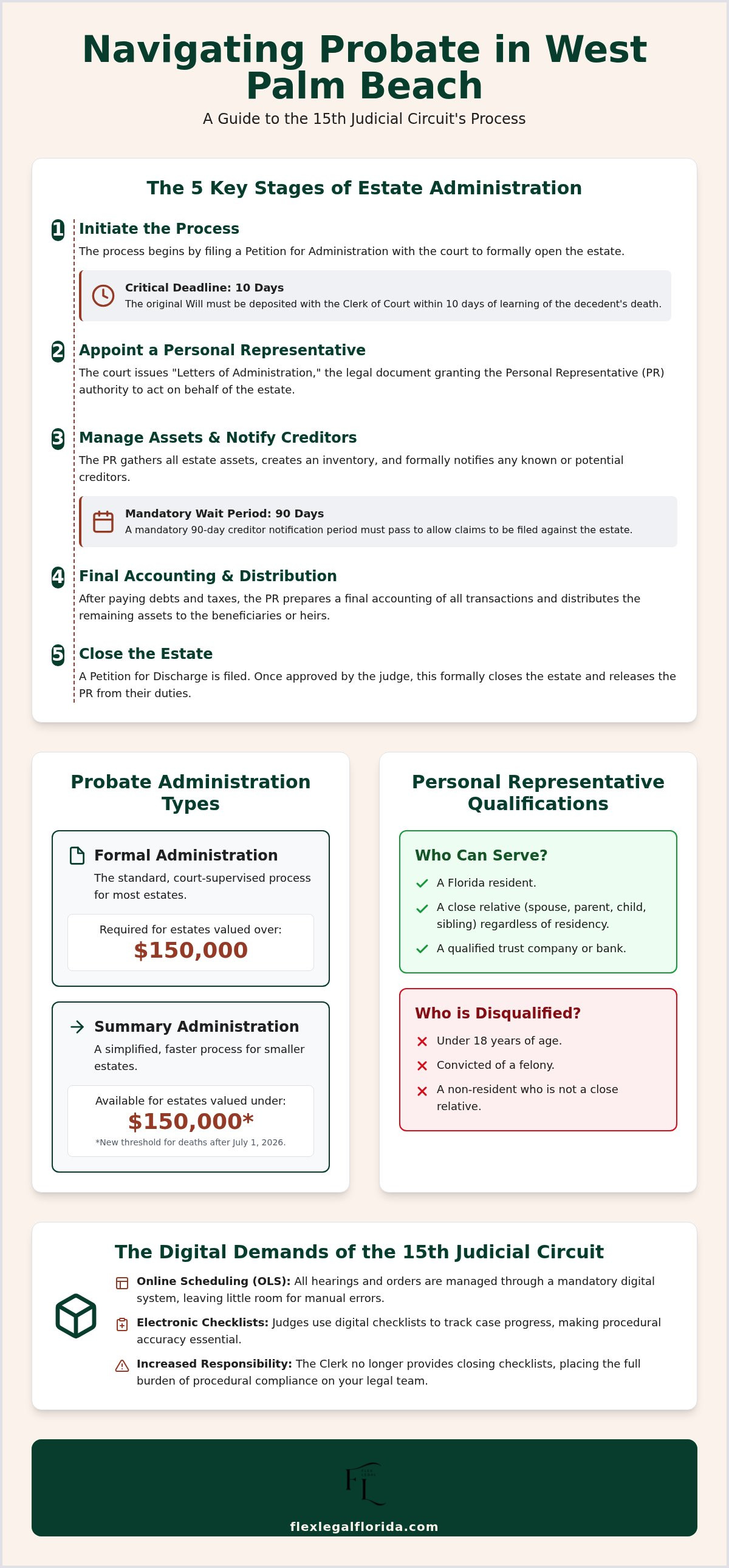
At its core, the Probate process is the court-supervised legal procedure for identifying a deceased person's assets, paying their debts, and distributing what's left to their heirs. In West Palm Beach, this isn't a generic state-wide routine; it's a specific sequence managed by the 15th Judicial Circuit. Whether the decedent left a valid Will (testate) or died without one (intestate), the court provides the framework to ensure the estate is settled fairly. Because of the technical nature of these filings, Florida law generally requires a personal representative to hire a probate lawyer palm beach county to navigate formal administration. This requirement protects you from personal liability and ensures the West Palm Beach probate court process moves forward without avoidable friction.
When is Probate Required in West Palm Beach?
Probate is necessary when a resident passes away owning assets titled solely in their name. If a bank account or a piece of local real estate doesn't have a co-owner with "rights of survivorship" or a designated "payable on death" beneficiary, the court must intervene to transfer title. Understanding the distinction between asset types is your first step in planning.
Probate Assets: These include individual bank accounts, vehicles, or Palm Beach County real estate held without a survivorship deed.
Non-Probate Assets: Items like life insurance policies with a specific beneficiary named or assets held in a Revocable Living Trust typically bypass court supervision entirely.
Identifying these assets early prevents surprises during the filing phase. If the total value of non-exempt assets is $150,000 or less for a death occurring after July 1, 2026, you might qualify for a simplified summary administration, which is significantly faster than the formal alternative.
The Local Players: The Clerk and the Judge
Your case lives within the 15th Judicial Circuit, which covers all of Palm Beach County. The Palm Beach County Clerk of the Circuit Court & Comptroller acts as the official record-keeper. It's important to know that the Clerk no longer provides closing checklists for families. This shift places the responsibility of procedural accuracy directly on your legal team.
The Probate Division is overseen by local judges, such as Judge Charles E. Burton or Judge Sarah Willis. These judges utilize a mandatory Online Scheduling System (OLS) and electronic checklists to move cases through the docket. Success in West Palm Beach depends on your ability to adapt to these digital tools and follow local Administrative Orders precisely. It's a modern system designed for efficiency, but it leaves little room for manual errors or missed digital notifications.
Initiating the Process: The Petition and Personal Representative
Opening an estate in the 15th Judicial Circuit begins with filing the Petition for Administration. This formal document asks the court to recognize the decedent's death and appoint a Personal Representative, often referred to as an executor in other jurisdictions. Once the judge reviews the petition and finds everything in order, they issue "Letters of Administration." This document is the essential "golden ticket" for the West Palm Beach probate court process. It grants the Personal Representative the legal authority to manage bank accounts, sell real estate, and negotiate with creditors. For more context on these initial steps, the Florida Bar's probate guide for families offers a helpful overview of the legal framework.
Who Can Serve as a Personal Representative in Florida?
Florida law is specific about who can lead an estate through the court system. To qualify, a person must be either a Florida resident or a close relative, such as a spouse, sibling, child, or parent, regardless of where they live. Someone who is not a Florida resident and not a close relative generally cannot serve. There are also strict disqualifying factors to consider. A person cannot serve if they have been convicted of a felony or are under the age of 18. For complex estates in West Palm Beach, families sometimes appoint a trust company to act as a neutral, professional fiduciary. This choice can alleviate the burden on family members during an emotional time.
The 15th Circuit Online Scheduling System (OLS)
The West Palm Beach probate court process has moved away from traditional paper filings for proposed orders. The 15th Circuit utilizes the Online Scheduling System (OLS), which serves as the mandatory digital gateway for West Palm Beach probate judges. You cannot simply email or mail a proposed order to the judge's chambers. Your attorney must upload these documents through the portal to ensure they are reviewed and signed electronically. This digital-first approach requires an agile legal partner who understands the nuances of the 15th Circuit’s specific electronic checklists. Managing these digital requirements is a core part of probate administration, ensuring your case doesn't get stuck in a digital queue.
Managing Estate Assets and Notifying Creditors
Once the court issues your Letters of Administration, your focus shifts from legal authorization to active management. The first major milestone in the West Palm Beach probate court process is filing the estate inventory. You must submit a comprehensive list of all probate assets, including their fair market value as of the date of death, within 60 days of your appointment. This inventory provides the court and all interested parties with a transparent baseline for the estate's value. It covers everything from local bank accounts to tangible personal property like jewelry or artwork. Accurate valuation is critical, as it influences both tax filings and the final distribution to heirs.
During this phase, you also manage the transition of "Exempt Property." Under Florida law, certain assets like household furniture, appliances, and up to two personal motor vehicles are protected for the benefit of the surviving spouse or children. These items are generally shielded from the claims of unsecured creditors, ensuring the family's immediate needs are met without interference from the decedent's past debts.
The Creditor Notification Process
Florida law mandates a structured 90-day window for creditors to file claims against the estate. As the Personal Representative, you must proactively identify "reasonably ascertainable" creditors and serve them with a formal Notice to Creditors. For unknown creditors, your attorney will arrange for a public notice to be published in a local newspaper of general circulation. This starts the clock on the three-month period for claims. If a creditor is particularly concerned about the administration, they may file a "Caveat" with the Clerk’s office, which ensures they receive immediate notice when the estate is opened.
Your attorney serves as a vital filter during this period. Not every claim filed against the estate is valid. Some may be "stale" and barred by the statute of limitations, while others might lack proper documentation. We help you scrutinize these filings and, when necessary, file formal objections to protect the estate’s remaining value for the beneficiaries.
Protecting the Florida Homestead
The primary residence of a West Palm Beach resident often receives special constitutional protections. Florida homestead law ensures that the family home is generally not considered a probate asset available to satisfy creditor claims. However, this protection is not automatic. You must file a "Petition to Determine Homestead Status" to receive a court order confirming that the property is exempt. This legal step is essential for clearing the title and allowing the home to pass to the rightful heirs. Because this process often requires professional appraisals to establish value, reviewing how much does probate cost in florida can help you budget for the necessary valuation and filing fees associated with securing the family home.
Final Accounting and Distribution of the Estate
Reaching the final stage of the West Palm Beach probate court process requires a final surge of precision. Once the 90-day creditor window closes and all valid debts are resolved, the Personal Representative must prepare a Final Accounting. This document is a comprehensive ledger. It tracks every receipt and disbursement that occurred during the administration period. Transparency here is your best defense against family disputes. By providing a clear record of how funds were managed, you build trust with the beneficiaries and protect yourself from future claims of mismanagement.
If all heirs are in agreement and want to expedite the closing, they can sign a "Waiver of Accounting." This modern, streamlined approach bypasses the formal ledger requirement. It saves time and reduces the administrative costs associated with the final stages of the case. Once the accounting is either filed or waived, the Personal Representative submits a Petition for Discharge. This is the formal request for the judge to officially close the estate and release the representative from their duties.
Settling Taxes and Administrative Expenses
Florida law mandates a specific order of priority for paying estate obligations. Before any assets reach the hands of heirs, the estate must satisfy its "Class 1" through "Class 8" expenses. This starts with administrative costs and funeral expenses. It also includes federal income taxes. The decedent's final Form 1040 is typically due on April 15 of the year following their death. You must ensure these tax obligations are met to avoid personal liability for the Personal Representative.
Attorney fees are also prioritized during this phase. Florida Statute 733.6171 outlines statutory fees that are presumed reasonable for probate administration. While these fees are negotiable, they provide a standardized framework that ensures the estate's legal needs are met professionally. Settling these costs early in the final stage allows for a clean transition to asset distribution.
Distributing Assets to Beneficiaries
The final transfer of property, cash, and personal belongings is the moment everyone has been waiting for. The Personal Representative carries out the distributions exactly as outlined in the Will or according to Florida’s intestacy laws. If a beneficiary cannot be located in Palm Beach County, the law provides specific procedures for depositing their share into the court registry or with the state. This ensures the estate can still be closed even when a family member is missing.
To finalize the West Palm Beach probate court process, the 15th Circuit requires a specific "Discharge Checklist" for formal administration cases. This electronic filing ensures that every procedural box has been checked, from the initial inventory to the final receipts from beneficiaries. Once the judge signs the Order of Discharge, the estate is officially settled. If you need assistance managing these complex closing requirements, our team offers expert probate administration services to guide you through the finish line.
Modern Probate Solutions: Why Flexibility Matters in West Palm Beach
The traditional West Palm Beach probate court process is often viewed as a slow, rigid sequence of events. However, the 15th Circuit’s shift toward digital filing and electronic scheduling offers a unique opportunity for those who value speed and transparency. We believe probate shouldn't be an intimidating hurdle. Instead, it’s a manageable transition that rewards proactive management and modern communication. By acting as an agile ally, we help families navigate these requirements without the friction of outdated legal models.
Our approach extends beyond standard probate administration. We provide specialized support for complex scenarios, including business succession planning and special needs planning. These cases require a deeper level of customization to ensure that assets are not just distributed, but protected for the long term. Whether you’re managing a local family business or securing the future of a vulnerable loved one, we adapt our strategy to meet your specific goals and the court's evolving standards.
Streamlining Court Requirements
The 15th Circuit’s mandatory electronic checklists and Online Scheduling System (OLS) can be daunting if you aren't using them daily. We leverage these digital tools to reduce administrative friction and keep your case moving forward. Our billing practices prioritize transparency, helping you understand the difference between statutory fees and hourly rates for complex probate litigation. Flex Legal’s commitment to providing clarity helps families move through an often-confusing court system with confidence. We focus on results, not just hours billed, ensuring you always know where your case stands.
Planning Ahead: Can You Avoid Probate Entirely?
While we're here to help you settle an estate today, we also look toward your family’s future. It’s possible to bypass the West Palm Beach probate court process entirely for the next generation. By establishing a revocable living trust, you can ensure that your assets pass directly to your beneficiaries without court intervention. This proactive step saves your family time and preserves their privacy. For a deeper look at how to secure your legacy, explore our revocable trust guide. When you're ready to build a dynamic support system for your estate, you can schedule a consultation with Flex Legal to discuss your probate or planning needs.
Moving Forward with Confidence in Palm Beach County
The West Palm Beach probate court process doesn't have to be a source of stress or confusion. By understanding the 15th Circuit’s digital scheduling requirements and the strict timelines for creditor notifications, you’ve already taken the first step toward a successful estate settlement. Whether you're managing a complex business succession or simply securing a family homestead, the key is staying ahead of court deadlines and maintaining transparent communication with all beneficiaries. This proactive approach ensures that assets are protected and heirs receive their inheritance without unnecessary friction.
Flex Legal acts as your agile ally in this journey. Founded by Jennifer L. Flexer, Esq., our firm specializes in the nuances of 15th Circuit probate administration. We replace the traditional, slow-moving legal model with a modern approach that prioritizes clarity and efficiency. With our transparent fee structures and deep expertise in local court procedures, we ensure you have a clear roadmap from the initial petition to the final discharge. You don't have to navigate these legal waters alone.
Navigate probate with a modern ally—Contact Flex Legal today. You have the tools to handle these responsibilities with grace, and we're here to support you every step of the way.
Frequently Asked Questions
How long does the probate process typically take in West Palm Beach?
The timeline depends on the complexity of the estate and the type of administration used. A summary administration might conclude in just a few weeks or months if there are no disputes. However, a formal administration typically lasts between six and twelve months. This duration accounts for the mandatory 90-day creditor period and the time needed to file final tax returns. Using digital tools like the Online Scheduling System helps prevent unnecessary delays.
Do I need a lawyer for probate in Palm Beach County?
Florida law generally requires a personal representative to be represented by an attorney for formal administration. The only exception is if the personal representative is the sole interested person in the estate. Even then, the technical requirements of the West Palm Beach probate court process make legal guidance essential. An attorney ensures you meet strict deadlines for inventories and accountings while protecting you from personal liability throughout the proceedings.
What is the difference between Formal and Summary Administration in Florida?
The primary difference lies in the value of the estate and the time since the decedent's passing. For deaths occurring on or after July 1, 2026, estates with non-exempt assets of $150,000 or less qualify for summary administration. Formal administration is required for estates exceeding that value or when the decedent died less than two years ago. Formal administration is more comprehensive and requires the appointment of a personal representative to manage the estate.
How much does it cost to file for probate at the Palm Beach County Clerk’s office?
Filing fees are set by the Palm Beach County Clerk of the Circuit Court. For a formal administration, the petition fee is approximately $395. If you qualify for summary administration, the cost is around $340 for estates over $1,000 and $230 for smaller estates. You should also budget between $150 and $300 for the mandatory notice to creditors publication. These costs are separate from the legal fees associated with your probate administration.
What happens if someone dies in West Palm Beach without a Will?
When a resident dies intestate, Florida’s intestacy statutes dictate how assets are distributed to heirs. Typically, the estate passes to the surviving spouse and children in specific percentages defined by law. The West Palm Beach probate court process still applies to these estates to ensure legal title is transferred correctly. We help families navigate these default rules to ensure the administration moves forward logically and minimizes conflict between potential heirs.
Can I sell the decedent’s West Palm Beach house while it is in probate?
You can sell a home during probate, but it requires specific legal steps. If the Will grants the personal representative the "power of sale," you might not need a specific court order for every step. Otherwise, you must obtain a court order authorizing the sale. For homestead property, a Petition to Determine Homestead Status is often necessary to clear the title before a sale can close and the proceeds can be distributed to heirs.
Who is responsible for paying the probate attorney fees in Florida?
Probate attorney fees are considered an administrative expense of the estate. This means they are paid directly from the estate's assets before the final distribution to beneficiaries. Florida Statute 733.6171 provides a framework for fees that are presumed reasonable based on the estate's value. At Flex Legal, we prioritize transparency in our fee structures, ensuring the family understands the costs involved in settling their loved one’s affairs from the very beginning.
What is a "Caveat" and why would someone file one in my probate case?
A caveat is a formal notice filed with the court by an interested person, such as a creditor or an heir. It acts as a digital alert that ensures the filer is notified immediately when a probate case is opened. This prevents an estate from being settled without the caveator's knowledge. Creditors often use caveats to protect their right to file a claim, while heirs may use them if they suspect a Will is invalid.


Comments