
How to Talk to Your Parents About Their Estate Plan: A Compassionate Guide for Florida Families

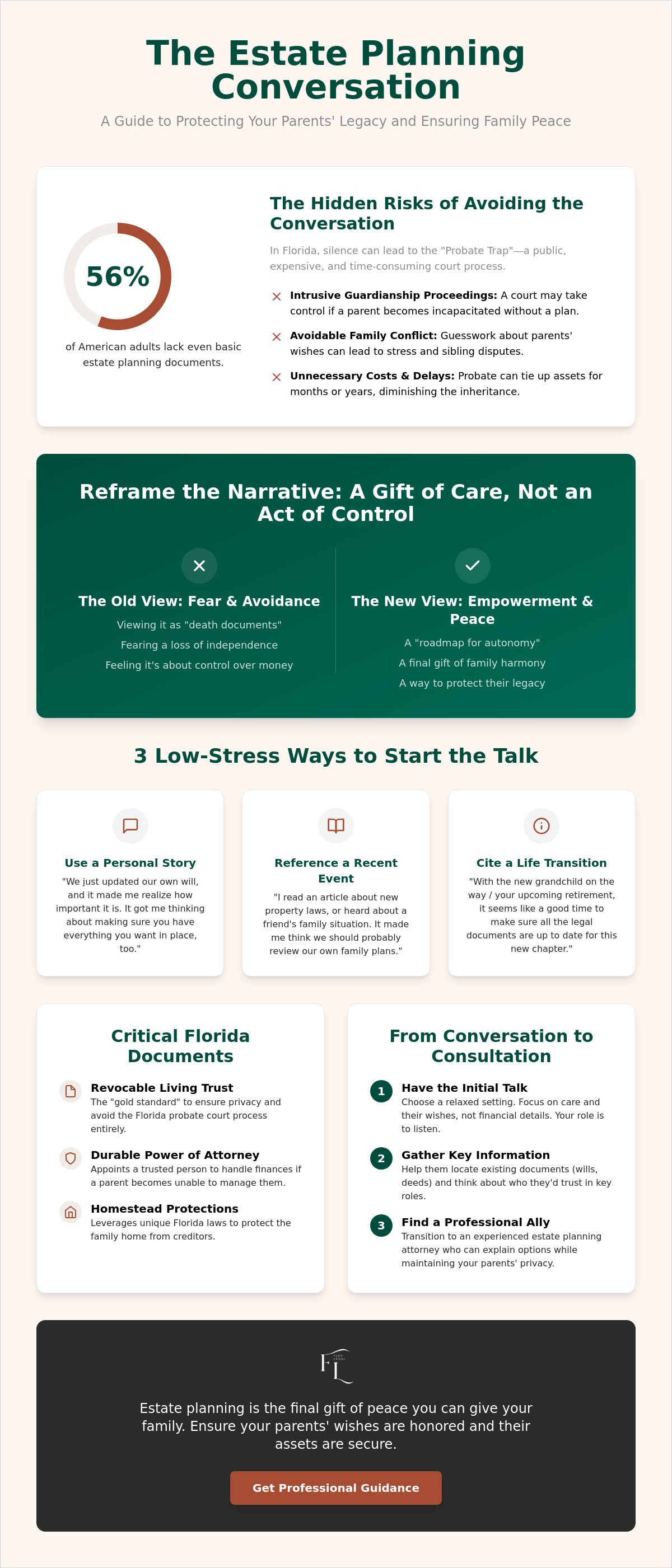
Did you know that 56% of American adults currently lack even basic estate planning documents? For many Florida families, this silence isn't just uncomfortable; it's a legal risk that could leave a lifetime of assets tied up in a lengthy, expensive probate court process. It's perfectly normal to feel anxious about how to talk to parents about their estate plan without sounding intrusive or overly focused on mortality. You want to protect their legacy, but you also want to respect their autonomy and maintain family harmony.
We believe that estate planning is a final gift of family peace rather than a somber obligation. This guide offers a clear, adaptable path to help you initiate these vital discussions while highlighting how modern Florida laws can safeguard your family's future. We'll explore practical conversation starters, the importance of avoiding formal probate through tools like Revocable Living Trusts, and how to handle Florida-specific requirements for incapacity planning and Homestead protections. By the end of this article, you'll have a solution-oriented strategy to ensure your parents' wishes are honored and their assets are secure.
Table of Contents
Why the 'Estate Talk' is the Greatest Gift You Can Give Your Family
Estate planning often carries a heavy, somber reputation. Many people view it as preparing for the end, but the reality is much more empowering. At its core, what is estate planning really about? It's a roadmap for autonomy. It ensures that your parents remain the authors of their own story, even if they can't physically speak for themselves one day. Understanding how to talk to parents about their estate plan starts with shifting the focus from "death documents" to a dynamic strategy for living well. We call this "Agile Planning." It's not a static set of rules, but a flexible support system that adapts as your family's needs and Florida's legal landscape evolve.
The emotional cost of uncertainty is far higher than the effort of a single conversation. When a plan is absent, the burden falls on children to guess what their parents would have wanted during a crisis. This guesswork often leads to stress, anxiety, and avoidable conflict. By initiating this talk now, you are offering your family the gift of clarity. You are replacing "what if" with a concrete path forward that honors your parents' values, protects their hard-earned assets, and preserves the peace of your household.
The Hidden Risks of Avoiding the Conversation
The consequences of silence are often felt most acutely in the Florida court system. Without a clear plan, families in West Palm Beach often fall into the "Florida Probate Trap." This is a public, time-consuming process where a judge oversees how assets are distributed. If your parents become incapacitated without a plan, you might face significant probate lawyer palm beach county fees or even complex Guardianship Proceedings. These court-ordered controls are often intrusive, expensive, and entirely public. Uncertainty creates a breeding ground for sibling disputes, turning a time of grief into a season of litigation. A clear plan removes that burden, providing a final gift of family harmony by ensuring assets move smoothly to the next generation without unnecessary friction.
Reframing the Narrative: Care vs. Control
Parents often resist these conversations because they fear a loss of independence. They've spent decades building their lives; the idea of handing over the keys can feel like a surrender. Your role isn't to take control, but to act as a facilitator for their wishes. By focusing on their legacy and comfort, you move the needle from "financial oversight" to "compassionate care." Frame the discussion around protecting what they've built and ensuring their voice is heard above the noise of state laws and courtrooms. Remind them that this process is about their comfort, their medical preferences, and their legacy. You are simply the ally helping them secure the future they want on their own terms.
Preparation: What You Need to Know Before You Speak
Starting a conversation about legacy requires more than just good intentions. It demands a level of self-awareness and localized knowledge. Before considering how to talk to parents about their estate plan, take a moment to evaluate your own emotional state. Are you approaching this out of genuine concern for their autonomy, or is there an underlying anxiety about your own future? Your parents will pick up on your energy. If you come from a place of service and protection, the conversation will feel like a partnership rather than an interrogation.
Look for natural life transitions to introduce the topic. Retirement, a recent health update, or the arrival of a first grandchild often serve as organic triggers. These moments provide a logical reason to discuss the future without making the conversation feel forced or morbid. It's also vital to consider the family dynamic. If your siblings are supportive, a unified front can be helpful. However, if there's history of tension, a one-on-one approach with the child the parents trust most is often more effective. Deciding who should be in the room is just as important as deciding what to say.
Understanding the Florida Legal Landscape
Florida laws are unique, especially regarding property and probate. A Will written in another state twenty years ago might face significant hurdles here. This is why a revocable trust is often considered the gold standard for West Palm Beach families. It offers a level of privacy and probate avoidance that a standard Will cannot match. Beyond asset distribution, incapacity planning is arguably more urgent. Ensuring your parents have a updated Durable Power of Attorney and healthcare directives means they stay in control of their care even if they can't voice it. Viewing this preparation as a gift to your family helps keep the focus on protection rather than paperwork.
Choosing the Right Time and Place
Timing is everything. Many people wait for the holidays to bring this up because the family is together. This is usually a mistake. High-stress environments and festive moods don't mix well with legal discussions. Instead, choose a quiet morning walk or a dedicated coffee date. You want a low-pressure environment where your parents feel comfortable and unhurried. If you're feeling unsure about the technical details, looking into modern estate planning solutions can help clarify the legal tools available to protect them.
3 Practical Scripts for Starting the Estate Planning Talk
The hardest part of learning how to talk to parents about their estate plan is often the first sentence. You don't need a formal boardroom meeting or a somber family summit to make progress. In fact, the most successful discussions often happen during a quiet moment at home or a casual car ride. The goal isn't to take over their finances; it's to ensure their voice remains the loudest in the room, regardless of what the future holds. These three scripts provide a respectful, natural way to open the door without causing defensiveness.
The 'I Just Did Mine' Approach
One of the most effective ways to normalize the topic is to lead by example. Sharing your own experience removes the stigma and positions you as a peer rather than an investigator. You might say: "I recently visited an estate planning attorney west palm beach to finally get my own documents in order. Honestly, the relief I felt knowing my kids and assets are protected was huge. It made me wonder, do you feel that same sense of peace with your current plan, or is it time for a quick refresh?"
This approach works because it focuses on your personal feeling of security. It also allows you to ask for their wisdom. Asking, "Who did you choose as a trustee when you were my age?" makes them the expert. It frames the conversation around their life experience rather than their mortality.
The 'Third-Party' Strategy
If your parents are particularly private, blaming external factors can take the heat off the personal relationship. You can use a news story or a legal update as your catalyst. Try this: "I was reading about how complex Florida's probate laws have become lately. It sounds like a total hassle for families to deal with the courts. I'd hate for our family to get stuck in that trap. Have you had a chance to check if your Homestead property is titled correctly to avoid probate?"
By positioning the state's complex legal system as the "enemy," you become their ally. You aren't asking for their bank account numbers. You are offering to help them navigate a "hassle" and protect what they've built from unnecessary court interference.
Handling the Pushback
It's common to hear "I'm not dying yet" or "It's none of your business." Don't let this end the conversation. Instead, pivot back to their autonomy. If they say they aren't dying, respond with: "I know, and I want it to stay that way. This is actually about making sure you're cared for exactly how you want while you're still here." If they value privacy, reassure them: "I don't need to see the specific numbers. I just need to know where the roadmap is so I can follow your lead if you ever need me to step in." This keeps the focus on their control and your support.
Critical Florida-Specific Questions to Ask Your Parents
Once you've successfully opened the door using the scripts we discussed, the focus shifts to the technical details that ensure the plan actually works under Florida law. It's one thing to have a conversation; it's another to ensure that documents are legally enforceable and optimized for our state's unique regulations. Knowing how to talk to parents about their estate plan means moving beyond generalities and asking specific questions about their current protections. Florida’s legal environment is distinct, particularly regarding property rights and incapacity, so your questions should reflect these nuances.
Consider using this checklist to guide your next talk:
"Do you have a durable power of attorney that was updated recently to meet current Florida standards?"
"How is the title to your Florida Homestead property held? Does it automatically avoid probate?"
"If you were unable to make medical decisions tomorrow, who is your designated Health Care Surrogate?"
"Are your digital 'keys'—like passwords for bank accounts and investment portals—stored in a place where we can access them in an emergency?"
"Does your plan account for the specific needs of any family members with disabilities, such as through a Special Needs Trust?"
The Power of Attorney and Health Care Surrogate
Many families mistakenly believe estate planning is only about what happens after death. In reality, "Life Documents" like the Power of Attorney and Health Care Surrogate are often more critical. They prevent "The Gap," which is the dangerous period between a sudden incapacity and death when assets can be frozen and medical decisions stalled. To be legally effective, a Florida Durable Power of Attorney must strictly adhere to the updated 2026 statutory requirements regarding witness signatures and specific "superpowers" granted to the agent. Without these precise legal markers, your family could be forced into expensive Guardianship Proceedings just to pay your parents' monthly bills.
Special Considerations for Florida Residents
Florida offers some of the strongest Homestead protections in the country, but these same laws can make transferring a home complex. You should ask if they have considered a "Lady Bird Deed" versus a Revocable Living Trust for the family residence. Each has different implications for probate avoidance and Medicaid eligibility. Additionally, if there is a grandchild or child with a disability in the family, it is vital to consult a special needs planning attorney. A standard inheritance could accidentally disqualify them from essential government benefits. Because Florida is a litigious state, asking about asset protection planning is also a smart move to ensure their legacy isn't vulnerable to external claims.
If your parents' current documents haven't been reviewed in the last few years, it may be time to consult with a modern legal ally to ensure their protections are up to date.
From Conversation to Consultation: The Next Steps
Moving from a kitchen-table discussion to a professional law office is often the most significant leap in this process. Many parents hesitate at this stage because they don't want to be a financial burden on their children. If you're wondering how to talk to parents about their estate plan without causing friction over costs, consider offering to cover the initial consultation yourself. Frame it as an investment in your shared peace of mind. This simple gesture removes the immediate financial barrier and demonstrates that you are fully committed to supporting their legacy on their own terms.
One of the biggest deterrents for Florida seniors is the fear of the "hourly clock" common in traditional legal practices. They worry that every question or follow-up phone call will result in a surprise bill. Modern firms have moved away from this rigid, intimidating model. Flat-fee planning provides the transparency and certainty parents crave. It allows them to speak freely and take the time they need to understand their options without feeling rushed by a ticking timer. This approach turns a potentially stressful transaction into a comfortable, collaborative experience.
Finding the Right Legal Partner in West Palm Beach
Traditional "Big Law" institutions often feel distant and overly formal. For modern families, an agile firm offers a more personalized and responsive experience. You want a partner who doesn't just draft static documents but understands the interplay between different legal tools. It's helpful to look for asset protection lawyers near me who can integrate wealth security directly into the estate plan. This holistic approach ensures that your parents' assets are protected from external risks while being positioned for a smooth transition. Look for a firm that prioritizes a partnership vibe over a transactional one.
The Flex Legal Approach to Family Peace
At Flex Legal, PLLC, we believe in removing the friction from professional planning. Our flat-fee packages are designed to provide total clarity from the start, ensuring there are no hidden costs or surprises. We specialize in core pillars like Special Needs Planning and Asset Protection, ensuring that every family member is protected under Florida's unique statutes. To prepare for your first meeting, we recommend gathering any existing Wills, property deeds, and a high-level list of assets. This preparation allows us to focus on your parents' goals from the very first minute. Schedule a streamlined consultation with Flex Legal, PLLC today.
Take the Next Step Toward Family Peace
Starting this journey requires courage, but the result is a legacy built on clarity rather than court-ordered confusion. By reframing the discussion as a roadmap for autonomy and using the practical scripts we've explored, you've already bypassed the biggest hurdle. You now understand the urgency of Florida-specific protections, from the unique requirements of a Durable Power of Attorney to the vital importance of avoiding the local probate process. Mastering how to talk to parents about their estate plan is a profound act of care that ensures their wishes remain the final word.
Now that you've opened the door, it's time to formalize those protections with a partner who values transparency as much as you do. Led by Jennifer L. Flexer, Esq., Flex Legal, PLLC specializes in Florida Special Needs Planning and modern estate solutions. Our fixed-price packages offer the total cost certainty your family needs to move forward without hesitation or surprise fees. Secure your parents' legacy with a flat-fee estate plan from Flex Legal, PLLC. You have the tools and the scripts to lead this transition; we're here to provide the legal framework that makes it permanent.
Frequently Asked Questions
How do I talk to my parents about estate planning if they are very private?
Focus on their autonomy rather than their specific bank balances. Reassure them that you don't need to see the numbers; you simply need to know where the documents are stored in case of an emergency. This approach respects their privacy while ensuring you can follow their instructions. Understanding how to talk to parents about their estate plan in this context means positioning yourself as a supporter of their wishes rather than an auditor of their assets.
What happens in Florida if my parents die without a will or trust?
Their assets will be distributed according to Florida’s intestacy laws through a court-supervised probate process. This often means the state decides who receives what, regardless of any verbal promises your parents might have made. It also exposes the estate to public record and potential delays. Without a specific plan, the family loses control over the timeline and the distribution, often leading to higher costs and unnecessary stress for the heirs.
Is a will enough to avoid probate in Palm Beach County?
A Last Will and Testament does not avoid probate; it actually serves as the primary instruction manual for the probate court. To bypass the court process entirely in Palm Beach County, your parents likely need a Revocable Living Trust or other probate-avoidance tools like Lady Bird Deeds. These mechanisms allow for a private and immediate transfer of assets. Relying solely on a will means your family must still navigate the formal administration process after their passing.
My parents live in West Palm Beach but their will is from New York—is it still valid?
A will executed in another state is generally valid in Florida if it met the legal requirements of that state at the time. However, Florida has very specific laws regarding Homestead property and Durable Power of Attorney that an out-of-state document might not address. Relying on an old New York will can lead to significant legal hurdles. It is usually best to have a local attorney review the documents to ensure they align with current Florida statutes.
How can I help my parents with estate planning without looking greedy?
Frame the conversation around their medical care and protection during incapacity rather than their money. Explain that you want to ensure they receive the exact type of care they desire if they can't speak for themselves. By focusing on "Life Documents" like the Designation of Health Care Surrogate, you demonstrate that your priority is their comfort and well-being. This shifts the narrative from inheritance to compassionate support for their quality of life.
What is the difference between a Power of Attorney and a Health Care Surrogate in Florida?
A Durable Power of Attorney handles financial and legal decisions, while a Designation of Health Care Surrogate focuses strictly on medical choices. In Florida, these are two distinct documents that serve different purposes during a parent's incapacity. The Power of Attorney allows you to manage their bills and property; the Health Care Surrogate gives you the authority to talk to doctors and make treatment decisions. Both are essential for a comprehensive and agile support system.
Should I be the one to bring up a Special Needs Trust for my sibling?
You should bring this up if you're concerned that a standard inheritance might disqualify your sibling from essential government benefits. A Special Needs Trust is a vital tool for protecting a vulnerable family member’s eligibility for programs like Medicaid or SSI. Learning how to talk to parents about their estate plan regarding a sibling shows you're looking out for the long-term security of the entire family. It ensures your parents' legacy provides support without causing accidental harm.
How much does a typical estate planning consultation cost in West Palm Beach?
Costs vary significantly depending on the complexity of the estate and the firm’s fee structure. Many traditional firms still bill by the hour, which can make the total cost unpredictable for families. Modern, agile firms often offer flat-fee packages for an initial consultation or a full estate plan to provide total cost certainty. You should check with individual firms in West Palm Beach to see if they offer a streamlined, fixed-price model that fits your parents' budget.



Comments