
How Long Does an Executor Have to Settle an Estate in Florida? 2026 Timeline

Updated: Aug 21
If you have recently been named a Personal Representative, you are likely feeling the weight of a ticking clock and the constant pressure from beneficiaries asking when they will receive their inheritance. One of the first questions you need answered is how long does an executor have to settle an estate in florida to manage expectations and avoid legal pitfalls. It's a heavy responsibility, and it's natural to worry that a single missed court deadline could lead to personal liability or friction with your family.
We understand that you want a clear path forward that prioritizes speed and transparency. This guide provides a detailed 2026 roadmap for settling an estate, accounting for recent legislative shifts like the increased 150,000 dollar threshold for summary administration. You'll discover the mandatory 90 day creditor period and the typical six to twelve month timeline for a standard formal administration. We will walk through the specific steps required by the court, giving you the confidence to act as an agile, effective leader for the estate while ensuring every asset is protected and every legal obligation is met with precision.
Table of Contents
The Florida Probate Timeline: 'Executor' vs. Personal Representative
When you start searching for how long does an executor have to settle an estate in florida, you'll quickly notice that Florida law uses the specific title of Personal Representative. This modern terminology reflects the active, professional nature of the role. You're the engine of the estate's resolution. The probate process is a court-supervised framework designed to ensure that debts are paid and assets are distributed correctly. Understanding this terminology is the first step in moving from confusion to a clear, actionable plan.
One of the most immediate deadlines is the 10-day rule. Florida Statute 732.901 requires the custodian of a Will to file it with the Clerk of the Court within 10 days of learning about the death. In West Palm Beach, this means visiting the Palm Beach County Clerk. While this doesn't settle the estate, it's the mandatory first hurdle. Missing this deadline can complicate the process before it even truly begins. It's an essential task that sets the stage for everything that follows.
It's vital to understand that the settlement clock doesn't actually start the moment a loved one passes away. Instead, the timeline officially begins once the court issues your Letters of Administration. This document is your legal authority that grants you the power to move money, sell property, and communicate with creditors. Until these letters are in your hand, you're essentially in a waiting room. The efficiency of your attorney in filing the initial paperwork determines how quickly this clock starts ticking.
Official Roles in the 2026 Probate Process
The Personal Representative serves as a fiduciary, which is the highest standard of care recognized by the law. You're responsible for gathering assets, notifying creditors, and eventually distributing what remains to the rightful heirs. Because of the high stakes and technical requirements, Florida law almost always requires the Personal Representative to be represented by a licensed attorney. In Palm Beach County, the Probate Judge acts as a neutral arbiter, reviewing every petition and accounting to ensure the process remains fair. This structure is designed to prevent friction and protect everyone involved from administrative errors.
First Steps After a Loved One Passes
Summary vs. Formal Administration: Which Path Are You On?
The path your case takes depends largely on the value of the assets and how long it's been since the decedent passed away. Not every situation requires the full, court-intensive process. When people ask how long does an executor have to settle an estate in florida, they are often surprised to learn that Florida offers a "fast track" known as Summary Administration. This streamlined version can often be completed in just a few weeks. In contrast, Formal Administration is the standard, multi-month journey that most Florida estates must navigate. Understanding which category you fall into is the first step in setting realistic expectations for beneficiaries.
One critical factor that often confuses families is the West Palm Beach homestead. Under Florida law, a primary residence is generally considered an "exempt asset." This means its value typically doesn't count toward the financial thresholds for probate. You might have a home worth millions, but if the other assets like bank accounts or vehicles are below the limit, you could still qualify for the faster process. For a deeper dive into these requirements, you can consult this Florida Bar consumer pamphlet, which outlines the basic rights and duties involved in each path.
Qualifying for Summary Administration
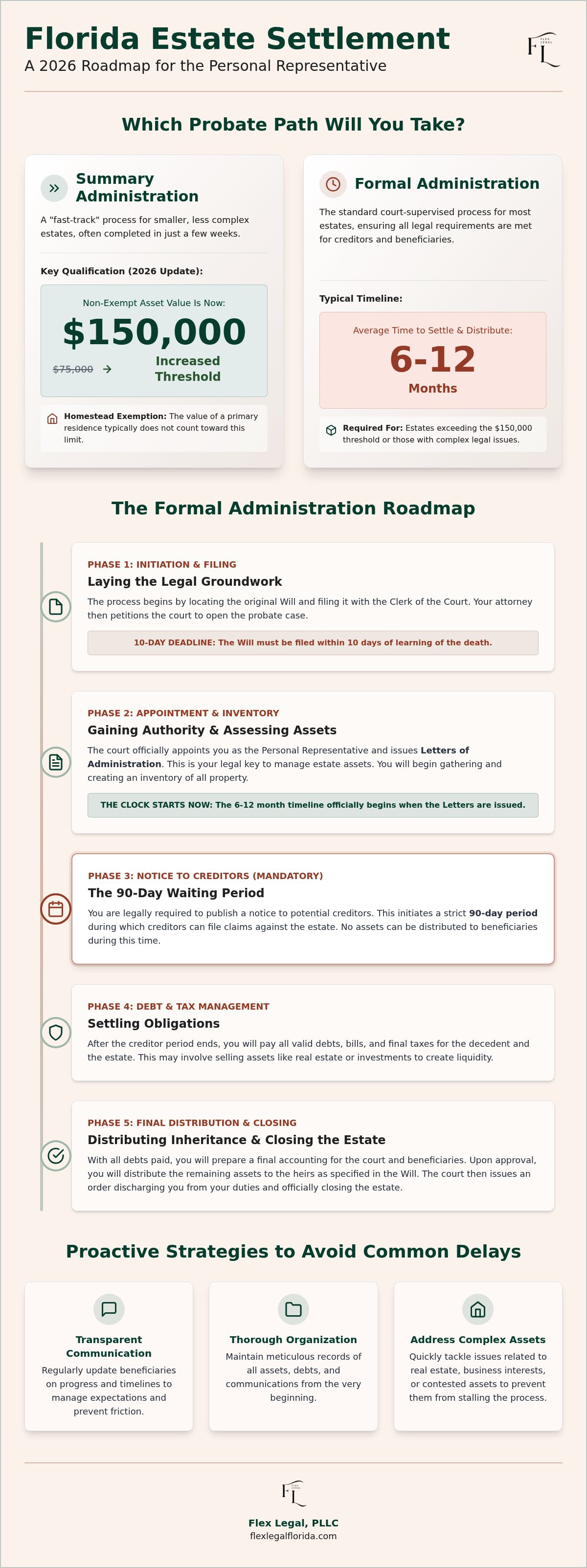
In 2026, the landscape for Summary Administration has become more accessible. Historically, this path was reserved for estates with non-exempt assets totaling less than $75,000. However, effective July 1, 2026, under CS/HB 1337, this threshold has increased to $150,000. This change allows many more families to bypass the longer Formal Administration process. You can also qualify if the decedent has been deceased for more than two years, regardless of the estate's value. Even on this fast track, delays can occur if creditors file claims that must be resolved before the judge signs the Order of Summary Administration.
When Formal Administration is Mandatory
If the estate's non-exempt assets exceed the $150,000 limit, or if the decedent's Will specifically requires it, you must use Formal Administration. This process is also necessary when there are complex business interests to manage or if you expect a "sibling rivalry" to turn into a legal contest. Formal Administration provides a more robust structure for resolving disputes and managing ongoing administrative tasks. Because this path involves more rigorous court oversight, working with a Probate Lawyer in Palm Beach County: A 2026 Guide to Florida Estate Administration is essential to keep the timeline moving efficiently. If you're feeling overwhelmed by the paperwork, reaching out for a consultation with a modern probate attorney can help you identify the most agile path forward for your specific situation.
Step-by-Step: The 6 to 12 Month Probate Roadmap
Starting a probate case in Palm Beach County often feels like a marathon, but it's actually a series of coordinated sprints. When you're asking how long does an executor have to settle an estate in florida, the answer for most formal administrations is between 6 and 12 months. This timeline isn't arbitrary; it's built around specific legal protections for heirs and creditors alike. By understanding the rhythm of the court, you can manage the expectations of impatient beneficiaries and ensure you're meeting your fiduciary duties without unnecessary stress.
Months 1-2: Your attorney files the Petition for Administration. Once the judge reviews the documents and signs the order, you'll receive your Letters of Administration, which officially starts your legal authority.
Months 3-5: This phase is dominated by the mandatory creditor period. It's a statutory "waiting room" that cannot be bypassed in a formal administration.
Months 6-9: During this window, you'll resolve any valid debt claims and handle the professional appraisal of estate assets.
Months 10-12: The finish line involves filing a final accounting with the court, handling any necessary tax filings, and finally distributing the inheritance to the beneficiaries.
The Critical 90-Day Creditor Window
One of the most significant steps in the process is publishing a Notice to Creditors in a local Palm Beach County newspaper. This action triggers a mandatory 90-day clock during which potential lenders can file claims against the estate. You can't just wait for them to see the paper, though. You must also conduct a diligent search for "known or reasonably ascertainable" creditors, such as utility companies or medical providers, and serve them notice directly. Beneficiaries cannot be paid until this window closes. This pause ensures that all legitimate debts are settled, protecting you from personal liability down the road.
Gathering and Valuing Estate Assets
While the creditor clock is ticking, you'll be busy documenting exactly what the decedent owned. Florida law requires the Personal Representative to file a verified Inventory with the court within 60 days of receiving their Letters of Administration. For West Palm Beach real estate or specialized business interests, this usually involves hiring professional appraisers to establish a fair market value as of the date of death. You'll also need to consolidate liquid assets into a dedicated estate bank account. When you're focused on how long does an executor have to settle an estate in florida, remember that staying organized during this asset-gathering phase is the best way to prevent administrative delays later in the year.
Common Causes of Probate Delays in Florida
Even with a clear roadmap, the reality of estate administration often introduces friction that can stretch the calendar. When you ask how long does an executor have to settle an estate in florida, you must account for variables that sit outside the standard statutory windows. While the law provides a baseline, specific complications can turn a six month process into a multi year endeavor. Recognizing these hurdles early allows a Personal Representative to pivot quickly and maintain momentum.
Beneficiary friction is one of the most frequent roadblocks we see in Palm Beach County. When sibling rivalry enters the courtroom, progress stops. Disputes over the distribution of sentimental items or the fair market value of a family home often require mediation or judicial intervention. Similarly, if a Will is contested or an heir cannot be located, the court cannot authorize a final distribution until these legal "clouds" are cleared. Agile legal support is essential here to resolve conflicts before they drain the estate's resources.
Real Estate Hurdles in West Palm Beach
West Palm Beach real estate adds a layer of complexity to the probate timeline. Selling a home during probate isn't as simple as a traditional real estate transaction. You must ensure the title is clear, manage local inspections, and sometimes obtain specific court approval for the sale price. This becomes even more challenging for out of state Personal Representatives who are trying to manage property maintenance from a distance. Many families choose to avoid these hurdles entirely by following a Revocable Trust Guide: Protecting Your West Palm Beach Estate in 2026, which allows for a private transfer of property outside of the court's view.
Tax Complications and the 12-Month Mark
For larger or more complex estates, the IRS becomes a silent partner in the probate process. If the estate's value triggers the need for a Federal Estate Tax Return (Form 706), the timeline automatically extends. The Personal Representative often has to wait for an IRS "Closing Letter" before they can safely distribute assets without the risk of personal liability. This letter confirms that the tax return has been accepted and no further audits are pending. Even the decedent's final individual income tax return can cause a delay if the death occurred late in the year, as the estate must remain open until all tax clearings are received. If you are concerned about potential delays or need help managing a complex filing, you should contact Flex Legal for a streamlined probate administration strategy that prioritizes efficiency.
Speeding Up the Process: How to Close an Estate Efficiently
Settling an estate doesn't have to feel like a bureaucratic stalemate. While the law sets the floor for timelines, your own efficiency as a Personal Representative determines the ceiling. When people ask how long does an executor have to settle an estate in florida, they're usually looking for the quickest possible finish line. By taking a proactive approach, you can ensure the process moves as quickly as the Palm Beach County court system allows. Efficiency isn't just about speed; it's about accuracy and transparency.
The most effective tool for avoiding delays is proactive communication. Friction often arises when beneficiaries feel left in the dark. By providing regular, clear updates, you prevent the suspicion and "sibling rivalry" that often lead to courtroom disputes. Organized record-keeping is equally vital. The final accounting is the ultimate gatekeeper to the distribution of assets. If you haven't tracked every expense and receipt from the start, the court may reject your final petition, sending you back to the beginning of the administrative process. For those looking to avoid this entire court-supervised journey in the future, a Revocable Living Trust remains the gold standard for private, rapid asset transfer.
Best Practices for the Personal Representative
Start by setting clear expectations with family members from day one. They need to understand that certain statutory windows, like the mandatory 90-day creditor period, are non-negotiable legal requirements. Your responsiveness is the next biggest factor in the timeline. When your attorney asks for a bank statement, an appraisal, or a property deed, providing it within 48 hours keeps the momentum alive. Most importantly, never commingle your personal funds with the estate account. Even a small, well-intentioned transfer of money can trigger a full audit, potentially adding months of delay to the case.
How Flex Legal Streamlines Probate
Traditional law models are often slow and rigid. We take a different path by leveraging modern technology to handle document processing and communication with the Palm Beach County courts more efficiently. Our approach is designed to alleviate the heavy administrative burden on the Personal Representative, acting as an agile ally throughout the 2026 probate landscape. We prioritize clarity and comfort, ensuring you have a streamlined path forward without the typical friction of professional services. Schedule a consultation with Flex Legal today to discuss your probate needs.
Take Control of Your Florida Probate Timeline
Settling an estate is a significant commitment, but it doesn't have to be an overwhelming one. You now have a clearer understanding of how long does an executor have to settle an estate in florida, from the 90-day creditor window to the full 12-month roadmap for formal administrations. Whether you're navigating the newly expanded 150,000 dollar threshold for Summary Administration or managing a complex estate with West Palm Beach real estate, your success depends on staying organized and acting with transparency. By following the month-by-month steps we've outlined, you're better equipped to manage beneficiary expectations and meet your fiduciary duties with precision.
If you're ready to move forward without the friction of traditional legal models, we're here to help. At Flex Legal, PLLC, we act as an agile and modern legal ally, navigating the Palm Beach County Probate Court with professional authority and empathetic support. Our focus on streamlined communication means you'll never feel left in the dark during this transition. Contact Flex Legal, PLLC for a streamlined approach to Florida Probate and let us help you reach the finish line with confidence and peace of mind.
Frequently Asked Questions
Can a Personal Representative be held personally liable for estate debts in Florida?
A Personal Representative is generally not responsible for the decedent's debts using their own money. However, you can be held personally liable if you breach your fiduciary duty. This often happens if you distribute assets to beneficiaries before the 90-day creditor period ends or if you fail to pay valid taxes. Managing the estate with an agile legal partner ensures you follow every statutory requirement and avoid these costly personal risks.
What happens if the Personal Representative doesn't settle the estate within a year?
While many families ask how long does an executor have to settle an estate in florida, the one-year mark is a standard benchmark for formal administration. If the case remains open longer, the Palm Beach County court may issue an Order to Show Cause. You'll need to provide a valid reason for the delay, such as ongoing litigation or a pending IRS closing letter, to receive a formal extension from the judge.
Is there a deadline to start the probate process after someone dies?
Florida law requires the custodian of a Will to file it with the Clerk of Court within 10 days of learning of the death. While there isn't a strict deadline to file the initial Petition for Administration, waiting too long can lead to asset depreciation or property tax complications. Starting early allows you to secure the Letters of Administration and begin the official 2026 timeline for asset distribution and debt resolution.
How long after death can beneficiaries expect to receive their inheritance?
Beneficiaries typically receive their inheritance within 6 to 12 months for a standard formal administration. If the estate qualifies for the 2026 Summary Administration threshold of 150,000 dollars, this timeline can shrink to just a few weeks or months. The specific duration depends on how quickly the Personal Representative inventories assets and whether any creditors file claims that require a formal legal response or negotiation before the court allows distribution.
Can the Personal Representative sell the decedent's house before probate is over?
Yes, you can often sell West Palm Beach real estate during the probate process. If the Will grants a "power of sale," you may proceed with the transaction once you have your Letters of Administration. If the Will is silent or there is no Will, you must obtain a court order authorizing the sale. This ensures the title is clear for the buyer and the proceeds are protected for the estate's creditors and heirs. For those managing similar sales in the DC, Maryland, or Virginia area, a DMV Probate Agent can provide specialized expertise for those specific jurisdictions.
What is the fastest way to settle an estate in Palm Beach County?
The fastest route is Summary Administration, which bypasses many of the hurdles of formal probate. To qualify in 2026, the non-exempt assets must be worth 150,000 dollars or less, or the decedent must have been passed for more than two years. Using modern technology and a proactive legal strategy can further accelerate this process, allowing families to finalize the distribution of assets in a matter of weeks rather than months.
Do all assets have to go through probate in Florida?
No, many assets bypass the court system entirely. Accounts with "Payable on Death" designations, jointly held property with rights of survivorship, and assets held within a Revocable Living Trust do not require probate. Understanding how long does an executor have to settle an estate in florida involves identifying which assets are actually "probate assets" and which can be transferred immediately to beneficiaries through beneficiary designations or trust administration without court intervention.


Comments