
Special Needs Planning Attorney West Palm Beach: Securing Your Family’s Future in 2026
- Kelly Mata
- May 7
- 13 min read

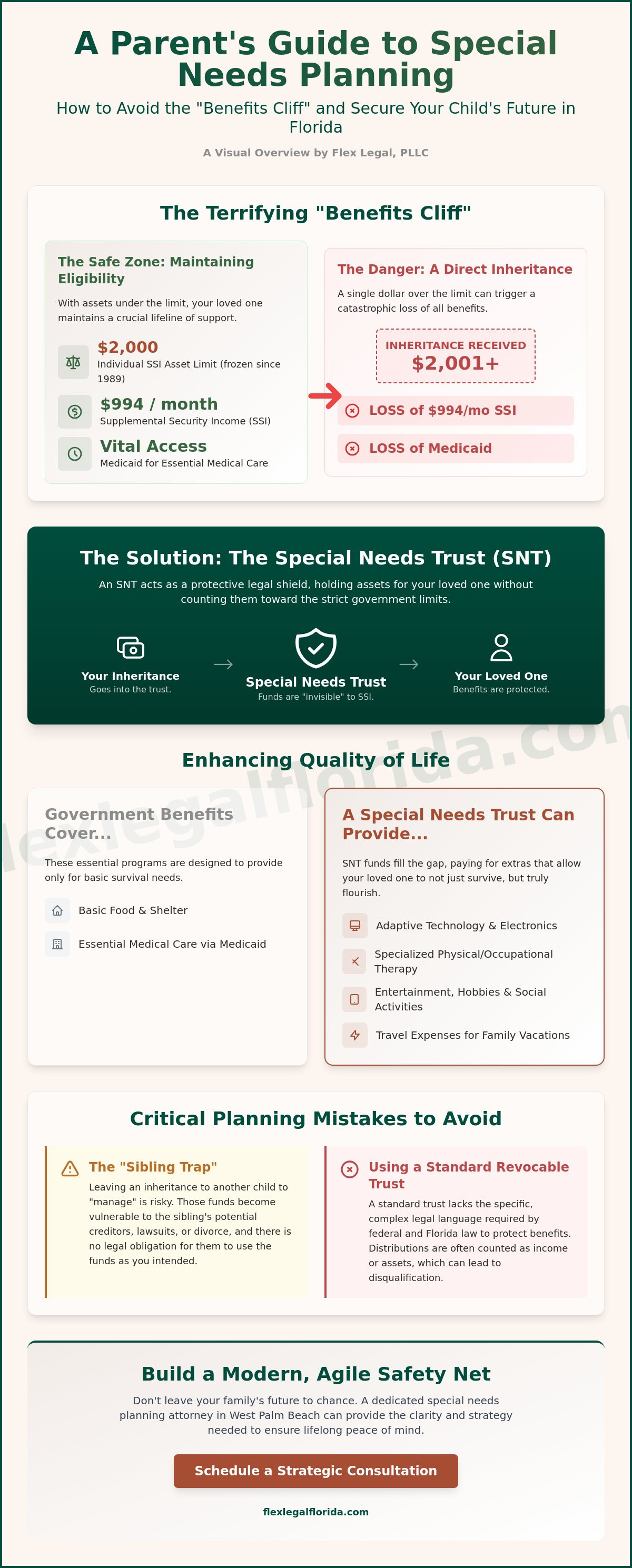
Could a simple act of love like leaving an inheritance accidentally trigger a financial crisis for your child? In 2026, the individual SSI asset limit remains frozen at just $2,000, meaning a single dollar over that threshold can jeopardize a $994 monthly benefit and vital Medicaid access. It's a terrifying "benefits cliff" that keeps many Palm Beach County parents awake at night. Partnering with a dedicated special needs planning attorney West Palm Beach ensures you don't have to choose between providing for your family and maintaining their essential aid.
We believe your legal strategy should be as dynamic as your family's needs. This guide shows you how to build a modern, flexible safety net that protects your loved one's quality of life while securing their government eligibility. You'll learn how to leverage the January 1, 2026, ABLE Act age expansion to 46, utilize the latest SSI food rule changes, and select the right trust structure to provide lifelong peace of mind.
Key Takeaways
Learn how a special needs planning attorney West Palm Beach builds a legal framework that keeps your loved one’s inheritance from triggering a loss of essential government aid.
Identify the strategic differences between trust types to ensure you select a plan that avoids the Florida Medicaid payback requirement.
Avoid the "Sibling Trap" by discovering why relying on other children to manage an inheritance can expose those funds to unintended creditors or lawsuits.
Navigate the Palm Beach County court system with confidence by understanding the local roles of the Clerk of the Circuit Court and probate judges.
See how modern flat-fee pricing and agile legal support can simplify the planning process and provide your family with total financial transparency.
Table of Contents
What is Special Needs Planning and Why Does it Matter in West Palm Beach?
Special needs planning isn't just about preparing for the future; it's about protecting a vital lifeline. For families in Palm Beach County, this specialized legal strategy ensures your loved one receives the inheritance you intended without triggering a sudden loss of government support. Many people assume a standard will is enough. However, a traditional inheritance often leads to the "benefits cliff." This occurs when an individual with a disability receives assets that push them over the strict eligibility limits for Supplemental Security Income (SSI) and Medicaid.
A estate planning attorney West Palm Beach acts as a strategic partner to coordinate these complex moving parts. We ensure your documents comply with Florida-specific trust laws while addressing the unique local landscape of West Palm Beach probate and guardianship rules. By building a tailored plan, you create a seamless transition of care that maintains financial stability and personal dignity.
Protecting SSI and Medicaid Eligibility
SSI and Medicaid are "means-tested" programs. They require beneficiaries to have very limited financial resources to qualify for aid. As of May 2026, the SSI asset limit for an individual remains fixed at a mere $2,000; a figure that has not changed since 1989. If a bank account or inheritance exceeds this amount by even a few dollars, the monthly $994 SSI payment can stop immediately. This loss of income often triggers a loss of Medicaid, which covers essential medical treatments and home-based services.
To prevent this, we use a legal "wrapper" known as a Special Needs Trust. So, What is a Special Needs Trust? Essentially, it's a vehicle that holds assets for the beneficiary's benefit without those assets counting toward the $2,000 limit. The Social Security Administration views these funds as "invisible," allowing the individual to keep their benefits while still having access to the resources you've set aside for them.
Quality of Life vs. Basic Needs
Government benefits are designed to cover the basics: food and shelter. They rarely provide for a thriving, joyful life. Special needs planning fills that gap. Private funds held in a trust can pay for "extras" that Medicaid won't cover. These include:
Specialized physical or occupational therapy.
Modern electronics, computers, and adaptive technology.
Travel expenses for family vacations or visiting relatives.
Entertainment, hobbies, and social activities.
A comprehensive plan also goes beyond finances. It addresses long-term housing and advocacy. We often recommend clients draft a "Letter of Intent" as part of their strategy. While not a legally binding document, it provides future caregivers with a clear roadmap of your loved one's preferences, medical history, and daily routines. Working with a special needs planning attorney West Palm Beach gives you the tools to ensure your family member doesn't just survive, but truly flourishes.
The Foundation of Your Plan: Special Needs Trusts (SNT) in Florida
While a revocable trust is a standard tool for avoiding probate, it often lacks the specific protective language required to shield a beneficiary's government benefits. A standard trust treats distributions as income or assets. In contrast, an SNT ensures the beneficiary never technically "owns" the funds. To remain valid under 2026 Florida statutes, a Special Needs Trust must be an irrevocable instrument established for the sole benefit of an individual with a disability and must explicitly limit the trustee's authority to make distributions that would disqualify the beneficiary from means-tested aid. This legal distinction is why many families seek a special needs planning attorney West Palm Beach to ensure their documents meet both federal and state requirements.
The choice of trustee is pivotal. While a family member understands the beneficiary's daily needs, a professional trustee brings the technical expertise required to navigate complex tax filings and reporting mandates. Many families choose a hybrid approach, appointing a family member as a co-trustee alongside a professional. This balance ensures the trust remains both empathetic and compliant. If you're unsure which trust structure fits your family's needs, scheduling a strategic consultation can clarify your path forward.
First-Party vs. Third-Party Special Needs Trusts
A First-Party SNT is funded with assets that already belong to the individual with a disability. This often includes personal injury settlements or retroactive Social Security payments. These trusts must include a "payback" provision, meaning Florida Medicaid has a right to be reimbursed from the remaining funds after the beneficiary passes away. Conversely, a Third-Party SNT is funded by assets from parents or grandparents. Because the money never belonged to the beneficiary, these trusts do not require a Medicaid payback. This allows any remaining funds to pass to other family members or charities. Both types must adhere to the "Sole Benefit" rule, ensuring funds are used exclusively for the person with the disability.
Pooled Trusts: A Collaborative Alternative
Pooled trusts offer a modern, efficient solution for smaller estates or families without a clear successor trustee. In this model, a Florida-based non-profit organization manages the assets of many individuals, "pooling" them for investment purposes while maintaining separate accounts for each beneficiary. This reduces administrative costs and provides professional oversight that might otherwise be unaffordable. Many families also pair a trust with Florida's ABLE United program. This allows for tax-free savings that the beneficiary can control directly for qualified disability expenses, such as the $20,000 annual contribution limit allowed in 2026. While pooled trusts offer less customization than a private standalone trust, their streamlined nature makes them an agile choice for families prioritizing speed and cost-effectiveness.
The Sibling Trap: Why 'Leaving it to a Brother or Sister' is Risky
Many parents choose the path of least resistance by leaving an inheritance directly to a neurotypical child with the verbal instruction to "look after" their sibling with special needs. It's a decision rooted in love and trust; however, it's one of the most dangerous legal mistakes a family can make. In the eyes of the law, these assets belong entirely to the sibling who receives them. This means the funds are legally vulnerable to that sibling's personal life events, including divorce, bankruptcy, or a civil lawsuit. If a sibling faces a legal judgment in 2026, the money intended for their disabled family member's care could be seized to pay off creditors. Similarly, if that sibling goes through a divorce, those assets might be considered marital property subject to division. Relying on a "moral obligation" provides zero protection in a Florida probate court. For those seeking expert guidance on Special Needs Trusts, it's clear that a formal legal structure is the only way to wall off these assets from outside threats.
Beyond the risk of creditors, there are significant tax implications to consider. When you leave assets to a sibling, they are taxed at that individual's personal income tax rate. A dedicated trust, while subject to its own tax rules, allows for strategic distributions that can minimize the overall tax burden on the family. Consulting with a special needs planning attorney West Palm Beach helps you navigate these financial nuances while ensuring the money actually reaches the person who needs it most.
Legal Vulnerabilities of Informal Agreements
Handshake deals have no standing in Florida's legal system. If the sibling holding the funds passes away unexpectedly, those assets will be distributed according to their own will or Florida's intestacy laws. This often means the money goes to the sibling's spouse or children, potentially leaving the person with special needs with nothing. Furthermore, managing a lifetime of care is a massive administrative burden. A formal Special Needs Trust (SNT) removes this weight from the sibling's shoulders. It provides a clear rulebook for how funds should be spent, which protects the sibling from making accidental distributions that could disqualify their loved one from SSI or Medicaid. Working with an attorney for special needs trust ensures that the legal "heavy lifting" is handled professionally, leaving your children to focus on their personal bond.
Maintaining Healthy Family Relationships
Informal arrangements often lead to deep-seated family resentment. When one sibling acts as the "gatekeeper" of the family's wealth, it creates an uncomfortable power dynamic. The disabled sibling may feel they have to "beg" for money, while the neurotypical sibling may feel overwhelmed by the constant financial requests. We believe in allowing siblings to be siblings rather than bankers. By establishing a formal trust, you provide a neutral, legally-binding set of instructions that everyone must follow. You can even appoint a professional co-trustee or a trust protector to handle the difficult financial decisions. This setup preserves the emotional relationship between your children and ensures the special needs planning attorney West Palm Beach you've chosen can help maintain the plan's integrity for decades to come.
Navigating the Local Landscape in Palm Beach County
The Palm Beach County Clerk of the Circuit Court & Comptroller plays a central role in auditing the annual reports and accountings required for every active guardianship case. For families initiating legal proceedings, all guardianship and mental health filings are processed at the Palm Beach County Main Courthouse located at 205 North Dixie Highway, West Palm Beach, FL 33401. A seasoned special needs planning attorney West Palm Beach understands that success isn't just about filing paperwork; it's about knowing the specific preferences of local probate judges. These judges often have unique expectations regarding trust language and the selection of trustees, which can impact how quickly your plan is approved.
Your strategy must also integrate with local Florida resources to be truly effective. This includes coordinating with the Agency for Persons with Disabilities (APD) to ensure your legal documents don't conflict with iBudget waiver requirements or the newer Florida Community Cares (ICMC) managed-care alternatives. We focus on creating a seamless connection between your private legal protections and these public support systems, ensuring no gap in care occurs when you're no longer there to advocate.
Guardianship vs. Guardian Advocacy in Florida
Florida Statute 744 now mandates that courts consider the "least restrictive alternative" before stripping an individual of their rights. Since July 1, 2024, Florida courts have placed a heavy emphasis on supported decision-making, which allows individuals to keep their rights while receiving help from a trusted advisor. For parents of children with developmental disabilities turning 18, Guardian Advocacy offers a more streamlined, less invasive path than traditional guardianship. It's an agile solution that protects the individual without the high costs and complexity of a full plenary proceeding. Additionally, a properly drafted durable power of attorney can often serve as a vital tool in incapacity planning, potentially avoiding the need for court intervention altogether.
Choosing a West Palm Beach Professional Trustee
Selecting a trustee is one of the most critical decisions in your plan. You can choose between local bank trust departments or specialized Florida trust companies that focus exclusively on special needs cases. When interviewing potential candidates, ask specifically about their familiarity with Florida Medicaid "sole benefit" rules and their experience with the 2024 SSI food rule changes. A local probate lawyer Palm Beach County provides essential support during the administration phase, ensuring the trustee remains compliant with the complex reporting standards set by the Clerk's office. If you're ready to secure your family's future with a plan that accounts for every local detail, contact our West Palm Beach team today for a tailored strategy session.
Modern, Agile Solutions with Flex Legal
Choosing a special needs planning attorney West Palm Beach shouldn't feel like an intimidating or rigid experience. At Flex Legal, PLLC, we've stripped away the stuffy atmosphere of traditional law firms to focus on what matters most: your family's peace of mind. We simplify the planning process by acting as an agile ally, helping you navigate the complex intersection of Florida law and federal benefit regulations. One of our core commitments is transparency. We offer flat-fee pricing for our special needs planning services, ensuring you know exactly what to expect without the stress of unpredictable billable hours. This allows us to focus entirely on building a comprehensive, high-quality blueprint for your loved one's future.
Flexibility is more than just our name; it's the foundation of every strategy we build. We understand that your family's needs in 2026 will likely evolve as your child grows or as government regulations change. Our plans are designed to be dynamic support systems rather than static sets of rules. Whether you're adjusting to the January 1, 2026, ABLE Act age expansion or responding to new Florida Community Cares (ICMC) enrollment options, we ensure your legal framework remains effective and responsive. We're here to help you build a legacy that provides both security and the freedom to thrive.
The Flex Legal, PLLC Difference: Agile and Empathetic
We've moved away from the traditional, slow-moving legal models that often alienate clients. Our firm uses modern technology to make document preparation efficient, clear, and accessible. This streamlined approach means less time spent on administrative friction and more time spent on strategic planning. We view ourselves as partners to West Palm Beach parents, offering an empathetic perspective that prioritizes your comfort. You won't find dense, multi-clausal legalese here. Instead, we provide straightforward declarations of value and actionable advice that helps you make informed decisions for your family member's care.
Start Your Special Needs Plan Today
Beginning your planning journey is a straightforward process when you have a clear roadmap. Most families can complete a comprehensive special needs estate plan within four to six weeks. To make our first meeting as productive as possible, we recommend gathering a few key items beforehand. Having these ready helps us move quickly toward a finalized solution:
Current SSI or Medicaid award letters for the beneficiary.
A list of all assets intended to fund the trust, including real estate and life insurance policies.
Contact information for potential trustees and successor guardians.
Any existing estate planning documents, such as a basic will or power of attorney.
A rough draft of your "Letter of Intent" outlining daily care preferences.
Securing your loved one's quality of life is a proactive step that provides immediate relief to the entire family. Our team is ready to help you navigate the 2026 legal landscape with confidence and clarity. Schedule your West Palm Beach Special Needs Planning consultation today to start building a flexible, lifelong safety net for those who matter most.
Build a Lifelong Safety Net for Your Family
The future of your loved one's care depends on the legal framework you establish today. We've explored how a properly structured Special Needs Trust keeps essential benefits secure and why informal agreements with siblings are too risky in a 2026 legal landscape. By choosing a special needs planning attorney West Palm Beach who understands the local probate judges and the specific requirements of the Palm Beach County Clerk's office, you ensure your plan is both compliant and effective.
Flex Legal, PLLC offers a modern alternative to traditional firms. Our flat-fee estate planning packages provide total financial transparency, while our deep expertise in Florida Special Needs Trusts ensures no detail is overlooked. We provide the agile legal support necessary to adapt as Florida's regulations continue to evolve. You don't have to navigate these complex decisions alone. Secure your loved one's future with a West Palm Beach Special Needs Planning Attorney. Taking this step today brings lasting clarity and protection to your entire family.
Frequently Asked Questions
Can I set up a special needs trust myself in Florida?
While you can technically draft legal documents yourself; doing so is extremely risky for special needs cases. These trusts must strictly adhere to federal guidelines under 42 U.S.C. § 1396p and specific Florida trust codes. A minor phrasing error can lead to an immediate loss of benefits. Consulting a special needs planning attorney West Palm Beach ensures your trust is legally sound and protects your loved one's eligibility from day one.
How much money can be in a special needs trust in 2026?
There is no maximum limit on the amount of money a special needs trust can hold. While the individual asset limit for SSI remains at $2,000 in 2026; the trust itself can hold unlimited assets. This allows families to provide for a lifetime of care; including high-cost medical needs or specialized housing; without ever jeopardizing the beneficiary's monthly government payments or essential medical coverage.
What happens to the money in a special needs trust when the beneficiary dies?
The outcome depends on whether you have established a first-party or third-party trust. First-party trusts must include a provision to reimburse Florida Medicaid for services provided during the beneficiary's life. Third-party trusts; which parents or grandparents typically fund; don't have this requirement. Any remaining funds in a third-party trust can be distributed to other family members or charities according to your specific instructions.
Does a special needs trust affect Social Security Disability Insurance (SSDI)?
A special needs trust doesn't impact SSDI eligibility because SSDI is an entitlement program rather than a means-tested one. It's based on work history and social security taxes paid. However; many people on SSDI also rely on Medicaid for health coverage. Since Medicaid has strict income and asset limits; a trust is still necessary to protect those specific health benefits even if the SSDI check itself isn't at risk.
Can a special needs trust own a home in West Palm Beach?
Yes; a trust can own real estate; including a primary residence in Palm Beach County. Owning the home through the trust ensures the beneficiary has a permanent place to live while keeping the property's value from counting against the $2,000 SSI asset limit. The trustee can also use trust funds to pay for property taxes; insurance; and maintenance to ensure the home remains a stable environment.
How often should I update my special needs estate plan?
You should review your plan every 3 to 5 years. Frequent changes in federal regulations and Florida state laws; such as the 2024 updates to the SSI food rule; can make older documents obsolete. A special needs planning attorney West Palm Beach can help you adjust your strategy whenever there are shifts in your family's financial situation or changes in the beneficiary's specific care needs.
Is a special needs trust the same as an ABLE account?
They are complementary but distinct legal tools. ABLE accounts allow for tax-free savings up to $20,000 per year in 2026 and offer more direct control for the beneficiary. Special needs trusts have no contribution limits and provide more robust protection for larger assets like real estate or life insurance payouts. Most successful plans use both tools together to maximize flexibility and total financial security.
Can I be the trustee of my child's special needs trust?
You can certainly serve as the initial trustee for your child's trust. This allows you to maintain control over distributions while you're able. It's vital; however; to name a successor trustee. This could be a professional institution or a trusted family member who will step in when you pass away or become incapacitated. This ensures your child's care remains seamless and uninterrupted.


Comments