
How to Choose a Guardian for My Child in Florida: A 2026 Parent’s Guide
- Kelly Mata
- Jul 6
- 13 min read

Updated: 5 days ago
What if the person you trust most to raise your child is legally ineligible to serve under Florida law? It is a startling question, but for many parents, the gap between personal preference and legal reality is wider than they realize. Learning how to choose a guardian for my child in Florida involves more than just a verbal agreement over dinner. It requires a clear understanding of specific state requirements and a strategy to manage potential family conflict before it starts.
We understand that thinking about a future where you aren't there is deeply emotional and often overwhelming. You want to ensure your children are raised with your values, yet the legal jargon and fear of making the "wrong" choice can lead to stressful delays. This guide provides a clear, step-by-step framework to help you navigate these complexities with ease. You'll discover how to separate financial management from physical care, understand the impact of the 2026 legal landscape, and ultimately create a legally binding plan that offers true peace of mind for your family's future.
Table of Contents
The High Stakes of Guardianship: What Florida Law Says in 2026
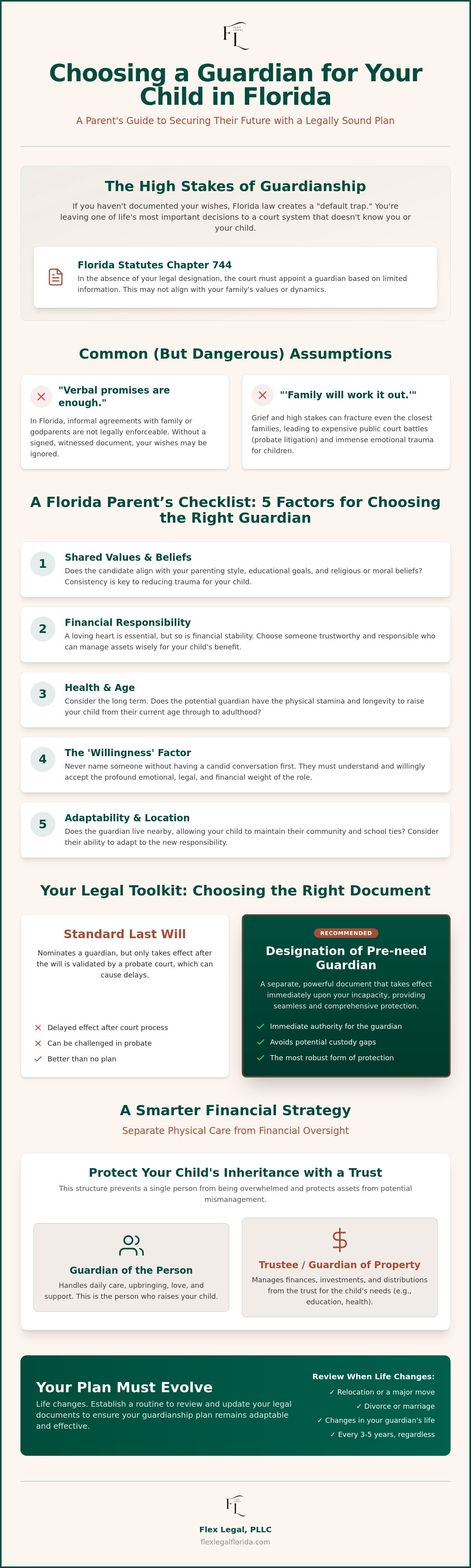
A Florida Parent’s Checklist: 5 Factors for Choosing the Right Guardian
Designation of Pre-need Guardian vs. Wills: The Florida Framework
Separating Care from Cash: Using Trusts to Support Your Guardian
Taking the Next Step: Formalizing Your Choice in West Palm Beach
The High Stakes of Guardianship: What Florida Law Says in 2026
Florida Statutes Chapter 744 serves as the primary framework for protecting the most vulnerable residents in our state. While these laws provide a safety net, they also create a "default trap" for parents who haven't documented their wishes. If you haven't formalized how to choose a guardian for my child in Florida, you're essentially leaving the decision to a stranger in a black robe. In the absence of a legal designation, the Palm Beach County Circuit Court must step in to appoint a representative. A judge will make this choice based on limited information presented during a hearing, which may not align with your family's unique dynamics or your personal values.
Many parents believe a verbal agreement with a sibling or a godparent is enough. In Florida, these informal promises are not legally enforceable. Without a signed, witnessed document, your family might face a chaotic scramble for custody. This isn't just about who gets the children; it's about avoiding a system that is often slow and rigid. With approximately 20% of all guardianship cases in the U.S. involving minors, the legal system is frequently taxed. You need a proactive strategy to ensure your children don't become part of a backlog while relatives argue in court.
The Difference Between a Legal and a Natural Guardian
Florida law recognizes biological and adoptive parents as "natural guardians." You have the inherent right and responsibility to make decisions for your children without court intervention. However, this status ends if both parents become incapacitated or pass away. At that point, the court must appoint a legal guardian to take over those responsibilities. Under Florida estate law, a "minor" is any individual under the age of 18. If a minor inherits assets exceeding $15,000, the court may require a guardian of the property even if a natural guardian is still present. Understanding these distinctions helps you see why knowing how to choose a guardian for my child in Florida is a critical part of modern parenting.
Why 'Family Will Work It Out' is a Dangerous Strategy
Assuming your family will naturally agree on who should raise your children is a risky gamble. When grief and high stakes collide, even the closest families can fracture. This often leads to probate litigation, a public and expensive process where relatives fight for custody. The emotional toll on children during these disputes is immense, as they are caught in the middle of adult conflict. To make a ruling, Florida judges use the "best interests of the child" standard, which is a legal principle focused on evaluating the safety, stability, and emotional ties of the proposed guardian to ensure the child's long-term welfare remains the primary concern.
A Florida Parent’s Checklist: 5 Factors for Choosing the Right Guardian
Selecting a guardian is one of the most profound decisions you'll ever make. It is an act of deep love, but it also requires a high level of logistical planning. When you are evaluating how to choose a guardian for my child in Florida, you must look beyond who your child loves most and consider who is best equipped to manage the daily realities of their upbringing. This choice isn't just about finding a replacement parent; it's about building a support system that mirrors your values and secures your child's future. To ensure your choice aligns with the requirements of Florida Statute Chapter 744, consider these five essential factors:
Shared Values: Does the candidate align with your parenting style, educational goals, and religious beliefs? Consistency in these areas reduces trauma for the child.
Financial Responsibility: A guardian with a loving heart might still struggle with a checkbook. You need someone who is stable and trustworthy with assets.
Health and Age: Consider the long term. Does the guardian have the physical stamina to raise a toddler to adulthood, or the longevity to see a teenager through college?
The 'Willingness' Factor: Never name someone without a candid conversation. They must fully understand the emotional and legal weight of the role before you finalize your documents.
Adaptability: Life changes quickly. Your best choice today might move across the country or start a new family in three years, so your plan must be flexible.
If you're feeling stuck between two equally qualified candidates, discussing your family's specific needs during Guardianship Proceedings planning can provide the objective perspective you need to move forward.
Geography Matters: Keeping Your Child in Florida
Stability is a cornerstone of a child's well being. Naming a local guardian in the West Palm Beach area allows your child to remain in their current school, keep their friends, and stay connected to their existing social circles. While naming an out of state relative is possible, it often introduces legal hurdles. Florida courts may require out of state guardians to post a bond or appoint a local resident as an agent for service of process. Moving a child far from their home community adds another layer of grief to an already difficult transition.
The Age Factor: Grandparents vs. Siblings
The "age gap" presents a unique challenge. Grandparents often have the most wisdom and shared history, but they may lack the energy required for the high octane demands of young children. Conversely, a younger sibling or cousin might have the stamina but lack the financial maturity or life stability needed to provide a permanent home. Naming a successor guardian is just as vital as your primary choice because it ensures your child’s care remains uninterrupted even if your first pick’s circumstances change. This "backup" person provides an essential safety net that keeps your plan adaptable over the coming decades.
Designation of Pre-need Guardian vs. Wills: The Florida Framework
Most parents assume their Last Will and Testament is the final word on who raises their children. While a Will is essential, it has a significant limitation: it only becomes active after you pass away. If you're seriously injured or face a long term illness that leaves you incapacitated, your Will remains silent. This is where many families get caught in legal limbo. When you're researching how to choose a guardian for my child in Florida, you need a document that protects your family during your life, not just after. The law recognizes that emergencies don't always wait for a death certificate.
The Designation of Pre-need Guardian is the proactive solution to this gap. It's a specific legal tool under Florida guardianship laws that allows you to name your chosen guardian before a crisis occurs. For Palm Beach County residents in 2026, filing this document creates a clear path for the court to follow if you can't make decisions yourself. Despite proposed legislative changes like House Bill 1099, which died in subcommittee in March 2026, the core requirements for these designations remain a stable and reliable part of your strategy. Knowing how to choose a guardian for my child in Florida means understanding that your choice needs to be documented for both death and incapacity.
How the Designation of Pre-need Guardian Works
This document allows your choice to take effect almost immediately if you're adjudicated incapacitated. To be legally sound, it requires specific formalities, including the signatures of two witnesses and a notary public. In court, this designation serves as a "rebuttable presumption." This means the judge must appoint your named person unless there's clear evidence they're unfit to serve. It provides a level of certainty that an informal note or a simple Will cannot match. By filing this with the clerk of the court, you're placing your wishes on the public record before they're ever needed.
Integrating Guardianship into a Comprehensive Estate Plan
A truly adaptable plan uses multiple documents to create a seamless safety net. Your revocable trust can provide the financial resources your guardian needs, while your Last Will and Testament reinforces your choice for the long term. Synchronizing these documents is vital to avoid legal contradictions that could trigger probate litigation. When your trust, Will, and pre-need designation align, you ensure your children are protected regardless of the circumstances. This integrated approach turns a static set of rules into a dynamic support system for your family.
Separating Care from Cash: Using Trusts to Support Your Guardian
Love and money require different skill sets. While your sister might be the perfect emotional match for your toddler, she may not have the expertise to manage a million dollar life insurance payout. When you are deciding how to choose a guardian for my child in Florida, it's often wise to separate the "Guardian of the Person" from the "Guardian of the Property." Florida law allows this distinction to ensure your child receives both high quality care and sound financial management. By splitting these roles, you create a system of checks and balances that protects your child's inheritance from accidental mismanagement or external influence.
A trust acts as the financial engine for your guardianship plan. It provides the resources your chosen caregiver needs to maintain your child’s lifestyle without forcing them to dip into their own pockets. You can structure the trust to cover specific expenses like housing upgrades, travel for family visits, or even a larger vehicle to accommodate a growing household. This approach ensures the guardian can focus on parenting rather than worrying about the logistics of funding a new life. If you're ready to secure these assets, exploring professional Trust Administration can help you build a plan that adapts to your family's evolving needs.
The Role of the Trustee in Child Support
The trustee serves as the gatekeeper of the assets while the guardian provides daily care. To keep the process smooth, you should set "ascertainable standards" for distributions, typically focused on Health, Education, Maintenance, and Support (HEMS). This legal framework gives the trustee clear instructions on when to release funds. It also prevents the "commingling" of money, ensuring your child’s inheritance stays separate from the guardian’s personal finances. This clarity reduces friction between the two roles and keeps the focus on the child’s well being.
Special Needs Guardianship Considerations
For families with children who have disabilities, the framework for how to choose a guardian for my child in Florida becomes even more specific. Special needs planning is essential to ensure that an inheritance doesn't disqualify your child from vital government benefits like SSI or Medicaid. A Special Needs Trust allows the guardian to provide for "quality of life" extras while keeping basic medical support intact. Guardian Advocacy is a simplified legal process in Florida designed for parents of adult children with developmental disabilities to maintain legal authority without a full adjudication of incapacity. This ensures that care and protection continue seamlessly even after the child turns 18.
Taking the Next Step: Formalizing Your Choice in West Palm Beach
Selecting a guardian is a profound act of protection, but it isn't a "set it and forget it" task. Life moves fast, and your legal documents must keep pace. Even after you have mastered how to choose a guardian for my child in Florida, we recommend reviewing your designation every two to three years. A guardian who was a perfect fit when your child was an infant might not have the stamina or lifestyle alignment needed for a teenager. Regular check-ins ensure your plan remains a dynamic support system rather than a static piece of paper that no longer reflects your reality.
Major life changes are the most common triggers for a plan update. If you experience a divorce, a death in the family, or a significant relocation, your current documents may become obsolete or even contradictory. In West Palm Beach, we see many families move in and out of the state, which can complicate guardianship if the paperwork isn't adjusted. Flex Legal offers a streamlined, modern approach to these updates. We replace the stiff, intimidating atmosphere of traditional law firms with an agile process that prioritizes your comfort. By using flat-fee packages, we provide West Palm Beach families with financial transparency, allowing you to focus on your child's future instead of worrying about billable hours.
The Consultation: What to Expect
Our planning sessions are designed to be collaborative and solution-oriented. We don't just hand you a stack of forms; we act as your partner to help you vet potential candidates against the specific requirements of Florida law. Professional drafting is essential because it ensures your documents are robust enough to withstand legal challenges from well-meaning but overbearing relatives. We help you move from a place of deep anxiety to a position of confident action. As your agile legal ally, we ensure your strategy for how to choose a guardian for my child in Florida is legally sound and emotionally resonant.
Secure Your Child’s Future Today
Before you finalize your plan, run through a final checklist to ensure no details are missed. Confirm that your primary and successor guardians are still willing to serve. Verify that your financial roles are clearly separated via a trust to prevent any "care vs. cash" conflicts. Once your documents are signed and notarized, storage is your next priority. Keep the originals in a secure, fireproof location, but make sure your inner circle knows exactly where to find them. Accessibility is just as important as security when an emergency occurs. If you are ready to move forward, Schedule your West Palm Beach estate planning consultation with Flex Legal to turn your intentions into a binding legal reality.
Protecting Your Family’s Tomorrow
Your children depend on your foresight and preparation. By moving beyond a simple verbal agreement and understanding how to choose a guardian for my child in Florida, you've already taken the first step toward their long term safety. You now know that a comprehensive strategy requires more than just a Will; it involves a Designation of Pre-need Guardian to cover incapacity and a trust to protect their inheritance from mismanagement. These legal tools work together to ensure your values remain the blueprint for their upbringing, even if life takes an unexpected turn.
At Flex Legal, founded by Jennifer L. Flexer, Esq., we specialize in modern, flat-fee legal solutions designed for the evolving needs of Florida families. Whether you require specialized Special Needs Planning or a straightforward guardianship designation, we act as your agile ally in West Palm Beach. We believe that professional authority shouldn't feel intimidating. It should feel like a partnership. Secure your child's future with a West Palm Beach guardianship plan today. You have the power to replace uncertainty with a concrete, adaptable plan that protects those you love most.
Frequently Asked Questions
What is the difference between a guardian and a trustee in Florida?
A guardian is responsible for your child's physical care and daily well being while a trustee manages the financial assets held within a trust. While one person can hold both roles, splitting them ensures a system of checks and balances. The trustee follows the specific instructions in your trust document to provide funds for the child's health, education, and maintenance. This separation prevents potential conflicts of interest and ensures professional oversight of the inheritance.
Can I name a co-guardian for my child?
You can name co-guardians in Florida, though it is most common to name a married couple who will raise the child together. If you choose two individuals who don't live together, it can create logistical hurdles and potential conflict in decision making. We often recommend naming one primary guardian and a successor to ensure a clear, streamlined path for your child's care. This approach avoids the risk of a legal deadlock if two guardians disagree on a major decision.
What happens if the person I chose as a guardian says no later on?
If your first choice is unable or unwilling to serve, the court will look to the successor guardian named in your legal documents. This is why naming at least one backup is a critical part of how to choose a guardian for my child in Florida. Without a designated successor, the court must appoint someone based on the "best interests of the child" standard. This process can lead to family disputes and delays that your original plan was designed to avoid.
Does a guardian have to be a family member under Florida law?
No, a guardian does not have to be a family member, but they must meet specific Florida residency requirements. Under state law, a non-relative can serve as a guardian only if they are a resident of Florida. If you want to name someone who lives out of state, they must be a blood relative or a spouse of a blood relative to qualify. These rules ensure the guardian is either geographically accessible or has a close biological tie to the child.
Can I prevent a specific person from ever being my child's guardian?
You can include specific language in your Designation of Pre-need Guardian to express your desire that a certain individual never serves as a guardian. While the court has the final say, your written objection carries significant weight in Florida proceedings. Providing clear reasons for the exclusion helps the judge understand why that person would not meet the best interests of your child. This proactive step helps shield your children from individuals you deem unfit or unstable.
How much does it cost to legally name a guardian in West Palm Beach?
The total cost involves court filing fees and professional legal fees for drafting the necessary documents. For example, initial filing fees for guardianship of a person in Florida counties often range around $235, though these are subject to legislative changes. For a comprehensive plan in West Palm Beach, families often choose flat-fee packages. This provides financial transparency and ensures all documents, including your Will and pre-need designations, are synchronized without the stress of hourly billing.
Is a handwritten note sufficient to name a guardian in Florida?
A handwritten note is not sufficient to legally name a guardian in Florida. To be enforceable, documents like a Designation of Pre-need Guardian must be signed in the presence of two witnesses and a notary public. Without these formalities, your note is merely a suggestion that the court can easily overlook during a contested hearing. Using a professionally drafted document ensures your wishes meet the strict requirements of Florida Statute Chapter 744.
Can I change my mind after I’ve signed the legal documents?
You can update or change your guardian designation at any time as long as you have the legal capacity to do so. In fact, we encourage parents to review their choices every few years to ensure they still align with their family's current needs and relationships. Updating your documents is a straightforward process that ensures your plan for how to choose a guardian for my child in Florida remains adaptable. It’s a simple way to keep your children’s safety net current as life changes.


Comments