
Coordinate a Special Needs Trust With Your Estate Plan

A special needs trust can help preserve Medicaid and SSI eligibility, but the trust type and how it handles distributions matter. For families in West Palm Beach, a special needs trust for Medicaid planning should be structured with the beneficiary’s assets, benefits, and goals in mind. The trust is one part of a coordinated plan, not a stand-alone fix.
It’s understandable to want an inheritance or other assets to support a loved one without disrupting essential benefits. The key is choosing a trust that matches who owns and contributes the funds, then coordinating it with the rest of the estate plan so assets go where intended.
This article explains how first-party, third-party, and pooled trusts differ, how their rules can affect Medicaid and SSI, and why distributions matter. It also covers how a special needs trust can work alongside a will and other estate-planning documents, and when professional planning can help coordinate them.
Table of Contents
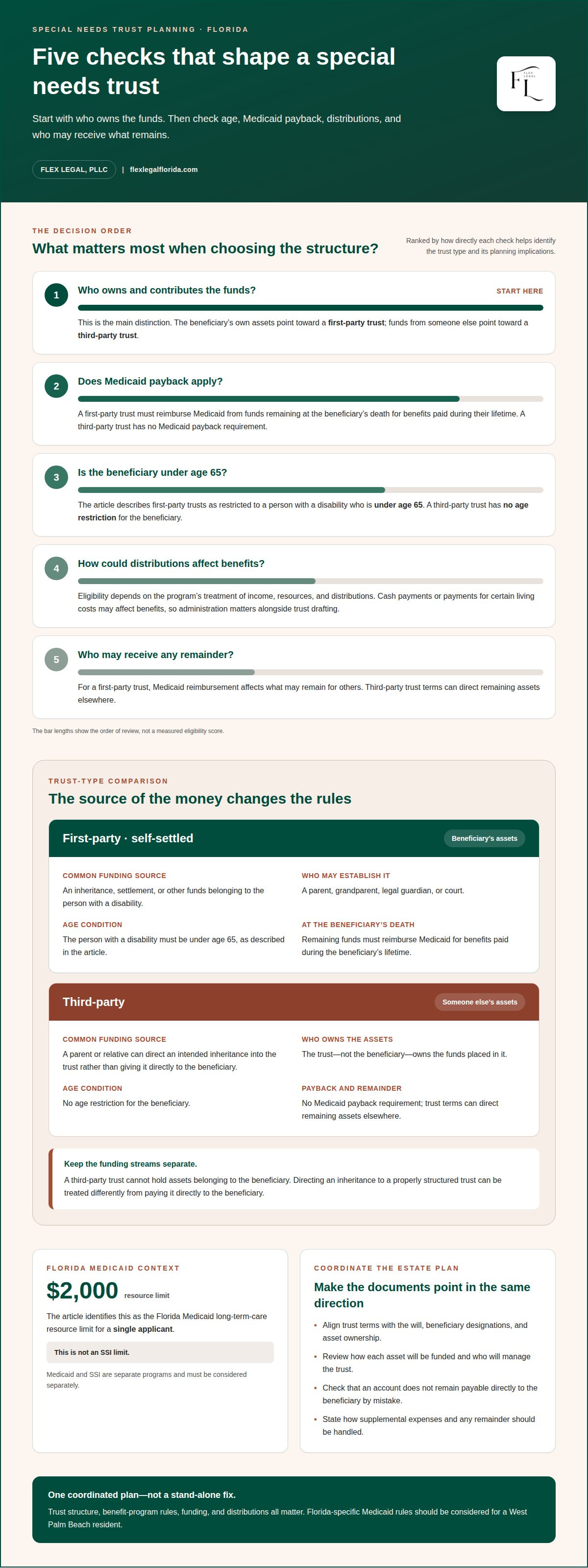
What is the Difference Between a First-Party Special Needs Trust and a Third-Party Special Needs Trust?
The main distinction is who owns the assets placed in the trust. For families in West Palm Beach, identifying the source of funds helps determine which trust structure and repayment provisions may apply.
First-Party Trusts and Self-Settled Assets
A first-party, or self-settled, special needs trust holds assets belonging to the person with a disability. According to U.S. Congress, this trust type is restricted to a person with a disability who is under age 65. It may be considered when the beneficiary receives an inheritance, settlement, or other funds in their own name. A parent, grandparent, legal guardian, or court may establish this type of trust. The source of funds matters because a third-party trust cannot hold assets belonging to the beneficiary.
Third-Party Trusts and Their Funding
A third-party special needs trust is created and funded by someone other than the beneficiary, such as a parent or another family member. The trust, not the beneficiary, owns its assets. For example, a relative can direct an intended inheritance into the trust instead of giving it directly to the beneficiary. When properly drafted, trust assets aren’t counted as the beneficiary’s resources for SSI or Medicaid. This type has no age restriction for the beneficiary and doesn’t require Medicaid payback.
Estate Recovery and Federal Trust Requirements
Federal requirements make a first-party trust repay Medicaid from funds remaining at the beneficiary’s death for benefits paid during their lifetime. This payback provision affects what may remain for other beneficiaries. A third-party trust has no Medicaid payback requirement, so its terms can direct remaining assets elsewhere. Estate recovery and trust payback are separate planning considerations. West Palm Beach families should understand which applies to the assets and trust involved, rather than assume every trust has the same repayment terms. Clear drafting connects funding, repayment, and instructions for any remainder.
Will a Special Needs Trust Protect Medicaid and SSI in Colorado?
A trust can help protect eligibility when its terms and administration follow the rules for the relevant benefit program. For families in West Palm Beach, Florida Medicaid rules are the local focus, and Medicaid and SSI must be considered separately.
Medicaid Payback Rules and Requirements
Payback provisions determine whether Medicaid may be reimbursed from trust assets after the beneficiary’s death. For first-party trusts, federal law requires reimbursement from remaining funds for Medicaid benefits paid during the beneficiary’s lifetime. This affects what may ultimately pass to family members. A special needs trust for Medicaid planning should account for repayment terms when the family considers who may receive any remainder.
Remainder Beneficiaries After Medicaid Payback
Remainder beneficiaries are the people or organizations named to receive trust assets left after the trust’s obligations are addressed. For a first-party trust, what is available to them depends on the remaining assets and required Medicaid reimbursement. A third-party trust has no Medicaid payback requirement. Clear remainder terms help families understand how trust assets may be distributed and avoid assuming all trust types work alike.
First-Party Trusts and Medicaid Eligibility
A first-party trust may help preserve Medicaid eligibility by holding the beneficiary’s own assets under qualifying trust terms. Eligibility still depends on how the specific program treats income, resources, and distributions. In Florida, the resource limit for a single applicant in Medicaid long-term-care programs is $2,000. This is not an SSI limit. Cash payments or payments for certain living costs may also affect benefits, so trust administration matters alongside drafting.
State Differences in Medicaid Trust Rules
State Medicaid programs can apply different eligibility rules, so procedures from other states should not be assumed to govern a West Palm Beach resident. Florida’s Medicaid long-term-care resource limit is one state-specific factor, while federal rules also apply to qualifying trusts. A special needs trust for Medicaid planning in Florida should be evaluated in light of the beneficiary’s program, assets, income, and proposed distributions. Considering these factors together helps families understand how trust terms fit local eligibility requirements.
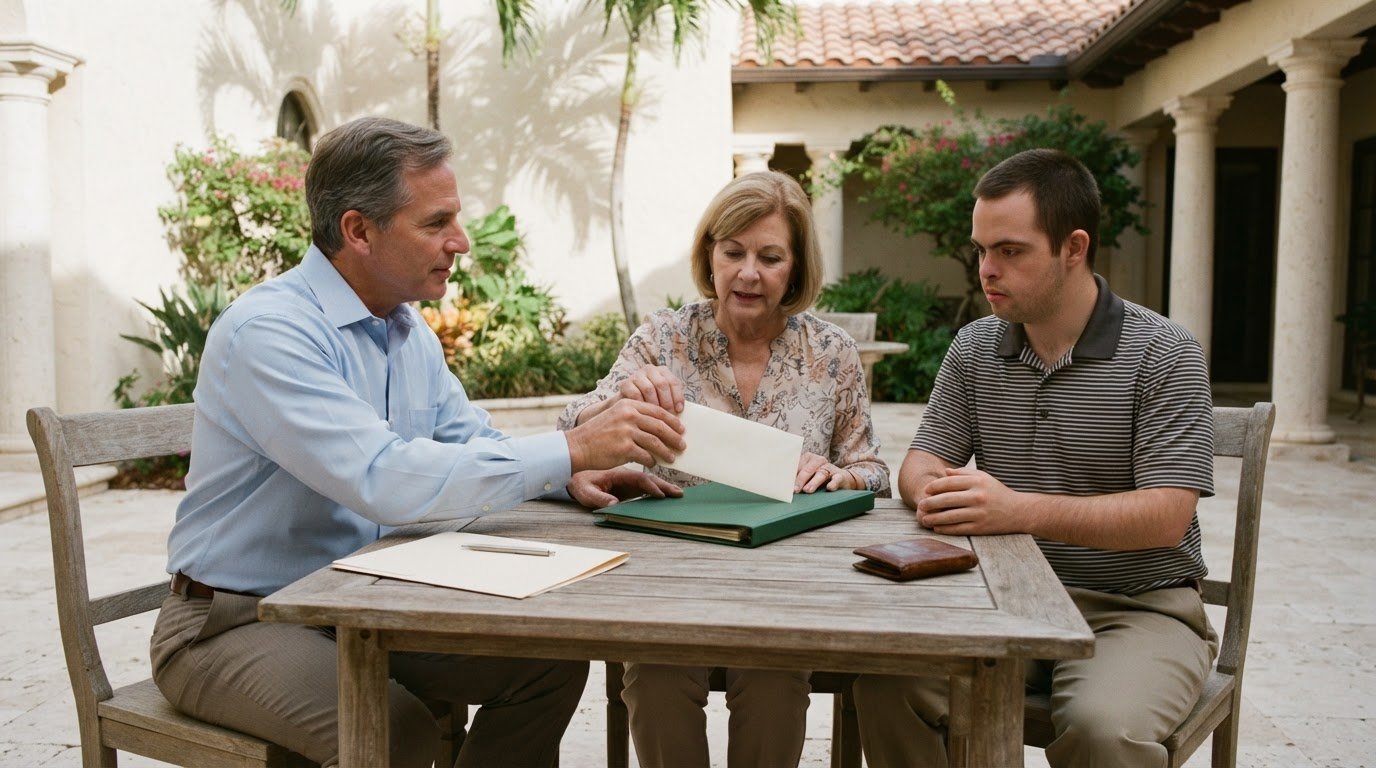
Creating and coordinating a special needs trust with an estate plan
An estate plan should direct assets to the trust without accidentally placing them in the beneficiary’s name. Coordinating ownership, funding, and distribution documents helps preserve the intended support.
How an attorney creates and coordinates a special needs trust with an estate plan
An estate-planning attorney aligns trust terms with the will, beneficiary designations, and asset ownership. This matters because an inheritance paid directly to a beneficiary may be treated differently from funds directed to a properly structured trust. The attorney considers each asset’s source, such as a family gift or settlement, and coordinates how it will be funded. For couples, clarifying individual and jointly owned assets, including any described as community property, can help avoid conflicting instructions.
Coordination also covers who manages the trust and how its terms address supplemental expenses. A will that names the trust but leaves an account payable directly to the beneficiary can produce an unintended result. Reviewing the estate plan as a whole helps align these directions.
Estate Recovery and Trust Planning
Colorado Medicaid estate recovery may affect some special needs trusts, depending on how they are funded. This makes the distinction between the beneficiary’s assets and a family member’s assets important beyond initial eligibility. Trust language, funding records, and the estate plan should work together to address intended recipients and any applicable recovery obligations. Planning for recovery is not the same as assuming every trust has identical consequences.
For example, an inheritance directed into a trust may be treated differently from assets first received by the beneficiary. The funding source and trust type shape the analysis.
Comparing Trusts, Pooled Trusts, and ABLE Accounts
How do special needs trusts differ from pooled trusts and ABLE accounts for Medicaid planning? A standalone trust can be tailored to a beneficiary and family, while a pooled trust is managed by a nonprofit that combines assets for multiple beneficiaries. An ABLE account is a separate savings option for an eligible person whose disability began before age 26. It can complement, rather than replace, a trust.
ABLE account contribution and resource rules can affect how savings interact with benefits. Those limits make account purpose and balance relevant when coordinating savings with a trust. Comparing the options helps match the funding source, management structure, and intended expenses to the estate plan.
Attorney and Medicaid-planner assistance
An attorney and Medicaid planner address different parts of a special needs trust plan. The attorney drafts trust terms and coordinates them with the estate plan. The planner examines how funding and distributions interact with Medicaid, SSI, and other programs. Aligning these roles helps prevent documents from conflicting with benefit administration.
An attorney is required to create a special needs trust. For a Colorado family, the attorney considers the beneficiary’s disabilities, asset ownership, supplemental support needs, trustee responsibilities, and instructions for remaining assets. This connects the legal language to family priorities, such as funding transportation or personal care without giving the beneficiary unrestricted control.
A Medicaid planner focuses on eligibility across relevant programs. The planner reviews income, resources, benefit status, and proposed trust payments, then explains how a spending pattern could affect assistance. This brings strict eligibility rules into the planning process. It complements legal drafting, but doesn’t replace the attorney’s responsibility for the trust terms.
The planning team reviews records such as settlement documents, inheritance papers, account ownership, benefit notices, and existing estate documents. The attorney uses these records to distinguish beneficiary-owned assets from family assets. The planner assesses how proposed funding and distributions fit benefit requirements. For example, naming a beneficiary directly on an account can change how the plan should be structured.
Review remains important when assets, distributions, or benefit circumstances change. Regular reviews of Medicaid eligibility requirements help maintain compliance. The attorney can assess whether trust language still reflects the estate plan, while the planner considers how proposed support fits program rules. This coordination is useful when a trustee changes or an inheritance is expected, because administration must follow the trust terms and applicable eligibility limits.
For coordinated legal planning, discuss special needs planning.
Flex Legal, PLLC: Special Needs Planning
Flex Legal, PLLC helps families in West Palm Beach connect Special Needs Planning with the broader estate plan. This can be useful when choosing a trust, preparing for a future inheritance, or updating documents as a beneficiary’s needs change. Coordinated planning can address how assets are directed and who may manage them.
Special Needs Planning can be considered alongside Revocable Living Trusts and a Designation of Pre-need Guardian. These documents serve different purposes, so their terms should work together rather than create conflicting directions. Trust Administration Assistance can help carry out the trust’s terms after it has been established.
If you’re ready to discuss how these planning options may fit your family’s circumstances, contact Flex Legal, PLLC for a Free Consultation.
Make Your Plan Ready for What Comes Next
A special needs trust for Medicaid planning works best as part of a plan that can adapt as family circumstances and support needs change. Start by identifying the decisions that still need attention: how future assets should be directed, who should manage them, and whether guardianship belongs in the wider conversation. Flex Legal, PLLC offers Special Needs Planning, Revocable Living Trusts, and Guardianship Proceedings to help West Palm Beach families address these connected priorities through estate planning.
You don’t need every future decision settled before beginning a planning conversation. A clear discussion of your family’s goals and existing documents can establish what needs coordination and what deserves attention first. That gives you a practical starting point for shaping a plan around the person it is meant to support.
Contact Flex Legal, PLLC to discuss your family’s planning needs and the next step toward a more coordinated future.
Frequently Asked Questions
Is an Attorney Required?
Yes. Careful drafting can help align the trust’s terms with its funding source, the beneficiary’s benefits, and the intended management. For example, a settlement belonging to the beneficiary raises different drafting issues from a gift made by a parent. The trust also needs to work with the will and beneficiary designations so assets follow consistent instructions.
What Defines a Disability?
For adults, Social Security disability criteria focus on a qualifying physical or mental condition that lasts, or is expected to last, at least 12 months or results in death. The Social Security Administration maintains an adult Listing of Impairments with 14 categories. Meeting a category’s criteria may support a disability determination, but the condition and evidence must satisfy the applicable criteria.
What Does a Special Needs Trust Cost in Washington?
Washington trust costs vary with the trust type, funding source, drafting needs, and coordination with other estate documents. A trust involving a beneficiary’s settlement may require different provisions from one funded by a relative’s inheritance. Administration needs and the plan’s complexity also affect the work involved. A typical fee range shouldn’t be treated as a quote for a specific family’s circumstances.
Why Does This Matter?
It matters because the way an asset is directed can affect benefit planning and the family’s intentions. For example, naming a beneficiary directly on an account may send funds outside the trust, even if a will describes a different plan. Coordinating account designations and estate documents helps reduce conflicting instructions and gives trustees a clearer framework for managing support.
What Is a Special Needs Trust and How Can It Support Medicaid Planning?
A special needs trust is a legal arrangement that holds assets for a person with a disability under a trustee’s management. It can support Medicaid planning by keeping eligible trust assets from being treated as the beneficiary’s available resources when the trust meets applicable rules. For instance, the trustee can use trust funds for approved supplemental needs rather than giving the beneficiary unrestricted access.
What Are the Rules for a Third-Party Special Needs Trust and Medicaid?
A third-party trust is funded with assets belonging to someone other than the beneficiary, such as a relative’s gift or inheritance. The trust must not receive assets belonging to the person with a disability. When properly drafted, its assets aren’t counted for Medicaid or SSI eligibility, and Medicaid payback isn’t required. The trust terms should also state who receives any remainder.


Comments