
Avoiding Family Conflict with a Living Trust: A 2026 Florida Guide
- Kelly Mata
- May 28
- 12 min read

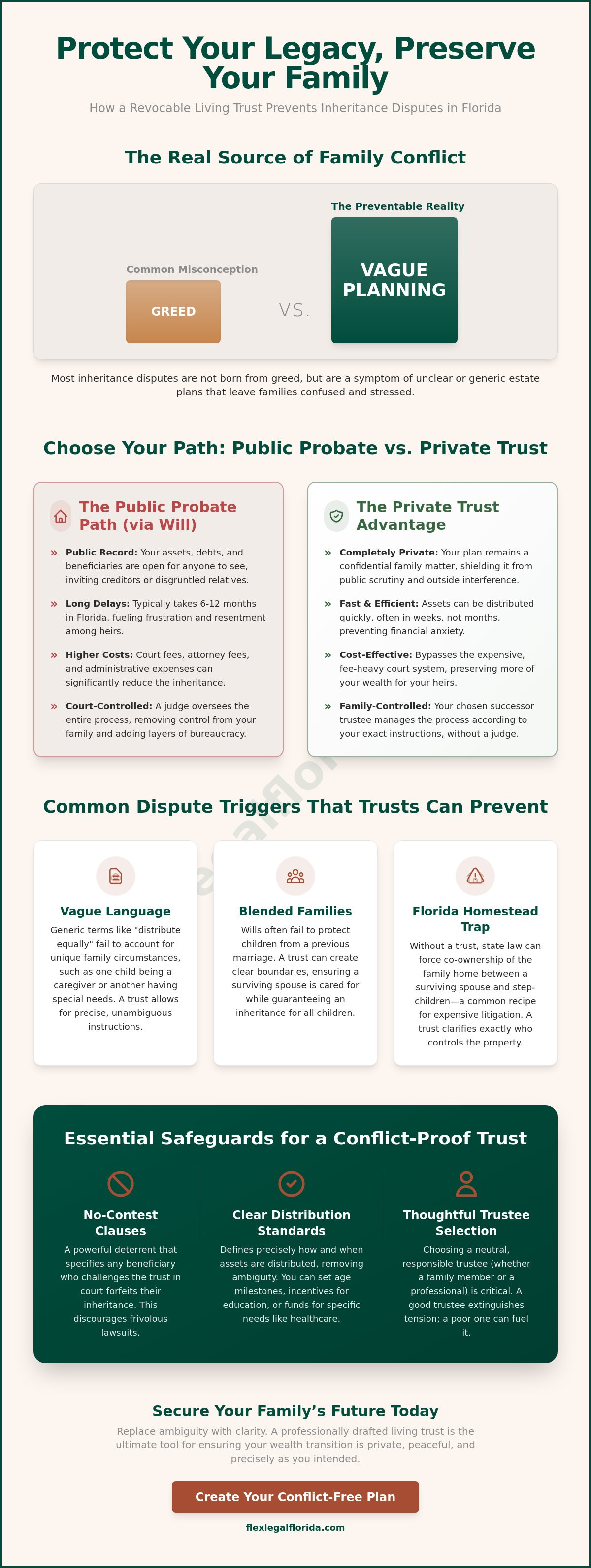
Most people think inheritance disputes are born from greed, but the reality is far more preventable: family conflict is usually just a symptom of vague planning. You've spent a lifetime building your legacy. The last thing you want is for your children to end up in a public Florida courtroom because of a confusing Will or the emotional stress of probate. It's a common anxiety that money could drive a wedge between the people you love most. One of the most effective strategies for avoiding family conflict with a living trust is by replacing ambiguity with absolute structural clarity.
This guide reveals how a strategically drafted trust protects your family's privacy and ensures every heir is treated fairly based on their specific needs. You'll learn how to minimize legal fees and leverage the latest 2026 Florida legal updates, such as the increased $150,000 summary administration threshold and expanded trustee powers. We're outlining a clear, adaptable path to transition your wealth privately while keeping your family's bond fully intact.
Key Takeaways
Move your legacy from the public eye of a courtroom to the privacy of a trust, significantly reducing the risk of external interference.
Discover specific drafting techniques for avoiding family conflict with a living trust that provide clear, unambiguous instructions for your heirs.
Identify the technical safeguards, like distribution standards and no-contest clauses, that protect your assets from unnecessary litigation.
Learn why the choice of a trustee can either fuel or extinguish family tension; discover how to make a selection that prioritizes peace.
Find out how a modern, flat-fee planning model offers a streamlined and adaptable alternative to traditional, complex estate services.
Table of Contents
Common Triggers for Inheritance Disputes in Florida
Estate litigation rarely starts with a spreadsheet. It starts with a feeling of being overlooked or a lack of clarity. While money is the fuel, the spark is usually emotional. In Palm Beach County, many families attempt a DIY approach using generic online templates. These forms often fail to account for the nuances of U.S. trust law and specific Florida statutes. When documents are drafted without professional precision, they leave doors wide open for interpretation. Vague language is a magnet for conflict. A Last Will and Testament that uses broad terms like "equally to my children" sounds fair on paper. It doesn't account for a child who provided years of unpaid caregiving or an heir with significant medical debts. Avoiding family conflict with a living trust begins by replacing these broad strokes with specific, legally sound instructions.
The Problem with Public Probate
Probate is a matter of public record. Anyone can access the court files to see exactly what you owned and who is scheduled to receive it. This transparency often invites disgruntled relatives or even predatory creditors to the table. In Florida, the formal probate process typically takes 6 to 12 months. These long, public delays fuel resentment among heirs who are waiting for closure and financial support. If your family is already navigating this complex system, working with a probate lawyer palm beach county can help manage the administrative burden while you work toward a resolution.
Blended Families and the Florida Homestead Trap
Blended families face unique hurdles that traditional Wills often ignore. Step-children frequently feel their inheritance is at risk when a step-parent survives the decedent. Florida's homestead laws add a significant layer of complexity to this dynamic. If a primary residence isn't titled or transferred correctly, the surviving spouse might only receive a "life estate," while the children from a previous marriage receive the "remainder." This forced split ownership is a recipe for disaster. In Florida, the family home is often the spark that ignites estate litigation if not protected by a trust. Conflicting expectations in West Palm Beach quickly turn into expensive legal battles when a surviving spouse and step-children are forced to share an asset they both feel entitled to control. Avoiding family conflict with a living trust allows you to set clear boundaries and specific rights for every family member, ensuring your home remains a sanctuary rather than a source of strife.
How a Revocable Living Trust Prevents Litigation
A revocable living trust functions as a private, out-of-court contract. It's a sophisticated tool designed to keep your family's business exactly that: family business. While a Will serves as a set of instructions for a judge to interpret, a trust is an active agreement that governs your assets while you're alive and after you pass. This shift from a public court process to a private administration is the cornerstone of avoiding family conflict with a living trust. By removing the audience of a public courtroom, you eliminate the platform where many inheritance disputes begin. Privacy acts as a natural deterrent to litigation because there's no public forum for disgruntled parties to air grievances or invite outside interference.
The speed of a trust administration also plays a vital role in preserving harmony. There is no mandatory waiting period like there is in probate. Assets don't sit in legal limbo for months, which prevents the financial anxiety and administrative frustration that often boils over into sibling rivalries. When heirs receive their inheritance through a streamlined, private process, the lack of friction leaves very little room for resentment to grow.
Avoiding the Courtroom Entirely
Trusts allow your estate to bypass the Palm Beach County court system completely. This is a significant advantage because it removes the heavy administrative burden and high court fees associated with traditional probate. When you use a revocable trust, your successor trustee manages the distribution according to your exact terms without needing a judge's permission. This autonomy reduces the overall legal expenses for your heirs and ensures that more of your legacy goes to the people you love rather than being consumed by court costs.
Incapacity Planning as Conflict Prevention
Conflict doesn't always wait until a death; it often starts during a period of illness or cognitive decline. If you haven't established a clear path for management, your family might find themselves in a contested guardianship proceeding. This is an expensive and emotionally draining court process where a judge decides who manages your care and finances. An agile trust plan, used in tandem with a durable power of attorney, ensures a smooth transition of control. Your chosen trustee steps in immediately to handle bills and healthcare decisions, providing a clear chain of command that prevents power struggles among children or relatives. If you're ready to build a plan that adapts to your family's specific needs, you might consider starting a conversation about your goals to ensure every safeguard is in place.
Essential Safeguards: No-Contest Clauses and Distribution Standards
Drafting a trust is only the first step toward a peaceful legacy. The real strength of the document lies in its internal safeguards. These technical provisions act as guardrails, guiding your trustee and setting expectations for your beneficiaries. Avoiding family conflict with a living trust requires more than just listing assets; it requires a strategy that anticipates human behavior. By using specific distribution standards and staged releases, you can provide for your family's needs while minimizing the potential for jealousy or financial mismanagement.
Are No-Contest Clauses Enforceable in Florida?
Many people believe a "no-contest" or in terrorem clause is a foolproof way to stop legal challenges. These clauses typically state that if a beneficiary contests the trust, they lose their inheritance entirely. However, Florida law takes a very different stance than most other states. Under Florida Statute 736.1108, a provision in a trust that purports to penalize any interested person for contesting the trust is unenforceable. This means you cannot simply threaten your heirs into silence. Agile planning is required to bypass these limitations, focusing on transparency and detailed reasoning rather than penalties. In Florida, clear intent is more powerful than a threat of disinheritance.
Clear Standards vs. Discretionary Powers
Vague instructions are the primary fuel for estate litigation. When a trust says a trustee should give a beneficiary "enough to live on," it invites an immediate argument over what "enough" looks like. One sibling might view a modest apartment as sufficient, while another expects a luxury condo. To prevent these friction points, professional estate plans use the HEMS standard: Health, Education, Maintenance, and Support. These four categories provide a legally recognized benchmark that a trustee can follow with confidence.
You can further refine these protections by using staged distributions or incentive provisions. Instead of a single lump-sum payout, which often leads to "sudden wealth syndrome" and resentment from other heirs, you can release funds at specific milestones, such as reaching age 30 or graduating from college. These strategies, often used by a special needs planning attorney to protect vulnerable beneficiaries, are equally effective for all heirs. They ensure that your legacy supports your family's long-term growth rather than causing a short-term rift. By establishing these clear benchmarks, you remove the burden of "guessing" from the trustee and provide your beneficiaries with a predictable, fair roadmap for their inheritance.
The Human Element: Communication and Trustee Selection
Even the most robust legal framework needs the right human leadership to succeed. Avoiding family conflict with a living trust is as much about people as it is about paperwork. While the previous sections focused on technical safeguards and court avoidance, this section addresses the emotional heart of your estate plan. The person you choose to manage your assets holds the keys to your family's future harmony. If that choice feels like a slight to other family members, it can trigger the very resentment you're trying to prevent.
Naming one child as the sole trustee while their siblings are merely beneficiaries is a classic sibling rivalry trap. This dynamic creates a perceived power imbalance that often leads to accusations of favoritism or lack of transparency. In many modern Florida estate plans, families are moving away from this traditional model. Instead, they utilize a Trust Protector. This is a neutral third party who has the authority to oversee the trustee's actions, replace a trustee if necessary, or make adjustments based on changes in tax law. This extra layer of oversight provides peace of mind for beneficiaries and keeps the trustee accountable without the need for court intervention.
Choosing the Right Leader for Your Estate
A good trustee needs a specific blend of organization, neutrality, and empathy. They must be able to manage complex financial tasks while communicating clearly with emotional heirs. If no family member fits this description, an independent or professional trustee is often the most compassionate choice. These professionals provide a buffer between siblings and ensure that distributions follow your exact standards without personal bias. When exploring these options, asset protection lawyers near me can provide guidance on selecting corporate trustees who specialize in Florida trust administration. This choice removes the "burden" of management from your children, allowing them to remain siblings rather than becoming business partners.
Transparency Without Loss of Control
Surprises are the primary catalyst for estate litigation. You don't need to reveal every dollar in your accounts to manage expectations effectively. A family meeting or a non-binding Letter of Wishes can bridge the gap between your legal documents and your family's understanding. By prioritizing transparency, you're not just distributing assets; you're actively avoiding family conflict with a living trust by removing the element of surprise. This proactive communication explains the "why" behind your decisions, such as why one child's inheritance is staged or why a specific property is being sold. If you're ready to design a leadership structure that protects your family bonds, you can reach out to discuss your family's unique dynamics and find a path forward that feels right for everyone.
Securing Your Family’s Future with Flex Legal, PLLC in West Palm Beach
Avoiding family conflict with a living trust isn't just about the legal documents; it's about the partnership you build with your legal team. While traditional estate planning often feels rigid and slow, Flex Legal, PLLC has replaced that outdated model with a sophisticated, agile approach that prioritizes your comfort. Our West Palm Beach roots give us a deep understanding of Florida's specific legal landscape, from homestead protections to the latest 2026 trust law updates. We act as your ally, ensuring your legacy is protected through a process that feels streamlined rather than stressful.
We believe transparency should start with the planning process itself. By moving away from unpredictable hourly billing, Flex Legal, PLLC provides our clients with a clear path forward. This modern approach allows you to focus on what matters most: protecting your heirs and preserving family harmony. Transitioning from the anxiety of "what if" to the confidence of a completed plan is the most significant gift you can give your loved ones. It replaces the public nature of probate with a private, secure transition that leaves no room for interpretation.
The Flex Legal, PLLC Difference: Agile Estate Planning
Our process is designed to be as dynamic as the families we serve. We don't offer one-size-fits-all solutions because every family dynamic in Palm Beach County is unique. Flex Legal, PLLC specializes in complex areas that traditional firms often overlook, including Asset Protection Planning and Special Needs Planning. These core strengths allow us to build comprehensive Revocable Living Trusts that account for every contingency. Clients value our flat-fee packages because they provide absolute price certainty. You'll know exactly what to expect from the start, allowing us to focus entirely on drafting a plan that adapts to your family's evolving needs. This level of customization ensures that your specific goals, such as protecting a child with unique needs or securing a family business, are met with precision.
Your Next Steps in Palm Beach County
Whether you're looking to review an existing plan or you're starting from scratch, the right time to act is now. Estate planning is a proactive measure that prevents the reactive chaos of probate or guardianship proceedings. Jennifer L. Flexer, Esq. and the Flex Legal, PLLC team are ready to help you navigate these decisions with empathy and professional authority. We'll work together to ensure your instructions are clear, your assets are protected, and your family remains united. Avoiding family conflict with a living trust is possible when you have the right leadership guiding the way. Schedule your West Palm Beach estate planning consultation today.
Protect Your Peace and Your Legacy
Your estate plan is more than a list of assets; it's a blueprint for your family's future harmony. We've explored how moving from the public spectacle of probate to a private trust administration removes the audience for potential disputes. By establishing the clear distribution standards and leadership structures discussed in this guide, you replace uncertainty with structural clarity. Avoiding family conflict with a living trust is the most effective way to ensure your children remain a family rather than becoming litigants in a courtroom. It's about providing definitive answers before the questions even arise.
At Flex Legal, PLLC, we offer a modern, agile approach to traditional law that prioritizes your family's unique dynamics. Our expertise in Florida Homestead and asset protection ensures your primary residence and wealth are secured against common legal traps. We provide flat-fee pricing for total transparency, so you can plan with confidence and without financial surprises. You don't have to navigate these complex decisions alone. Secure your family’s legacy with a custom Florida Living Trust. We're here to help you build a future that is as stable as it is compassionate.
Frequently Asked Questions
Can a living trust be contested by a family member in Florida?
Yes, a family member can contest a living trust in Florida, but they must prove specific legal grounds such as undue influence, fraud, or lack of mental capacity. Because a trust is a private contract that you manage during your lifetime, it's often more difficult to challenge than a Will. A judge doesn't automatically review a trust, which limits the opportunities for disgruntled heirs to initiate a public dispute.
What happens if a sibling is unhappy with their inheritance in a trust?
If a sibling is unhappy with their inheritance, the clear distribution standards in your trust act as a legal shield. By using the HEMS standard (Health, Education, Maintenance, and Support), you provide the trustee with specific benchmarks that are hard to argue against. This structure is a primary method for avoiding family conflict with a living trust because it removes the subjective judgment calls that often lead to sibling resentment.
Is it better to have a family member or a professional as a Trustee?
Choosing between a family member and a professional trustee depends on your family's unique dynamics. A family member brings personal knowledge but can unintentionally fuel sibling rivalries or feel overwhelmed by the administrative burden. A professional trustee offers a neutral, third-party buffer that ensures your instructions are followed with absolute impartiality, which often preserves family relationships by removing the power struggle from the inheritance process.
Do no-contest clauses actually work in Florida estate plans?
No-contest clauses are strictly unenforceable under Florida law. Florida Statute 736.1108 states that any provision penalizing a person for contesting a trust is void. Instead of relying on threats, you should focus on agile planning techniques like staged distributions and clear letters of intent. These methods establish your wishes without relying on a legal deterrent that a Florida judge will simply ignore.
How does a living trust protect my privacy in West Palm Beach?
A living trust protects your privacy by bypassing the public probate process entirely. In West Palm Beach, probate records are open to the public, meaning anyone can see your assets, debts, and who is receiving your money. A trust is a private document that allows for the transfer of wealth behind closed doors, keeping your family's financial details away from prying eyes and potential creditors.
Can I change my living trust if my family dynamics change in 2026?
You can absolutely change your living trust if your family dynamics shift in 2026. Because it's a revocable trust, you have the flexibility to amend specific sections or restate the entire document as your needs evolve. Recent updates to Florida trust law also provide authorized trustees with more power to modify trusts under specific conditions, ensuring your plan remains as adaptable as your life.
How much does it cost to set up a living trust to avoid family conflict?
The cost to set up a trust depends on the complexity of your estate and the specific safeguards you require. While fees vary based on the level of customization and asset protection needed, it's helpful to view the expense as an investment in avoiding family conflict with a living trust. You should check with your legal professional for a quote that reflects your specific goals and the modern, flat-fee options available in the current market.
What is the difference between a Will and a Living Trust for avoiding fights?
The main difference between a Will and a Living Trust is the forum where they are handled. A Will must go through a public, court-supervised probate process that can take 6 to 12 months, providing a platform for heirs to fight. A trust operates privately and immediately upon your death or incapacity, which significantly reduces the friction and delays that typically lead to estate litigation.


Comments