
How to Protect a Special Needs Child’s Inheritance

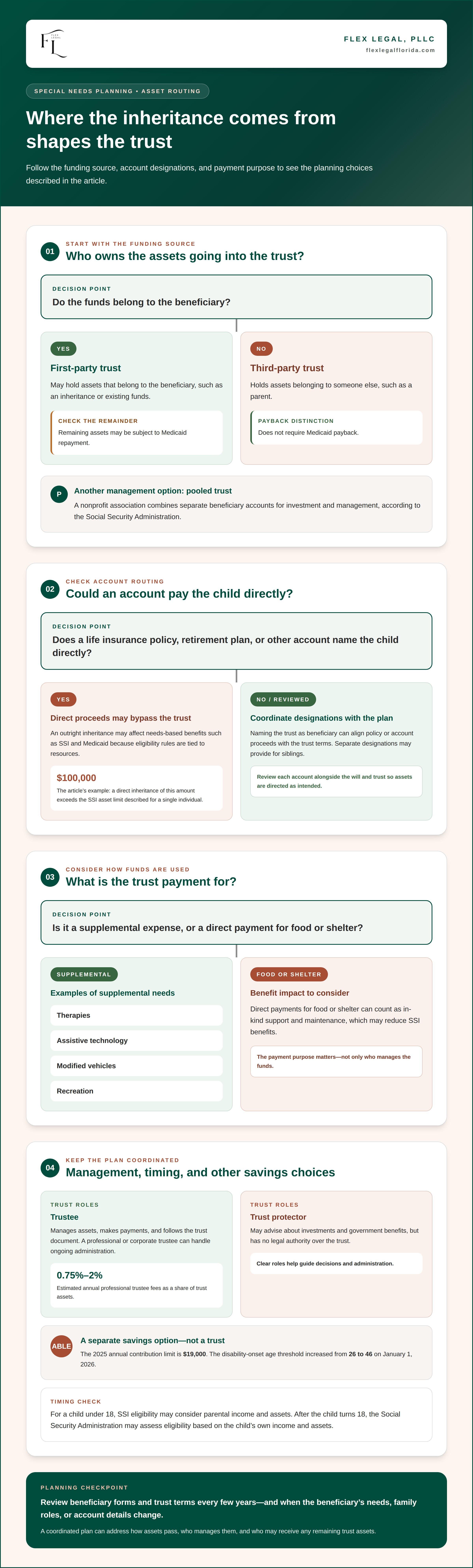
A direct inheritance can put a child’s eligibility for means-tested benefits such as Supplemental Security Income or Medicaid at risk. A special needs trust can hold inherited assets for the child, with a trustee managing funds instead of the child owning them outright. Understanding how to protect a special needs child's inheritance starts with planning how assets will pass, not just deciding who receives them.
It’s natural to want to provide lasting financial support while protecting access to important benefits. A well-structured plan can help balance those goals, but details matter: the trust type, beneficiary designations, and how funds are managed all affect the outcome.
This article explains how special needs trusts work, why direct inheritances and beneficiary designations deserve careful attention, and how Texas rules fit into the planning picture. You’ll also learn how a letter of intent can help future caregivers understand your child’s routines and preferences.
Table of Contents
What Is a Special Needs Trust?
A special needs trust holds assets for a beneficiary while a trustee manages them. Families planning how to protect a special needs child's inheritance can use the trust terms to direct funds toward supplemental needs without transferring ownership directly to the child.
Types of Special Needs Trusts
A first-party trust can be used to manage assets belonging to the beneficiary, such as an inheritance or existing funds. A third-party trust holds assets belonging to someone else, such as a parent, and doesn’t require Medicaid payback. A pooled trust combines separate beneficiary accounts for investment and management by a nonprofit association, according to the Social Security Administration. The funding source affects repayment and who may receive remaining assets.
An ABLE account is another savings option, but it differs from a trust. The 2025 annual contribution limit is $19,000, and the disability-onset age threshold increased from 26 to 46 on January 1, 2026. An attorney can explain how these options fit the family’s goals.
Trustees and Trust Protectors
A trustee manages trust assets, makes payments, and follows the trust document. A professional or corporate trustee can handle ongoing administration. A trust protector may advise about investments and government benefits, but has no legal authority over the trust. Professional trustee fees are estimated at 0.75% to 2% of trust assets annually. Clear roles help guide decisions and administration.
Life insurance can fund a third-party trust when the trust is named as beneficiary. Retirement plans and other accounts also need coordinated designations, since naming the child directly may bypass the trust. Coordinating these accounts is one part of how to protect a special needs child's inheritance through the broader estate plan.
An attorney drafts trust terms around the beneficiary, funding source, trustee, and distribution goals. Setup cost depends on the case, including drafting complexity and assets involved; a quote is provided after a quote request.
Life insurance and retirement plan beneficiary designations
Trust payments may cover supplemental expenses such as therapies, assistive technology, modified vehicles, and recreation. Direct payments for food or shelter can count as in-kind support and maintenance, which may reduce SSI benefits.
Outright Gifts and Needs-Based Benefits
An outright gift transfers assets directly to the beneficiary, which can affect needs-based benefits. SSI and Medicaid have eligibility rules tied to resources, so an inheritance may disqualify someone from assistance. For example, a $100,000 direct inheritance exceeds the SSI asset limit described for a single individual. Even an amount just above a limit can matter, making the route funds take important.
For a child under 18, SSI eligibility may consider parental income and assets. After turning 18, the Social Security Administration may assess eligibility based on the child’s own income and assets. Timing and ownership can therefore change how an inheritance affects benefits.
Siblings and Remainder Beneficiaries
A trust can direct who receives any remaining assets after the beneficiary dies. Parents may name siblings or other people as remainder beneficiaries, balancing the child’s long-term support with the family’s inheritance goals.
Life insurance and retirement plans should fit into the same estate plan. If a policy or account names the child directly, its proceeds may bypass the trust. Naming the trust as beneficiary can align those assets with its terms, while separate designations can provide for siblings. Review each account in light of the intended distribution plan.
Updating Plans as Rules Change
An estate plan review checks whether beneficiary forms and trust terms still match the family’s goals and current benefit rules. Families are advised to revisit special needs plans every few years, since rules and circumstances can change.
A review can account for changes in the beneficiary’s needs, family roles, or the assets held in insurance and retirement accounts. An attorney can help align those decisions with the broader inheritance plan, so account designations and trust documents work together.
How Can an Attorney Help Protect a Disabled Child’s Inheritance Without Affecting Benefits in Texas?
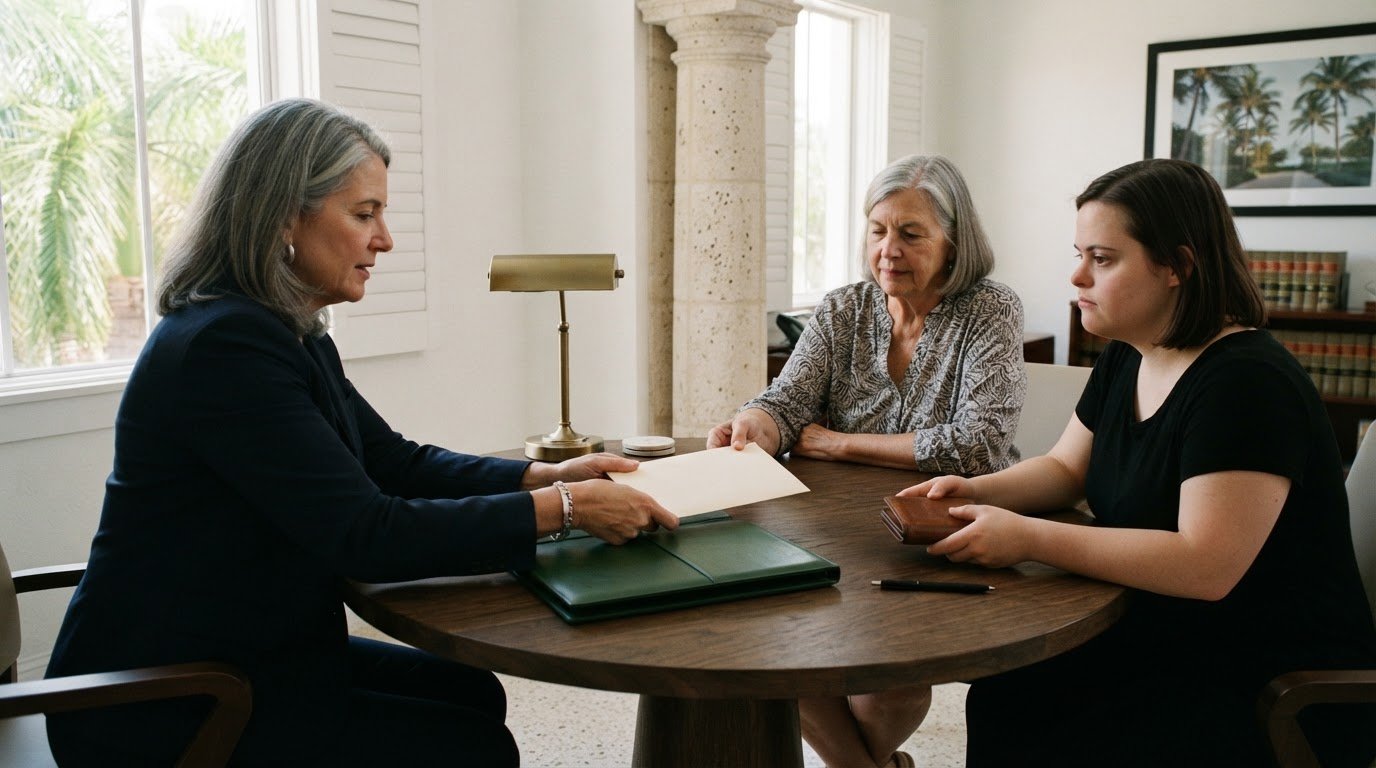
For families in West Palm Beach, Florida, an attorney at Flex Legal, PLLC can coordinate inheritance planning with a child’s care needs and benefit considerations. The plan can address how assets pass, who manages them, and what information future caregivers need. A will, trust, and beneficiary designation may each direct assets differently, so reviewing them together can reveal inconsistencies.
A letter of intent gives future caregivers practical information about the child. It’s a nonbinding document, so it doesn’t replace a will, trust, or other legal document. Parents can describe familiar routines and preferences in clear language, such as preferred meals, food aversions, hobbies, medications, and medical providers. These details can help a caregiver understand the child’s established routines and care preferences.
If parents pass away or can no longer provide care, a family member or another caregiver may need this information. The letter can explain where relevant records are kept and whom to contact about the child’s care. It communicates the parents’ knowledge and wishes, but it doesn’t assign legal authority or guarantee a specific arrangement. Other estate documents address asset management and distribution.
Update care plans as the child’s needs, routines, or providers change. For example, parents can revise medication details or replace information about a former medical provider. An attorney at Flex Legal, PLLC can help align the letter with the family’s estate documents and identify who should receive it. For West Palm Beach families, keeping practical care information distinct from legally operative documents makes each document’s purpose clearer to future caregivers.
Risks of leaving an inheritance directly to a disabled child
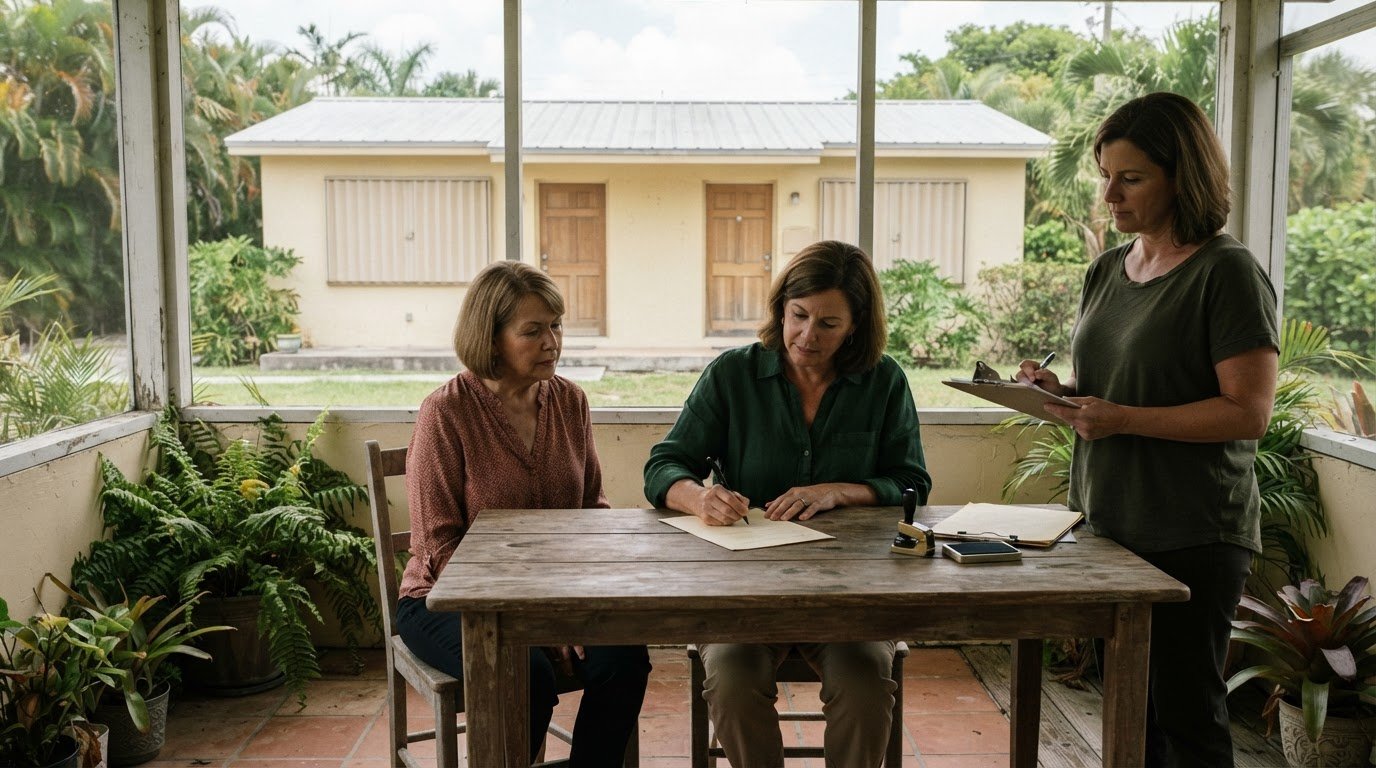
A direct inheritance can affect a child’s eligibility for benefits that depend on income or assets. The child may receive cash, property, or account proceeds outright. If those assets exceed a program’s limit, eligibility for needs-based support may be affected. Account for this risk before a will or beneficiary form transfers assets directly.
Consider a $50,000 inheritance paid directly to a beneficiary whose SSI resource limit is $2,000. The inheritance could place the beneficiary above that stated limit, even though the money is intended to provide long-term security. A sudden benefit interruption can also disrupt access to support for medical expenses, housing, and other necessities. Without a trustee managing funds, the beneficiary must handle the inheritance directly.
Age matters, too. According to the Social Security Administration, a disabled child may qualify for SSI based on the child’s own income and assets after turning 18, when legally an adult. A gift received before adulthood and one received afterward may therefore be assessed differently. Planning should consider when the child receives assets, who owns them, and whether a trust is intended to hold them.
A direct inheritance can also create pressure to spend funds to regain eligibility. That may leave less for future needs and remove the planned structure for managing distributions. Coordinate wills, insurance proceeds, retirement accounts, and other transfers before naming a child directly. A trust can provide trustee oversight and support needs over time, subject to its terms and applicable benefit rules.
Reviewing these risks as part of special needs inheritance planning can help families align asset transfers with long-term support goals.
Flex Legal, PLLC: Special Needs Planning
Flex Legal, PLLC helps families coordinate inheritance and care planning through Special Needs Planning. This can be a useful next step when a child may receive assets, benefit eligibility is a concern, or family members need clear roles for future decisions. Planning can coordinate a trust with beneficiary designations and address how assets will be managed for the child’s needs.
Families can also consider a Revocable Living Trust, Asset Protection Planning, or a Designation of Pre-need Guardian as part of a broader plan. The right approach depends on the child’s circumstances, the assets involved, and the family’s goals. A planning conversation can identify which documents fit those needs and how they work together.
Contact Flex Legal, PLLC to discuss special needs planning for your family.
Make the Next Planning Decision With Confidence
A thoughtful approach to how to protect a special needs child's inheritance starts with the whole picture. The plan should reflect your child’s changing needs, your family’s priorities, and the arrangements already in place. Treat it as an ongoing family decision, not a document to set aside once signed.
A planning conversation can connect your goals to the legal documents and decisions that shape your child’s future. Consider what you want the inheritance to support, who should help manage it, and how to communicate your family’s care wishes. Those priorities give the process direction and help identify which questions need attention first.
Flex Legal, PLLC offers Special Needs Planning, Revocable Living Trusts, and Guardianship Proceedings for families considering these issues. Contact Flex Legal, PLLC to discuss your family’s planning needs and consider a path forward that reflects your child’s circumstances.
Frequently Asked Questions
What About Your Other Children?
You can plan for each child’s needs separately within one estate plan. For example, parents may provide for a disabled child through a trust while leaving other assets directly to siblings. A West Palm Beach estate planning conversation can help clarify how those choices fit together. Naming remainder beneficiaries also identifies who may receive trust assets left after the child’s death.
How can a special needs trust protect a child's inheritance without affecting SSI or Medicaid eligibility?
A properly structured trust can keep inherited assets under trustee management rather than transferring ownership directly to the beneficiary. The trustee follows the trust terms when paying for supplemental needs, such as therapies or assistive technology. Payment details matter: direct payments for food or shelter can count as in-kind support and maintenance, potentially reducing SSI benefits. Trust terms and distributions should account for the benefits involved.
Should parents name a special needs trust as beneficiary of life insurance, retirement accounts, or a will?
Coordinate beneficiary designations with the trust so proceeds don’t pass directly to the child by default. For instance, an insurance policy might name the trust, while the will directs other assets into the same plan. Review each account’s beneficiary form separately: a will alone may not control assets that pass under a beneficiary designation. The designations should match the trust’s terms and intended recipients.
What happens if a child with disabilities inherits money directly?
An inheritance may count toward the child’s assets for needs-based benefit eligibility, potentially affecting access to support. This can happen when a will, bank account, or insurance policy names the child outright. The impact depends on the benefit program and the child’s circumstances. Before assets transfer, review how the inheritance is directed and whether an existing trust can receive it.
Who can serve as trustee, and what duties and fees does the trustee have?
A relative, friend, professional trustee, or bank may serve as trustee. The trustee manages trust assets, makes payments, and follows the trust document, including its distribution requirements. For example, the trustee may pay a service provider directly for an approved expense and keep a record of the transaction. Fees and responsibilities depend on the trustee and arrangement, so understand the compensation terms and administrative duties before making an appointment.
What are the Medicaid payback rules for first-party special needs trusts?
A first-party special needs trust funded with the beneficiary’s own assets must include a Medicaid payback provision. When the beneficiary dies, Medicaid is reimbursed for benefits paid before remaining trust assets pass to other beneficiaries. This differs from a third-party trust funded with someone else’s assets, which doesn’t require Medicaid payback. The funding source therefore affects what happens to any remainder.

Comments