
Florida Business Succession Tax Implications for LLC Owners

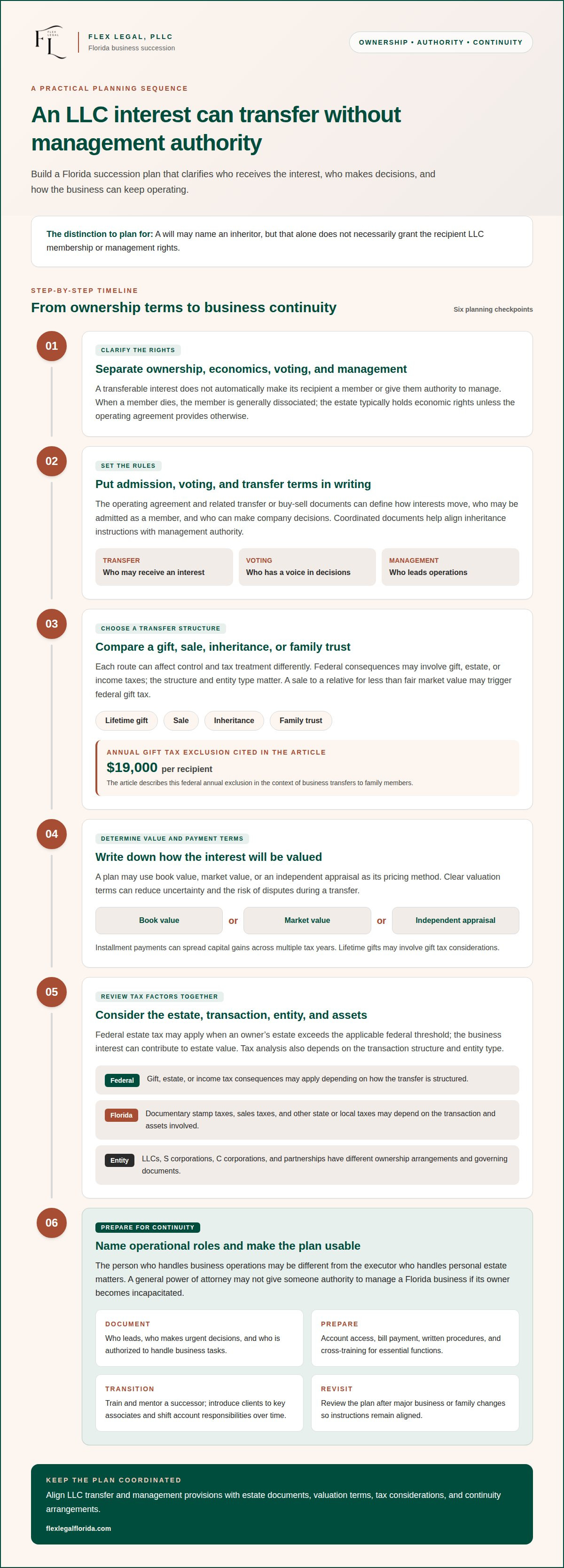
A will may name who inherits an LLC interest, but that does not necessarily give the recipient the right to manage the company. In Florida, a deceased LLC member is generally dissociated, and the estate typically holds only the economic rights to the interest unless the operating agreement provides otherwise. Florida business succession tax implications also depend on how ownership transfers, so the operating agreement and estate plan should be considered together.
It is reasonable to want a clear path for your business and the people who may depend on it. A succession plan can coordinate LLC ownership and management provisions with your estate plan while accounting for potential gift, estate, and income tax consequences. This article explains how operating agreements and transfer options affect an LLC transition, which tax factors may apply, and how to connect the plan with your broader estate planning goals.
Table of Contents
How Can a Florida Business Succession Attorney Help Address Succession Planning in My Tampa, FL, Estate Plan?
For West Palm Beach business owners, succession planning connects business documents with personal estate plans. Florida business succession tax implications depend on the transfer structure, asset values, and intended successors. A coordinated plan from Flex Legal, PLLC can clarify who inherits ownership and who will lead the company.
Federal Estate Tax Implications
Federal estate tax may apply when an owner’s estate exceeds the applicable federal estate tax threshold. The business interest can contribute to the estate’s value, making its ownership and valuation relevant to inheritance planning. Reviewing business and personal estate documents together can help align beneficiary instructions with the succession plan. This gives successors a clearer picture of the ownership transfer and potential estate tax exposure.
Tax Exposure and Business Continuity
Estate tax exposure can affect the resources available to continue operating after an owner’s death. If an estate needs liquidity, successors may face pressure to sell assets, borrow funds, or change leadership sooner than planned. A business succession plan can coordinate the intended transfer with continuity arrangements, including who takes operational responsibility. Review the plan after major business or family changes to keep its instructions aligned.
Tax Considerations for Transfers and Sales
Federal tax consequences may involve gift, estate, or income taxes, depending on whether the business is gifted, inherited, or sold. Entity type and transaction structure affect the analysis for an LLC, S corporation, C corporation, or partnership. Florida documentary stamp taxes, sales taxes, and other state or local taxes may also depend on the transaction and assets involved. A professional reviews these factors alongside the transfer documents.
Valuation Discounts, Installment Sales, and Gifts
Valuation methods and payment terms can influence the tax treatment of a transfer. A plan may set book value, market value, or an independent appraisal as its pricing method. Installment payments can spread capital gains across multiple tax years, while lifetime gifts may involve gift tax considerations. Florida business succession tax implications also depend on accurate valuation and written agreements. Gaps can lead to disputes, unexpected tax exposure, or pressure to sell assets.
Florida LLC operating agreements and ownership transfers
An LLC succession plan needs to distinguish ownership, economic rights, voting power, and management. Florida operating agreements and transfer documents can clarify how those interests move and who controls the company.
Transfers of Control and Management
An ownership transfer does not automatically transfer authority to manage a Florida LLC. When a member dies, the member is generally dissociated, and the estate typically holds economic rights unless the operating agreement provides otherwise. A recipient of a transferable interest does not automatically become a member or gain management rights. Clear admission and voting provisions help owners establish who can make decisions and address challenges during the transition.
Family Transfers Through Gifts or Sales
Family transfers may use lifetime gifts, sales, or family trusts, but the structure affects tax treatment and control. According to the Internal Revenue Service, the federal annual gift tax exclusion described for business transfers to family members is $19,000 per recipient. A gift of an interest, or a sale to a relative for less than fair market value, may trigger federal gift tax. Documents should state the transfer terms and clarify the recipient’s role.
Entity Type and Ownership Structure
Entity type and ownership structure shape which documents govern a transfer and how its tax consequences arise. An LLC’s operating agreement can establish internal rules, members’ rights, and transfer restrictions. S corporations, C corporations, and partnerships use different ownership arrangements, so the relevant agreements and transfer terms differ. A sale, gift, or transfer through a family trust can also affect gift, income, or estate tax treatment. Reviewing entity documents together helps align ownership interests with management and voting rights. A tailored business succession plan can coordinate those terms with estate planning documents.
Legal Considerations for Business Succession in Florida
A Florida continuity plan should identify who leads the business and how ownership transfers after an owner’s death or incapacity. The person handling company operations may be a successor or business manager, while an executor generally handles personal estate matters. A general power of attorney may not give someone authority to manage a Florida business if its owner becomes incapacitated. Coordinated documents can clarify both roles and reduce uncertainty during an unexpected transition.
Contingency strategies should address more than planned retirement. For example, a plan can specify who makes urgent decisions if an owner becomes disabled or an unexpected market change disrupts operations. Written procedures, clear policies, and cross-training help employees cover essential functions. Documenting access to business accounts and bill payment can also help an authorized leader manage financial tasks if the owner is unavailable. These arrangements make continuity planning practical, not just a statement of intent.
Employees and clients also need a transition that preserves working relationships. A successor can learn key responsibilities through training and mentoring before taking the lead. While the owner remains active, the business can introduce clients to younger associates and gradually shift account responsibilities. Clear communication helps employees understand reporting lines and clients know who will handle their work. A Florida attorney can coordinate succession documents with operational plans, identify conflicting instructions, and account for the company’s structure and members’ roles. Share documented plans with relevant stakeholders so employees and business partners understand the intended leadership transition and the procedures that support compliance and the owner’s legacy.
Business succession planning in Florida
Effective succession planning connects ownership, leadership, business value, and tax strategy. In Florida, the right structure depends on the company’s entity type, assets, liabilities, and the roles of its owners and stakeholders. A family business may transfer to relatives, sell to an outside buyer, or pass to employees or managers. Each option can have different tax consequences, so align the transfer terms with the intended transition.
There is no single deadline that fits every Florida business. Planning typically starts with a review of entity documents, ownership records, financial commitments, and the owner’s retirement or transfer goals. Next, identify potential successors and consider their qualifications, training needs, and future leadership roles. A retirement-focused transition can allow time for mentoring, while an unexpected illness or death calls for clear contingency arrangements. The business’s scope and successors’ readiness shape the work and its timing.
Tax planning should reflect the proposed transaction rather than assume every transfer works the same way. A business sale may have tax consequences based on its structure and timing. Installment payments can distribute capital gains across multiple tax years, while interest on seller-financed payments can affect both parties. A valuation method, such as book value, market value, or an independent appraisal, can help establish a price for ownership transfers. In an asset sale, purchase-price allocation also affects the seller’s and buyer’s tax liabilities.
Written agreements should coordinate with estate documents and address debts, dispute resolution, and successor responsibilities. Prepare employees and clients for a smooth handoff through training, mentoring, and gradual shifts in responsibility. Share the documented plan with relevant stakeholders so family members, partners, and future leaders understand their roles.
For a coordinated approach to ownership, leadership, and tax considerations, discuss business succession planning.
Flex Legal, PLLC: Business Succession Planning
Flex Legal, PLLC helps Florida business owners plan ownership changes and coordinate succession with their estate plans. Its Business Succession Planning can address transfer documents, successor roles, and continuity if an owner retires, becomes incapacitated, or dies. This planning is especially relevant when an LLC’s operating agreement and personal estate documents need to work together.
For owners whose plans also involve family protection, Revocable Living Trusts, Guardianship Proceedings, and Special Needs Planning can address related estate planning needs. The right combination depends on the owner’s goals, business structure, and intended successors. A coordinated review can bring those considerations into one adaptable plan.
Contact Flex Legal, PLLC to discuss business succession planning for your circumstances.
Shape a Plan for the Next Chapter
Understanding Florida business succession tax implications is a starting point, not the whole transition. Your next step is to connect your plans for the business with the people and priorities that matter personally. Consider who should lead, what role family members may have, and how the business transition should fit your broader estate plan. Bringing these priorities together gives professional planning a clear direction.
Flex Legal, PLLC offers Business Succession Planning alongside Revocable Living Trusts, Special Needs Planning, and Guardianship Proceedings. These services can address related business and family planning needs within your estate plan. Start with your goals and the documents already shaping your plans by booking a Free Consultation with Flex Legal, PLLC.
Contact Flex Legal, PLLC to discuss a succession plan that reflects your priorities. A thoughtful next step today can help you move forward with greater clarity.
Frequently Asked Questions
Can I transfer my LLC to my children?
You can plan to transfer an LLC interest to your children, but the operating agreement and transfer structure matter. A gift, sale, or transfer through a family trust can have different tax consequences. The transfer may also give children economic rights without admitting them as members or granting management authority. Review the agreement’s transfer and admission provisions alongside your estate documents.
How Can a Professional Help Plan for the Continuity of My Business in West Palm Beach?
A professional can help document who should lead, make decisions, and handle essential operations if you become unable to act. For a West Palm Beach business, this may include identifying a successor, clarifying authority over business accounts, and planning how employees and clients will be supported during a transition. A general power of attorney may not provide authority to manage the business, so coordinate related documents carefully.
How Can a Professional Help Plan for the Transfer of Business Ownership?
A professional can assess the ownership structure and coordinate transfer terms with the company’s governing documents and estate plan. For example, a multi-owner business may need clear buyout terms for an owner’s retirement, incapacity, or death. Planning can also address how the interest will be valued, who may acquire it, and how a purchase will be funded, clarifying successors’ responsibilities.
How Often Should a Florida Business Succession Attorney Review My Business Estate Plan?
Review the plan annually and after a major life or business change. Examples include a new co-owner, a change in the intended successor, a significant shift in business assets, or a change in family circumstances. These events can make existing documents inconsistent with current ownership or goals. A review can identify outdated directions and help keep business and personal estate documents aligned.
What Are The Tax Implications Of Business Estate Planning?
Tax effects depend on the business’s value, ownership structure, and transfer method. An inheritance may contribute to the owner’s taxable estate, while a gift or sale can raise different federal tax considerations. A business sale may also produce income tax consequences, and allocating the sale price among assets can affect both seller and buyer. Coordinating the transaction with estate planning helps clarify these tax factors.
What happens to my Florida LLC if I die?
Generally, a deceased Florida LLC member is dissociated, and the estate holds the member’s economic rights unless the operating agreement provides otherwise. The person inheriting or receiving the interest does not automatically gain membership or management authority. That distinction can affect who receives distributions and who makes company decisions. The operating agreement and estate documents should work together to address the intended ownership and leadership transition.



Comments