
First Party vs. Third Party Special Needs Trust in Florida: 2026 Guide
- Kelly Mata
- 22 hours ago
- 12 min read

Did you know that the state of Florida could claim every dollar remaining in your loved one’s trust after they pass away, simply because of how the account was originally funded? It's a startling reality for many families who realize too late that their well-intentioned planning triggered a mandatory Medicaid payback provision. When you are trying to provide a higher quality of life for a family member with a disability, the last thing you want is for your generosity to accidentally disqualify them from essential health insurance. Understanding the nuances of a first party vs third party special needs trust Florida residents use is the only way to ensure your support acts as a safety net rather than a legal hurdle.
We know you want to protect your family legacy while ensuring your loved one has the specialized care they deserve. This 2026 guide explains the critical differences between these two trust types so you can make an informed decision with total confidence. We will explore how to stay within the $2,000 asset limit, the impact of recent Florida trust restructuring laws, and how to choose the right path to maintain government benefits for the long term.
Table of Contents
Why the "Party" Matters: Understanding Florida Special Needs Trusts
Florida families face a strict financial ceiling. If a loved one with a disability has more than $2,000 in countable assets, they risk losing vital Medicaid coverage and SSI payments. It's a high-stakes balancing act that can feel overwhelming. A Special Needs Trust (SNT) acts as the essential solution. It allows you to set aside funds for a beneficiary without those funds counting against their asset limit. This legal structure ensures that your loved one can enjoy a higher quality of life while maintaining their eligibility for public programs.
When you start researching a first party vs third party special needs trust Florida plan, the terminology can be confusing. In the legal world, the "party" refers specifically to the source of the money. Is it the beneficiary's own money, perhaps from a personal injury settlement, or is it a gift from a parent or grandparent? Choosing the correct category isn't just a technicality. It determines how the trust is managed, who can set it up, and whether the state of Florida can seize the remaining funds after the beneficiary passes away.
The Role of Florida Statute 732.2025(8)
Florida law is remarkably specific about these protections. Florida Statute 732.2025(8) formally recognizes supplemental needs trusts as valid planning tools. This state-level recognition works in tandem with federal authority under 42 U.S.C. § 1396p(d)(4). Together, these laws ensure that a properly drafted trust is seen as a non-countable asset by state agencies. These trusts are designed to supplement public assistance, not replace it, giving families a reliable way to provide extra support without fear of a benefit cutoff.
Supplemental vs. Basic Needs
Think of an SNT as an adaptability tool that evolves with the beneficiary’s changing needs. It covers "quality of life" expenses that Medicaid and SSI don't provide. This includes everything from advanced medical therapies and specialized wheelchairs to electronic devices, travel, and recreation. By using the trust for these supplemental items, you protect the beneficiary’s basic SSI check for their everyday living costs.
Recent regulatory shifts in 2026 have made these trusts even more flexible. A significant rule change that took effect in late 2024 means that food and groceries purchased by a trust no longer trigger a reduction in SSI benefits. However, if the trust pays for housing expenses like rent or a mortgage, the beneficiary's SSI payment may still be reduced by approximately $351 per month. Understanding these nuances is key to maximizing the value of the trust while protecting every dollar of government support.
First-Party Special Needs Trusts: Protecting Your Own Assets
A first-party special needs trust, frequently referred to as a (d)(4)(A) trust, is a specialized legal tool designed for individuals who already possess assets but need to qualify for or maintain government assistance. Unlike other trust types, this specific account is funded with the beneficiary's own money. In Florida, these trusts are often the primary solution for individuals who receive a sudden influx of wealth that would otherwise disqualify them from Medicaid or Supplemental Security Income (SSI). It’s an essential part of the first party vs third party special needs trust Florida landscape for those who need to "spend down" assets instantly to stay below the $2,000 limit.
Common funding sources for a first-party trust include:
Personal injury settlements or medical malpractice awards.
Lump-sum back-payments from the Social Security Administration.
Direct inheritances that were not protected by a third-party trust in a loved one's will.
Life insurance payouts where the individual with a disability was named as a direct beneficiary.
Timing is critical when establishing this trust. Florida law enforces a strict "under age 65" requirement. If a beneficiary has already reached their 65th birthday, they generally cannot establish a new (d)(4)(A) trust to protect their own assets. For those nearing this age, acting quickly is the only way to preserve their financial independence and health coverage. If you are approaching this milestone, reaching out for special needs planning can help you secure your eligibility before the window closes.
The Medicaid Payback Provision
The most distinct feature of a first-party trust is the "payback" requirement. Because the trust is funded with the beneficiary's own money, the state of Florida acts as a secondary beneficiary. Upon the death of the trust holder, the trustee must use any remaining funds to reimburse Florida Medicaid for the total cost of medical assistance provided during the person's lifetime. The payback provision acts as a mandatory trade-off where the state receives reimbursement for care in exchange for the beneficiary's immediate and ongoing eligibility for public benefits.
Setting Up a First-Party SNT in West Palm Beach
Establishing these trusts often requires navigating the local court system. In Palm Beach County, the 15th Judicial Circuit may need to approve the creation of the trust, especially if it involves a minor or an incapacitated adult. While the individual can often establish the trust themselves, a parent, grandparent, or legal guardian can also initiate the process. Professional management is highly recommended because the Social Security Administration (SSA) performs rigorous audits. Even a small administrative error in how funds are spent can trigger a loss of benefits, making an experienced legal ally vital for long-term compliance.
Third-Party Special Needs Trusts: Building a Family Legacy
If the first-party trust is a reactive tool for sudden windfalls, the third-party special needs trust is the cornerstone of proactive family planning. This legal structure is funded entirely by assets belonging to someone other than the beneficiary. Parents, grandparents, or even siblings can contribute to this trust through direct gifts or as part of an inheritance. When evaluating a first party vs third party special needs trust Florida families often find the third-party option provides significantly more control over where the money goes in the long run.
The most compelling advantage of this trust is the absence of a Medicaid payback provision. Because the money never belonged to the beneficiary, the state of Florida has no legal claim to the funds after the beneficiary passes away. This allows families to protect a legacy for multiple generations. If funds remain in the trust at the end of the beneficiary's life, those assets can be distributed to other children, grandchildren, or charitable organizations. It’s a powerful way to provide for a loved one’s immediate needs while ensuring the family’s hard-earned wealth stays within the family.
Estate Planning for Florida Parents
For parents in West Palm Beach, a third-party SNT is often integrated directly into a broader revocable trust or a Last Will and Testament. This ensures that if something happens to the parents, the inheritance doesn't land directly in the child's lap and trigger a benefit disqualification. Instead, the assets flow seamlessly into the trust. This setup offers immense peace of mind. You aren't just leaving behind money; you're leaving behind a protected financial ecosystem that maintains your child’s quality of life without jeopardizing their access to Florida Medicaid or SSI.
Choosing a Trustee for a Third-Party SNT
Selecting the right trustee is one of the most important decisions you'll make. This individual or entity must possess a unique blend of deep empathy and sharp financial literacy. They need to understand the beneficiary’s daily challenges while also navigating the strict reporting requirements of the Social Security Administration. In Palm Beach County, families often weigh the benefits of a family member trustee versus a professional corporate trustee.
While a sibling or close relative understands the family dynamic, they may feel overwhelmed by the complex accounting rules. Many families choose a hybrid approach, appointing a professional to handle the technical details while a family member serves as a trust protector. Consulting a special needs planning attorney guide can help you evaluate which management style fits your family’s specific goals and budget. Making this choice early ensures your plan is adaptable to whatever the future holds.
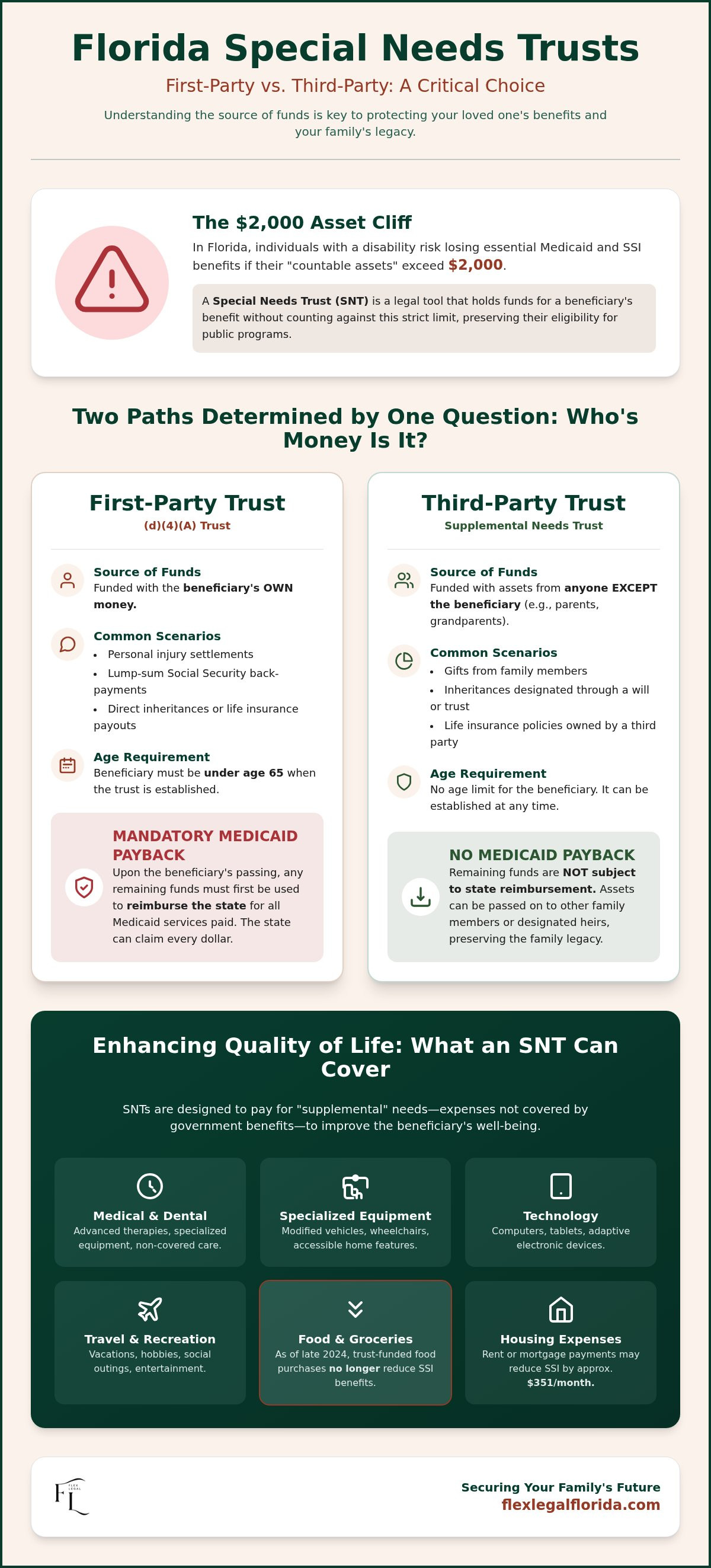
First Party vs. Third Party: A Direct Comparison
Deciding between trust types often comes down to one simple question: where did the money come from? While both tools protect your eligibility for Florida Medicaid and SSI, they serve very different masters. A first-party trust is a protective shield for your own assets, while a third-party trust is a vessel for family generosity. Understanding the first party vs third party special needs trust Florida distinction ensures you don't accidentally trigger a multi-thousand-dollar payback requirement when it isn't legally necessary.
Which One Do You Need? Common Scenarios
Real-world situations often dictate the legal path for you. Consider a West Palm Beach resident who wins a $500,000 car accident settlement. Because that money belongs to the injured person, they must use a first-party trust to stay below the $2,000 asset limit. Without it, their health insurance would vanish instantly. Conversely, if a grandmother wants to leave her Palm Beach condo to her grandson with autism, she should establish a third-party trust. This keeps the home out of the state's reach once the grandson passes away.
Sometimes the need is more urgent. Imagine an adult with a disability who receives an unexpected, direct inheritance from a well-meaning relative who didn't plan ahead. Because the money is now in the beneficiary's name, a first-party trust becomes the only way to "spend down" the assets and preserve their benefits. It's a reactive but essential move to prevent a financial crisis.
Can You Have Both?
An adaptable plan often utilizes multiple legal structures at once. It's entirely possible, and sometimes necessary, to have both types of trusts. You might have a first-party trust holding a small personal settlement and a third-party trust holding the bulk of the family's legacy. If you've already passed the age of 65, "Pooled Trusts" serve as a vital alternative, allowing you to join a larger group trust to protect your income and assets without the standard age restrictions.
Building a plan that evolves with your family requires a partner who understands the local Florida landscape. If you're ready to secure your loved one's future, schedule a consultation to explore a custom strategy for your specific needs.
How to Start Your Special Needs Plan in West Palm Beach
Planning for a loved one’s future shouldn't feel like a burden. At Flex Legal, we’ve reimagined the legal experience to be as streamlined and supportive as possible. We move away from the rigid, intimidating atmosphere of traditional firms by acting as your agile ally. Our process starts with a clear, solution-oriented consultation where we listen to your family’s specific story. Because we utilize a transparent flat-fee model, you can focus on making the best decisions for your family without worrying about unpredictable hourly bills or hidden costs.
A successful strategy requires more than just picking a trust type. It involves a holistic look at your entire estate. We ensure your special needs trust works in perfect harmony with other essential documents like your Last Will and Testament, Durable Power of Attorney, and Designation of Health Care Surrogate. This integrated approach protects your loved one from every angle, ensuring that no matter what the future holds, their quality of life and government benefits remain secure. Navigating the first party vs third party special needs trust Florida landscape is much simpler when you have a clear, adaptable path forward.
Gathering Your Information
The discovery phase is where we build the foundation of your plan. To help us provide the most accurate guidance, we recommend gathering a few key items before our first meeting. You don’t need to have everything perfect, but having these details ready allows us to move faster on your behalf:
Current statements for any government benefits (SSI, SSDI, or Medicaid).
A comprehensive list of assets, including bank accounts, real estate, and life insurance policies.
A summary of your long-term goals for your loved one’s care and lifestyle.
Copies of any existing estate planning documents you may have.
During this phase, Flex Legal serves as your agile ally. We prioritize clear communication and modern solutions, cutting through the dense legal jargon that often creates unnecessary friction. Our goal is to provide you with the clarity and comfort you need to feel confident in your choices.
Taking the Next Step
Securing a family legacy in Palm Beach County requires proactive action. Whether you are dealing with a sudden inheritance or planning for the long term, the right legal structure makes all the difference. Our West Palm Beach office is designed to be accessible and welcoming, reflecting our commitment to a partnership-based approach. We’re here to help you turn anxiety about the future into a steady, logical plan that protects those you love most. Don’t wait until a crisis forces your hand. You can schedule a consultation for special needs planning with Flex Legal today to start building a more secure tomorrow.
Securing Your Loved One’s Financial Independence
Navigating the complexities of Florida Medicaid and SSI rules doesn't have to be a solo journey. You now understand that the choice between a first party vs third party special needs trust Florida residents use depends entirely on the source of the assets. Whether you're protecting a personal injury settlement or building a multi-generational legacy, the right legal structure keeps essential health insurance intact. By acting now, you prevent the stress of a sudden benefit disqualification and ensure your family's hard-earned resources are used for their intended purpose: a higher quality of life.
Flex Legal serves as your agile ally in the heart of West Palm Beach. We bring specialized Florida special needs expertise to every conversation, ensuring your plan is both compliant and adaptable. Our flat-fee pricing model removes the guesswork from the process, providing you with predictable planning and total transparency from day one. You have the power to create a stable, protected future for your family. Secure your family’s future with a Florida Special Needs Trust and gain the peace of mind you deserve today.
Frequently Asked Questions
Does a special needs trust affect Florida Medicaid eligibility?
A properly drafted special needs trust allows you to hold assets without affecting your Florida Medicaid eligibility. Because the assets are held in the trust rather than in the beneficiary's name, they don't count toward the strict $2,000 asset limit. This ensures that the individual remains eligible for essential health insurance and Supplemental Security Income while still having access to funds for a higher quality of life.
What happens to the money in a first-party special needs trust when the beneficiary dies?
When a beneficiary of a first-party special needs trust passes away, the state of Florida must be reimbursed for the cost of medical care provided. This is known as the "payback provision." The trustee is legally required to use the remaining funds to pay back the Florida Medicaid program. Any assets left over after this reimbursement can then be distributed to other named heirs or beneficiaries as outlined in the trust document.
Can I set up a third-party special needs trust for my adult child in Florida?
Yes, you can absolutely establish a third-party special needs trust for your adult child in Florida. This is a common and effective strategy for parents who want to provide for their child’s long-term care without jeopardizing their public benefits. Since the trust is funded with your assets rather than the child's own money, there is no Medicaid payback requirement, allowing you to direct any remaining funds to other family members later.
Is there an age limit for special needs trusts in Florida?
There is a strict age limit of 65 for establishing a first-party (d4A) trust. If you are comparing a first party vs third party special needs trust Florida residents should know that third-party trusts have no such age restriction. For individuals over 65 who need to protect their own assets, a pooled trust is often the best alternative to ensure they remain eligible for Medicaid while preserving their financial independence.
How much does it cost to set up a special needs trust in West Palm Beach?
The cost of establishing a special needs trust varies based on the complexity of your family’s goals and assets. At Flex Legal, we utilize a transparent flat-fee model to ensure you have total predictability throughout the planning process. This approach removes the anxiety of hourly billing and allows us to focus on building an adaptable solution that fits your specific needs in West Palm Beach without any hidden financial surprises.
What can a special needs trust pay for in 2026?
In 2026, a special needs trust can pay for a wide range of "quality of life" expenses that government benefits don't cover. This includes specialized medical equipment, therapy, education, travel, and electronics. Following a significant rule change in late 2024, trusts can now pay for food and groceries without reducing the beneficiary’s SSI payment. However, paying for housing expenses like rent or mortgage may still result in a partial reduction of monthly SSI benefits.
Who can serve as a trustee for an SNT in Florida?
You can choose a family member, a trusted friend, or a professional entity like a bank or trust company to serve as a trustee. The best choice often depends on the complexity of the trust and the beneficiary's needs. Many families in Palm Beach County opt for a professional trustee or a pooled trust manager to handle the rigorous accounting and reporting requirements, while a family member acts as a trust protector to oversee the beneficiary's personal well-being.
Do I need a lawyer to set up a special needs trust in Palm Beach County?
While you aren't legally required to hire an attorney, working with an expert is vital to ensure the trust complies with complex federal and state laws. A single mistake in the trust's language or administration can lead to a total loss of benefits. Choosing an agile ally in Palm Beach County ensures your documents are drafted correctly and that you have a clear, adaptable path forward for your loved one’s long-term security.


Comments