
Estate planning to avoid family disputes by sharing your wishes

A family business or cherished home can become a source of conflict when no one knows what should happen to it. Estate planning to avoid family disputes means recording clear wishes, naming the people responsible for carrying them out, and planning how important assets will be managed or passed on. A thoughtful plan can give relatives direction when emotions are already high.
It’s understandable to focus on who inherits what, but clear instructions matter just as much as the decisions themselves. This article explains how trusts and beneficiary designations can organize transfers, why written directions for sentimental belongings matter, and how to plan for real estate and a family business. You’ll also learn how sharing key wishes and keeping documents current can reduce uncertainty for the people who may need to act on your plan.
Table of Contents
How an estate planning attorney can use trusts and beneficiary designations to help avoid probate
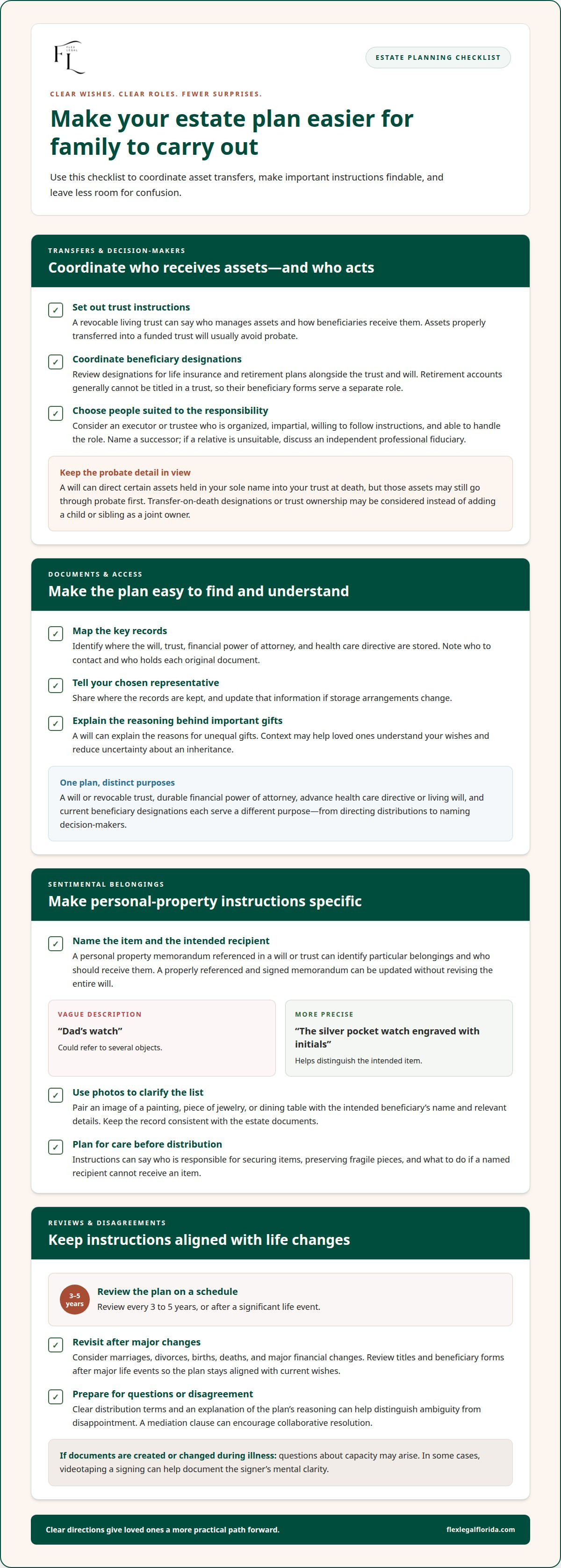
A revocable living trust can specify who manages assets and how beneficiaries receive them. Assets properly transferred into a funded trust will usually avoid probate. An attorney can identify which assets belong in the trust and prepare instructions for the successor trustee. Clear directions can reduce confusion about authority and inheritance.
A trust may help with planning for a blended family, minor children, or beneficiaries who need support managing inherited assets. It can set conditions or stagger distributions rather than transferring everything at once. For example, a trustee can manage an inheritance until a beneficiary reaches an age specified in the trust. An attorney can tailor these terms to your family’s needs and explain how trustee succession works.
Not every asset belongs in a trust. Retirement accounts generally cannot be titled in a trust, so beneficiary designations play a separate role. An attorney can coordinate those designations with your trust and will, including designations for life insurance and retirement plans. A will can direct certain assets held in your sole name into your trust at death, but those assets may still go through probate first.
To plan for probate avoidance, an attorney can also consider transfer-on-death designations or trust ownership instead of adding a child or sibling as a joint owner. Joint ownership can raise questions about control and intended inheritance. Reviewing titles and beneficiary forms after major life events helps keep your plan aligned with your current wishes.
How can an attorney help you choose an executor or trustee? They can help assess who is organized, impartial, willing to follow instructions, and able to handle the role. If family conflict makes a relative an unsuitable choice, an attorney can discuss an independent professional fiduciary and name a successor.
When beneficiaries disagree, an attorney can clarify distribution terms, explain the plan’s reasoning, and include a mediation clause to encourage collaborative resolution. Clear instructions can help distinguish a genuine ambiguity from disappointment about an inheritance.
Sharing document locations and personal property wishes as part of a professionally prepared estate plan
Clear instructions help loved ones find your estate plan and understand your intentions. A professionally prepared plan can identify where your will, trust, financial power of attorney, and health care directive are stored. It can also explain who to contact and who holds each original document. Tell your chosen representative where these records are, and update that information if storage arrangements change.
A comprehensive estate plan can coordinate a will or revocable trust, a durable financial power of attorney, an advance health care directive or living will, and current beneficiary designations. Each document serves a different purpose, from directing distributions to naming decision-makers. A will can state how property should pass and explain the reasoning behind unequal gifts. That context may reduce resentment by helping loved ones understand the wishes behind an inheritance.
Estate planning and inheritance rules vary by state, including rules affecting probate and property distribution. If valid estate documents don’t direct distribution, state law determines how a person’s property is distributed. An attorney can prepare documents under the applicable state’s laws and account for changes in family circumstances.
Keep documents current after marriages, divorces, births, deaths, or major financial changes. Review the plan every 3 to 5 years or after a significant life event. If someone creates or changes documents during illness, questions about capacity may arise. In some cases, videotaping a signing can help document the signer’s mental clarity.
What does estate planning with an attorney cost in the United States? Fees depend on the plan’s complexity, the documents involved, and the work required; pricing is provided after a quote request. A professionally prepared estate plan can also clarify how a will records your wishes and reduces ambiguity for beneficiaries.
Planning for sentimental personal possessions with legal guidance
A handwritten promise about a family photograph or watch can mean different things to different relatives. Written instructions give an executor a clearer basis for distributing these items and can help prevent disputes over expectations. An attorney can help connect those instructions to your estate plan and explain how to prepare the document under applicable state law.
One option is a personal property memorandum referenced in a will or trust. It identifies particular belongings and the people meant to receive them. A properly referenced and signed memorandum can be updated without revising the entire will. An attorney can help describe each item precisely, such as “the silver pocket watch engraved with initials,” rather than “Dad’s watch,” which could mean several objects.
Photographs can make an item list easier to interpret. A picture of a painting, piece of jewelry, or dining table can help the executor match the written description to the correct item. Pair each image with the intended beneficiary’s name and any relevant details. Keep the record consistent with your estate documents so informal notes don’t conflict with formal instructions.
Thoughtful planning also considers how belongings will be managed before distribution. A trustee may need to secure items, preserve fragile pieces, and follow the trust’s instructions. Your estate plan can explain who takes responsibility and what to do if a named recipient cannot receive an item. Clear directions give the executor or trustee a practical path forward.
Tangible personal property is a common source of estate disputes. An attorney can help address disagreements before they arise, especially when several loved ones value the same heirloom. Discussing preferences with family may reveal competing expectations, but your written plan should record your final wishes. Beneficiary designations generally govern named accounts or policies, not household possessions, so personal items need their own clear directions. That distinction can protect relationships and the legacy attached to sentimental belongings.
Planning for family businesses and real estate with an estate planning attorney
A family business can create uncertainty if its owner can no longer manage daily decisions. An estate planning attorney can help document who will take charge, how operations should continue, and how ownership should pass. For example, instructions might distinguish a child who works in the company from relatives who don’t. Estate planning to avoid family disputes can clarify roles, control, and inheritance.
A succession plan should address more than who receives the business. It can explain how managers are selected, what happens if a named successor cannot serve, and how family members receive information. The owner can also decide whether active and nonactive relatives should have different responsibilities. Clear designations give the family a decision-making structure instead of leaving important choices to assumptions.
Real estate needs similarly specific planning. A vacation home, rental property, or family farm may be kept, transferred, managed, or sold. Your estate plan can explain who may use the property, who handles upkeep, and how shared decisions are made. If children inherit a home together, directions about maintenance and a potential sale can help prevent disagreements over costs or use.
Separate ownership from personal attachment. A family member may value a property for its memories, while another needs a sale to support their inheritance. An attorney can help explain the intended distribution and document how the property should be handled. For families seeking estate planning to avoid family disputes, planning can also address business continuity if the owner becomes unable to manage. Discuss a tailored succession plan to clarify future roles and help protect the business transition.
Flex Legal, PLLC
Flex Legal, PLLC helps families put clear estate planning documents and decision-making arrangements in place in West Palm Beach. If you’re deciding how property should pass, who should care for a minor child, or how to plan for a beneficiary with special needs, tailored legal guidance can help bring those choices into focus.
Depending on your circumstances, planning may involve a Last Will and Testament, a Revocable or Irrevocable Living Trust, Guardianship, or Special Needs Planning. These options address different needs, so the right approach depends on your family relationships, assets, and wishes. Reviewing them together can give loved ones clearer direction and reduce uncertainty about your intentions.
If you’re ready to discuss your wishes and family’s planning needs, contact Flex Legal, PLLC.
Make your intentions a practical plan
Estate planning to avoid family disputes begins with more than choosing who receives property. It also means deciding what you want your plan to protect: continuity in a family business, stability for a dependent loved one, or a meaningful connection to a home. Naming these priorities helps shape decisions around your family instead of relying on assumptions about what “fair” should mean.
Before planning conversations, consider which relationships and responsibilities matter most to you. You might want one person to manage practical affairs while another receives a particular asset. Explaining those priorities gives an attorney useful context for preparing documents that reflect your intentions. It also creates a clearer starting point for discussing sensitive choices with the people affected.
Your plan can adapt as family needs and priorities change. Flex Legal, PLLC can help you consider a suitable approach and put your wishes into clear legal documents. Contact Flex Legal, PLLC to discuss your estate planning priorities and take a thoughtful next step for the people you care about.
Frequently Asked Questions
What estate planning documents help prevent family disputes?
A coordinated plan can include a will or trust, a durable financial power of attorney, an advance health care directive, and current beneficiary designations. Each document should identify who makes decisions and how the instructions fit together. For example, the person named to manage finances during incapacity may differ from the person responsible for distributing property later. Clear roles help prevent conflicting expectations among relatives.
Can a revocable living trust help avoid disputes over an estate?
Yes. A revocable living trust can specify who manages trust assets and how beneficiaries receive them. Assets properly transferred into a funded trust will usually avoid probate. The trust doesn’t automatically cover property left outside it, so ownership and beneficiary forms still need coordination. Clear successor-trustee instructions also help prevent uncertainty about who handles administration.
How can an estate planning attorney help communicate an estate plan to family members?
An attorney can help you prepare for a family conversation that explains key decisions without requiring you to disclose every private detail. For example, you can tell relatives who will serve as trustee, where important documents are kept, and why a particular distribution reflects your wishes. Sharing the plan’s purpose before a crisis can give loved ones context and reduce surprise.
How can an estate planning attorney document unequal inheritances or gifts to reduce the risk of challenges?
An attorney can document your intended distribution and add a written explanation of why beneficiaries receive different shares. The plan can also distinguish earlier transfers as gifts, loans, or advances on inheritance, then state how each should be treated. If a charitable bequest is part of the plan, explaining its purpose can help relatives understand the decision rather than interpret it as an oversight.
What steps can an estate planning attorney take to prevent disputes over sentimental personal belongings?
An attorney can help prepare a personal property memorandum referenced in your will or trust, with clear descriptions and named recipients. For instance, identifying a particular ring by its engraving is clearer than saying “the family ring.” Photographs can help match written directions to the correct item. The plan can also name an alternate recipient if the first person cannot receive it.
How can an estate planning attorney help reduce the risk of a will or trust contest?
An attorney can use precise language, document your intentions, and help ensure the plan reflects informed decisions. This matters especially if documents are created or changed during illness, when questions about capacity may arise. In some cases, recording a signing can document the signer’s mental clarity. A careful process supports clarity, but no document can prevent every challenge.


Comments