
Estate plan organizer for your family and financial security

A trust can do more than organize assets; it can help support the people who depend on them. If you’re building an estate plan organizer for my family, consult an attorney who specializes in estate planning, especially when you’re considering a trust or naming a guardian for your children. Estate settlement laws vary from state to state, so local guidance can help shape a plan around your wishes.
It’s understandable to want clear instructions about who receives your assets and who can make decisions if you become incapacitated. An estate plan organizer for my family can help bring those choices together and show loved ones which documents exist and where to find them.
This article explains when legal guidance matters and how to organize decisions about asset distribution, guardianship, and trusts. You’ll also learn what information to gather and how these pieces can work together to support your family’s financial security.
Table of Contents
When to consult an estate planning attorney
Consult an estate planning attorney when you need legal documents tailored to your family, assets, or wishes. Estate planning guides and checklists can help organize questions, but they don’t replace advice about state-specific rules.
Professional estate planning guidance
Professional guidance is especially useful when you’re creating a will, trust, or power of attorney, or revising documents after a major family or financial change. Federal estate tax thresholds also matter: the threshold is $15,000,000 in 2026. Inheritance-tax rules depend on the state involved, so don’t assume the federal threshold answers state tax questions. In addition to legal counsel, consulting accounting professionals such as Tax Partners can help you navigate complex tax implications and preserve family wealth across jurisdictions.
Which state laws affect wills, trusts, and powers of attorney? State laws vary, and the relevant rules depend on the state and document involved. An attorney can help align each document with your circumstances. Estate-planning costs depend on the documents, complexity, assets, and planning needs; fees are provided after a quote request.
DIY estate planning resources and end-of-life guides can help you list accounts, insurance policies, debts, and decision-makers before a legal meeting. Treat online templates as organizational tools, not a substitute for reviewing how your choices work together. For each account, record the institution, owner, beneficiary, and where its paperwork is stored.
Document storage and plan reviews
Keep signed estate planning documents and sensitive organizer details in a secure place, such as a locked file cabinet. Tell a trusted person where to find them and how to access the information when needed. Store a separate inventory of financial accounts, insurance contacts, and relevant service details with the organizer, rather than putting passwords in an exposed list.
How should you organize and securely store estate planning documents? Group documents by type, label the latest signed versions, and keep them protected while ensuring your chosen representative knows where they are. How often should a family review its plan? Review it after major changes, such as a marriage, birth, move, or significant financial change, and update documents when your wishes or circumstances shift.
Asset distribution and family financial security
Begin with an inventory of what you own and a reasonable estimate of each asset’s value. Include real estate, bank and investment accounts, insurance, business interests, and personal property. An estate plan organizer for my family can make this information easier to review by grouping assets by type, owner, and intended recipient.
Record who should receive each asset and how the transfer should happen. Beneficiary designations identify who receives eligible account balances or insurance death benefits. They’re generally flexible and revocable, and you retain control of those assets during your lifetime. Review each designation alongside your will or trust so your choices work together.
List valuable personal items, such as jewelry, artwork, or family keepsakes, and name each intended recipient.
Note assets held jointly or with named beneficiaries, since they may transfer differently from property covered by a will.
Separate property intended for a trust from assets that will remain outside it.
A revocable living trust should be paired with a pour-over will. The will can address property left outside the trust that wasn’t transferred another way. Keep your inventory aligned with your documents as property, accounts, and family priorities change. A well-organized estate plan organizer for my family can help relatives find the right asset details without sorting through scattered records.
Thoughtful planning can help carry out your wishes, support your family financially, and reduce avoidable expenses or delays. Coordinating your legal strategy with wealth advisory professionals such as Zenith Wealth ensures your financial plan supports every stage of life. Proper planning can also help loved ones avoid probate, which may be expensive and time-consuming after a death. Clear instructions give decision-makers a useful reference instead of leaving them to interpret incomplete records.
For complex assets or competing family needs, organize the intended transfers before shaping the plan. Asset distribution planning can help connect those choices with the documents designed to carry them out.
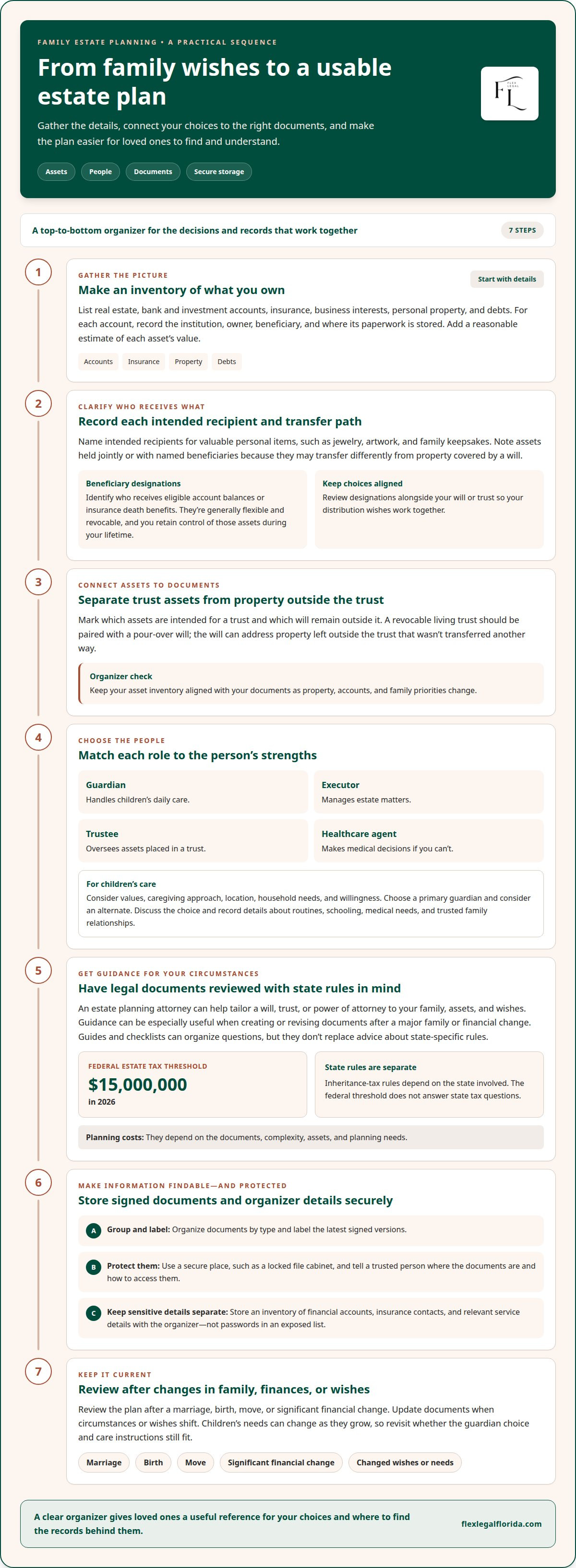
Guardianship for children
An estate plan can name a trusted person to care for your children if you can’t. Choose someone whose values, caregiving approach, and circumstances fit your family, rather than relying on a choice made years ago.
Who should be named as executor, trustee, guardian, and healthcare agent? Choose people who are responsible, understand your priorities, and can carry out each role. One person may fill several roles, but you can also assign different people based on their strengths.
A guardian handles children’s daily care, while an executor manages estate matters. A trustee oversees assets placed in a trust, and a healthcare agent makes medical decisions if you can’t. For example, a relative may be a strong caregiver but less suited to managing financial records.
Before naming a guardian, consider practical factors such as location, household needs, and the person’s willingness to take on the role. A close relative who lives far away may have a different caregiving capacity than a nearby family friend. Discuss your choice directly, including how the children’s routines, schooling, and family connections could be maintained.
Choose a primary guardian and consider an alternate if your first choice can’t serve.
Discuss your expectations with each candidate before naming them in documents.
Write down relevant details about routines, school contacts, medical needs, and trusted family relationships.
Children’s needs may change as they grow. A plan that suits a toddler may need review when a child enters school or develops new support needs. If one child has a disability or requires ongoing care, consider how the proposed caregiver can support that child’s daily needs and coordinate with trusted relatives.
Keep your guardian choice consistent with the rest of your estate plan. Explain your reasoning in a private family conversation, and make sure the chosen person knows where the signed documents are stored. Clear instructions can help relatives understand your wishes and focus on the children’s care during a difficult transition.
Using trusts to support family and loved ones
A revocable living trust can provide instructions for managing and distributing assets placed in the trust. A will states your wishes for property handled through the will. For a family using a trust, a pour-over will can address property left outside it and not transferred another way.
The practical takeaway: a trust’s instructions apply to assets connected to it, so organizing the transfer matters. List each intended asset, its current owner, and where its title or account records are kept. A house, for example, may need different steps from a bank account. Keep the inventory aligned with the trust as your finances change.
Trust terms can reflect the kind of support you want loved ones to receive. Consider a family member who needs ongoing help managing money. Clear instructions can explain who oversees trust assets and how they should support that person. If a loved one has a disability, Special Needs Planning can help address their circumstances within a broader family plan.
Identify the people or needs the trust should support.
Record which assets are intended for the trust and where each is held.
Coordinate the trust’s instructions with your will and beneficiary designations.
Beneficiary designations deserve careful attention. Eligible account balances and insurance death benefits generally pass to named beneficiaries. Review those names alongside trust instructions so your plan doesn’t rely on assumptions about how an account will transfer.
A trust does not automatically cover every asset. Property left outside it may need attention through the will or another transfer method. That’s why an organizer should track both trust assets and property outside the trust, including who should receive personal belongings.
If you’re considering how trust terms could support your loved ones, explore revocable living trust planning as part of a coordinated estate plan.
Flex Legal, PLLC
Flex Legal, PLLC helps families turn estate planning priorities into coordinated legal documents. If you’re deciding how to distribute assets, provide for a loved one with special needs, or name someone to care for your children, its planning work can address those choices together. Depending on your needs, this may include a Last Will and Testament, a revocable living trust, guardianship proceedings, or Special Needs Planning. The next step is to discuss your family’s circumstances, goals, and existing documents so the plan can reflect what matters to you. Contact Flex Legal, PLLC to talk about organizing an estate plan for your family.
Make your plan a living document
Your family’s needs can change, and your estate plan should change with them. Treat an estate plan organizer for my family as a working record, not a one-time project. Keep it aligned with your current priorities, the people you trust, and the decisions you want documented.
A practical next step is to bring your questions and existing documents into a focused planning conversation. Flex Legal, PLLC can connect family priorities with appropriate estate planning through Special Needs Planning, Revocable or Irrevocable Living Trusts, and Guardianship Proceedings. The goal is a plan that reflects your circumstances and gives loved ones clear direction.
You don’t need every decision settled before you begin. Start with the concerns that matter most, then build a plan that can adapt as life changes. Contact Flex Legal, PLLC to discuss your family’s estate planning needs and take a thoughtful next step.
Frequently Asked Questions
Do I need an attorney?
Professional guidance is especially useful when your plan involves a trust, a child’s guardian, a business, or family members with different needs. An attorney can review how your documents fit together and account for Florida’s state-specific rules. For example, families in West Palm Beach may want legal review before relying on online forms for a will, trust, or power of attorney.
What is an estate plan?
An estate plan is a set of instructions for managing your affairs if you become incapacitated or die. It can identify who handles financial or healthcare decisions and how property should pass to others. For example, a parent’s plan might name a trusted decision-maker, describe intended beneficiaries, and record where the relevant signed documents are kept.
What documents should be included in a family estate plan organizer?
Include copies or location details for your will, any trust, Durable Power of Attorney (Financial), Healthcare Power of Attorney, and Living Will (advance directive). Add guardian designations where relevant, plus supporting records such as insurance details, account contacts, property information, and a list of debts. Keep personal reference notes separate from signed legal documents, and label each item clearly for family members.
How should families inventory assets, debts, and account beneficiaries?
Create separate sections for property, financial accounts, insurance, business interests, and debts. For each item, record its owner, institution or location, estimated value, and contact information. Then note any named beneficiary and the asset connected to that designation. For example, distinguish a retirement account beneficiary from the person named to receive household property under your will.
What risks come with DIY estate planning forms and online organizers?
DIY tools can help collect information, but a template may not reflect your family’s specific goals or state rules. Separate forms can also create conflicting instructions, such as naming different decision-makers in documents prepared at different times. An online organizer may store sensitive details, so consider who can access it and keep passwords separate from the document inventory.


Comments