
Can a Trustee Be a Beneficiary in Florida? Roles and Risks

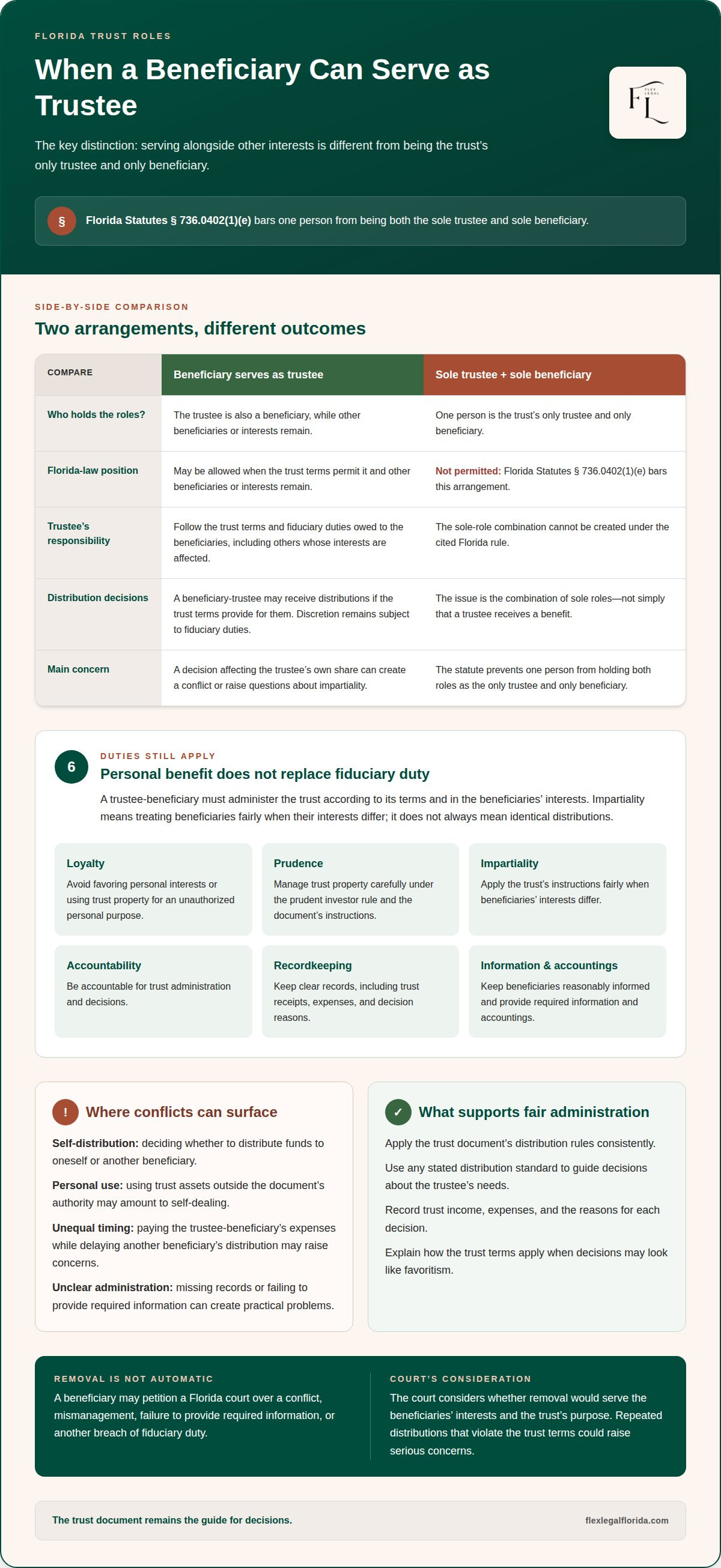
Yes, a trustee can also be a beneficiary in Florida, but the key limit is that one person can’t be the trust’s sole trustee and sole beneficiary. The Florida Legislature’s rule in section 736.0402(1)(e) prevents that arrangement. So, can a trustee be a beneficiary in Florida when other beneficiaries or interests are involved? In many trust structures, yes, if the trust terms allow it.
It’s understandable to consider naming a beneficiary as trustee: they may know the family and have a personal interest in managing the trust well. But holding both roles can create conflicts, particularly when the trustee makes discretionary decisions that affect their own share. A beneficiary-trustee must still follow the trust terms and treat beneficiaries fairly. This article explains when a beneficiary may serve as trustee, why being the sole trustee differs from being the sole beneficiary, and what practical risks to consider. It also covers how Florida law shapes the decision and what to keep in mind when planning trust administration.
Table of Contents
Can a Beneficiary Be the Sole Trustee of an Irrevocable Trust in Florida?
A beneficiary may serve as trustee if the trust allows it, but Florida law does not permit one person to be both the sole trustee and sole beneficiary. This distinction matters when deciding who will manage trust assets and whose interests the trustee must protect.
Fiduciary Duties of a Beneficiary-Trustee
A trustee must administer the trust according to its terms and in the beneficiaries’ interests. Even if the trustee also receives benefits from the trust, they owe duties to the other beneficiaries as well as themselves. These duties include loyalty, prudence, impartiality, accountability, recordkeeping, and providing information and accountings. For example, the trustee must follow the trust’s distribution rules even if another choice would increase their own share.
Impartiality and Conflicts of Interest
Impartiality means treating beneficiaries fairly when their interests differ, while following the trust’s instructions. It doesn’t always mean making identical distributions. A conflict of interest can arise if a beneficiary-trustee decides whether to distribute funds to themselves or another beneficiary. The trustee should apply the document’s terms consistently, keep clear records of the decision, and avoid favoring personal interests. Florida Statutes section 736.0802 addresses the trustee’s duty of loyalty.
Sole Trustee and Sole Beneficiary Roles
What happens if the same person is the only trustee and only beneficiary in Florida? The trust can’t be created in that arrangement: according to The Florida Legislature, Florida Statutes § 736.0402(1)(e) bars the same person from holding both roles as the sole trustee and sole beneficiary. This rule is different from a beneficiary serving as trustee where other beneficiaries or interests remain. Confirming who holds each interest helps clarify whether the roles are compatible.
Trustee duties also include careful management of trust property under the prudent investor rule and the document’s instructions. Practical failures can include using trust funds for an unauthorized purpose, neglecting records of receipts and expenses, or failing to keep beneficiaries reasonably informed. Florida Statutes section 736.0813 addresses the duty to inform and account. If a trustee’s actions cause losses, the trustee may be held liable.
Conflicts of interest in discretionary decisions
Discretionary decisions can become difficult when they affect the trustee’s own interests. Clear trust terms and consistent administration help distinguish an authorized distribution from self-dealing.
Trustee-Beneficiary Distributions
A trustee-beneficiary may receive distributions when the trust terms provide for them. A Florida trust document may also grant discretion to make distributions to the trustee, but that authority remains subject to fiduciary duties. The trustee must follow the document’s limits and administer the trust for its beneficiaries. For example, a distribution standard tied to health, education, maintenance, and support can guide decisions about the trustee’s needs. Florida Statutes § 736.0504(3) addresses creditor protection when an ascertainable standard limits distributions a trustee can make for their own benefit.
Record trust income, expenses, and the reasons for each decision. Using trust assets for a personal purpose outside the document’s authority may amount to self-dealing. Under the Florida Trust Code, serving as trustee does not give someone permission to redirect trust property for personal use.
Family dynamics can add pressure. For example, siblings may question a beneficiary-trustee’s decision to pay their own expenses from trust funds while delaying another beneficiary’s distribution. In a blended family, even a decision that follows the estate plan may look like favoritism if the trustee does not explain how the trust terms apply. Beneficiaries have rights to information and may challenge trustee conduct, while consistent records can help explain the basis for a decision.
Removal for Conflicts of Interest
A conflict may support a request to remove a beneficiary-trustee, but it does not automatically end the trusteeship. A beneficiary may petition a Florida court over a conflict of interest, mismanagement, failure to provide required information, or another breach of fiduciary duty. The court considers whether removal would serve the beneficiaries’ interests and the trust’s purpose. For example, repeated distributions to the trustee that violate the trust terms could raise serious concerns.
If discretionary decisions are creating mistrust, reviewing the trust’s distribution terms can help clarify the trustee’s authority and responsibilities.
Advantages of appointing a beneficiary as trustee
A grantor may appoint a beneficiary who understands the family’s needs and priorities. That familiarity can help the trustee interpret practical details, such as why one beneficiary may need a distribution sooner than another. The beneficiary’s interest in proper administration may also encourage attentive management. Still, familiarity does not replace the duty to follow the trust terms.
Consider a family trust with several beneficiaries and a home that needs ongoing care. A beneficiary-trustee who knows the property and family circumstances may be able to coordinate decisions without first learning those details. Their involvement can make communication more direct, particularly when beneficiaries understand how the trustee role relates to their interests. The trust document remains the guide for decisions.
With a revocable trust, the grantor often serves as the initial trustee. A successor trustee may take over after the grantor’s death or incapacity. Naming a beneficiary as successor can provide continuity in trust administration. It does not, by itself, ensure that every asset avoids probate: property not transferred into the trust may still require probate administration.
Choose a trustee based on their ability to manage records, finances, and administrative duties, not family status alone. For example, a beneficiary already handling shared property may have useful experience, while another may lack the time or skills for ongoing responsibilities. An attorney can help the grantor shape the trust terms around the intended distribution plan, address potential conflicts, and name a successor if the beneficiary cannot serve. This keeps the appointment aligned with the trust’s purpose instead of treating it as an automatic family role.
Florida law on beneficiary-trustees
Florida law may allow a beneficiary to serve as trustee if the trust document permits it. The central planning question is how the document balances the trustee’s personal interest with their duties to other beneficiaries.
Trustee and Beneficiary Roles
Can a trustee also be a beneficiary of a Florida trust? Yes, if the trust terms allow the person to hold both roles. Naming a beneficiary as trustee gives them authority over trust assets while also giving them an interest in those assets. The document should identify who may receive distributions, who may make decisions, and how a successor trustee is selected.
Florida law draws a boundary when one person is the sole trustee and sole beneficiary. According to The Florida Legislature, that arrangement cannot create a trust under Florida Statutes § 736.0402(1)(e). A trust with other beneficiaries or interests is different, but the trustee must still administer it under its terms. That distinction helps a grantor design roles that preserve the trust’s purpose.
Benefiting From an Administered Trust
What does Florida law say about a trustee benefiting from a trust they administer? A trustee may benefit as a beneficiary if the trust authorizes it, but their authority remains limited by the document and their fiduciary duties. For example, when deciding on a distribution to themselves, the trustee must apply the stated standard rather than treating trust assets as personal property.
Florida Statutes § 736.0504(3) addresses creditor protection when an ascertainable standard limits distributions a trustee can make for their own benefit. The standard can shape both the trustee’s discretion and the beneficiary’s interest. For estate planning, naming a trustee-beneficiary therefore calls for careful drafting around distributions, impartial administration, and documentation of decisions. A prudent structure makes the trustee’s authority clear without removing protections owed to other beneficiaries.
For help aligning trustee authority with a trust’s terms, discuss Florida trust administration.
Flex Legal, PLLC: Trust Administration
Flex Legal, PLLC provides trust administration assistance to help trustees carry out trust terms, manage records, and handle beneficiary distributions. This support can be especially useful when the trustee is also a beneficiary and decisions may affect their own interests or prompt questions among family members.
Trust administration assistance can also help clarify how a revocable living trust fits into an estate plan and how to administer it when circumstances change. The focus is on understanding the trust document and the responsibilities it assigns, so decisions stay aligned with its terms.
For guidance on trust administration, contact Flex Legal, PLLC.
Make the Trustee Role Fit Your Plan
Choosing a trustee is also an opportunity to consider how your family’s needs may change. Someone who seems like the right fit today may later face competing responsibilities, changing relationships, or difficulty managing trust administration. Building flexibility into the plan can help keep decisions aligned with your intentions as circumstances evolve.
If you’re weighing whether a beneficiary should manage trust assets, consider how that choice fits into your wider estate plan. Flex Legal, PLLC also provides Revocable or Irrevocable Living Trust, Special Needs Planning, and Guardianship services for families with different planning needs. The right structure depends on the trust terms, the beneficiaries’ interests, and the trustee’s responsibilities.
Understanding whether a trustee can also be a beneficiary in Florida is a useful starting point. A thoughtful plan can turn that answer into clear roles and practical direction for the people you care about. Contact Flex Legal, PLLC to discuss your next step with confidence.
Frequently Asked Questions
Does One Role Avoid The Other?
No. Serving as trustee does not erase a person’s beneficiary interest, and being a beneficiary does not remove trustee responsibilities. The trust document sets the trustee’s authority, while its distribution terms define what a beneficiary may receive. For example, a successor trustee may continue administering the trust while remaining eligible for distributions under its terms. Consider each role separately to understand the person’s powers and interests.
Does a Beneficiary-Trustee Lose Creditor Protection?
Not automatically. Creditor protections depend on the trust’s source, distribution terms, and the beneficiary-trustee’s authority. Under Florida Statutes § 736.0504(2), a creditor generally can’t compel a discretionary distribution or attach the beneficiary’s interest because of the trustee’s discretion. Section 736.0504(3) addresses protection when an ascertainable standard limits distributions the trustee may make for personal benefit. These provisions don’t make every trust interest protected from creditors.
Can a sole trustee be the sole beneficiary of a Florida trust?
No. According to The Florida Legislature, Florida Statutes § 736.0402(1)(e) prevents the same person from being the trust’s sole trustee and sole beneficiary. The analysis can depend on whether other people hold genuine interests. In Hansen v. Bothe, the Florida Second District Court of Appeal held that merger didn’t apply because remainder beneficiaries retained equitable interests. That decision illustrates why the interests created by the document matter.
How should conflicts of interest be handled when a Florida trustee is a beneficiary?
Start with the trust terms and apply the same decision-making standard to comparable requests. For example, if the trustee considers a distribution for personal expenses, document the request, the trust provision relied on, and the reason for the decision. Keep beneficiaries reasonably informed and maintain accurate records. If concerns persist, beneficiaries may seek court review, including a petition for removal when grounds exist.
Are there tax or creditor implications when a Florida trustee is also a beneficiary?
Trustee and beneficiary titles alone don’t answer tax questions; the trust’s terms, funding, and distribution powers matter. Creditor treatment also depends on those details. For example, Florida Statutes § 736.0505(1)(b) addresses a trust where the beneficiary is also the settlor, allowing a creditor to reach the maximum amount distributable to or usable for the settlor’s benefit. West Palm Beach estate planning should account for these distinctions.


Comments